
Tor N. Johnson
 Tor N. Johnson | Lantern Festival
Your artist statement emphasizes contrast and color. What first sparked your fascination with dramatic lighting and bold palettes?
There are a couple influences from my childhood that I suspect sparked this… firstly, I was raised on a steady diet of old movies (especially film noir) where there was lots of high-contrast and moody lighting OR brilliantly bright technicolor. Separately, one of my favorite things as a child were trips to the Meads store where there was a vast wall of felt-tip pens in every color imaginable. There were so many possibilities with those pens.
Many of your images capture quiet, abandoned, or decaying spaces. What draws you to these environments, and what stories do you hope viewers will find in them?
I can’t entirely explain this one. Historic places have always been an attraction to me and I’ve loved the stories of history for my whole life. The forgotten places just call to me. While I don’t often get to indulge in shooting abandoned places, it’s so much fun. From a visual perspective, they are oddly colorful in unexpected ways and have great shadows. Separately, it’s odd to stand there and realize that what is now quiet was once busy and full of activity. I will admit to trying to hear the rhythm of the space when it was alive in my mind’s eye.
For the viewers of any of my images, my first and most important hope is that they say “wow, that is a beautiful picture”. The mission is aesthetic first and foremost. It’s a bonus if they can picture themselves standing where the image was shot and feel what it was like.
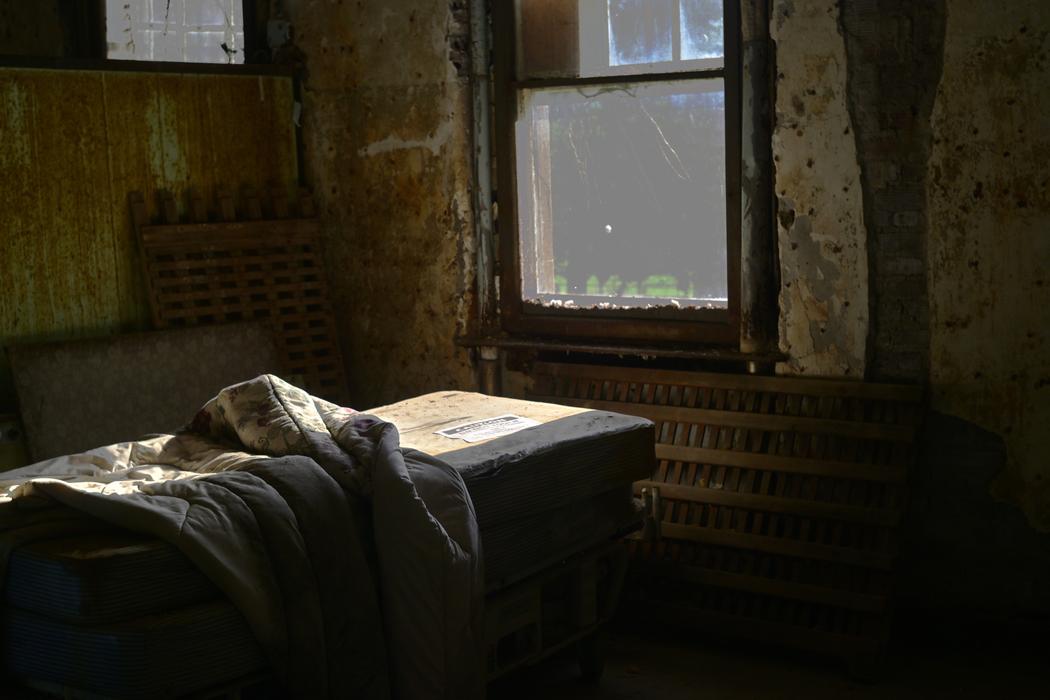 Tor N. Johnson | A Forsaken Bed At Pennhurst
Your architectural photographs show a strong sense of symmetry and structure. How do you approach composition when photographing historic or ornate buildings?
For many years I worked as a graphic designer creating print advertisements. When photographing a strongly geometric scene, my instinct is to try to organize the image into symmetry and structure to balance the image. I’ll frame until it feels right (and then shoot 3-5 more shots just in case I was wrong the first time).
 Tor N. Johnson | Architectural Details Imperial Library
Several of your works highlight textures — peeling paint, aging wood, fabric, or patterned surfaces. What role does texture play in your visual storytelling?
This is absolutely the designer in me… there’s actually not a major story in these patterns beyond “isn’t this pattern and color gorgeous?”. These are shots where I saw a little spot that I though looked beautiful and tried to capture it. The peeling of paint is a fertile ground for interesting shapes combined with colors and contrast. These are images that can be printed, hung up, and be enjoyed without the distraction of messages or deep meaning.
I simply like the looks and hope others can relax and enjoy them as well.
You’ve worked with 35mm, medium format, large format, and digital. How has each format influenced the way you see and photograph the world?
Starting with 35mm film taught me patience and acceptance… so many pictures simply didn’t work, needed a different composition, or didn’t come out for some technical reason. Medium and large format (along with the quest for more megapixels) are the direct result of my love of re-cropping images and a quest for better quality. Why be limited to just the frame shape of 35mm? Sometimes I might decide to crop square or to a different aspect ratio. The larger film formats and high-res cameras let me adjust the cropping after the fact without sacrificing quality.
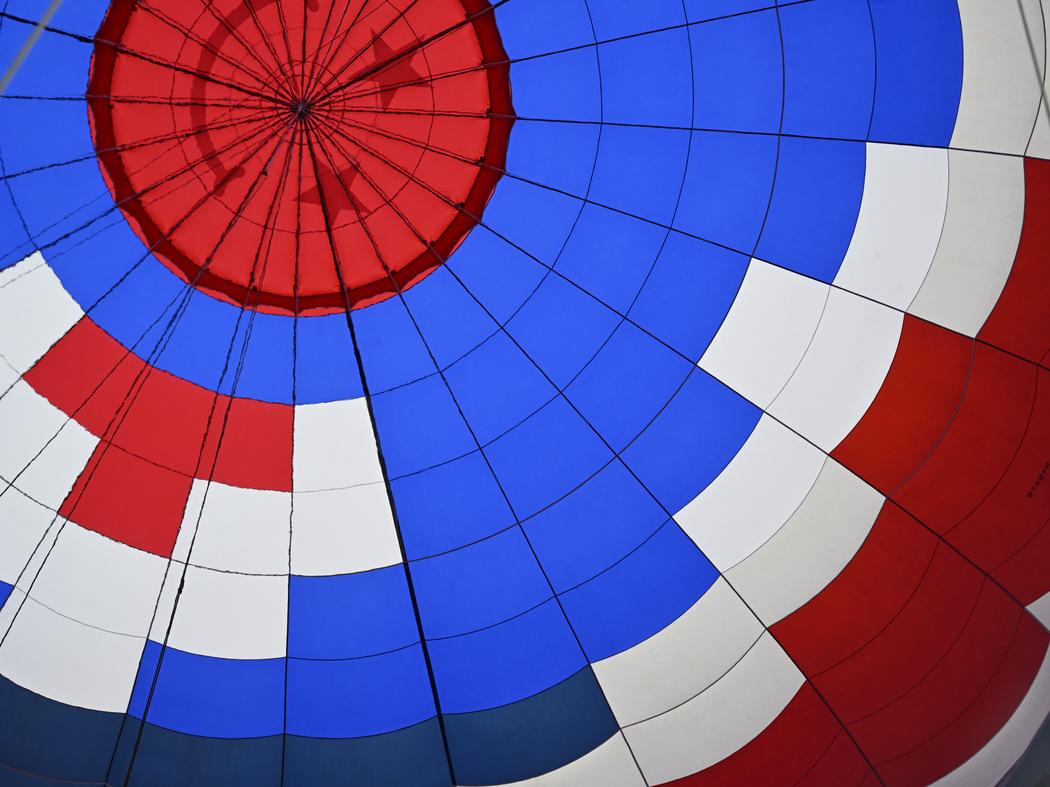 Tor N. Johnson | Hot Air Geometry
When shooting, do you plan a narrative ahead of time or allow the environment and lighting to guide you spontaneously?
Out in the field, I absolutely let the lighting guide me spontaneously. My goal is to capture the beauty in the moment. I carry the camera while exploring and shoot as the opportunity provides while also reading the historical placards of what I’m seeing.
 Tor N. Johnson | Lantern Festival
How do you balance your work in the technology sector with your creative practice? Do they influence each other in unexpected ways?
I don’t see these as opposites or even all that different. There’s an old World War 2 pilot’s adage about aircraft: if it looks good, it probably flies good. There is an aesthetic to good engineering, and an order to good design. On a conceptual level, creative and technology are just two sides of the same coin.
On a mundane level, it doesn’t hurt to have the technical background to understand resolution and geometry to know how some of the more technical techniques work and how to output images to different display mediums.
Leave a Reply
You must be logged in to post a comment.