
Zhe Yang
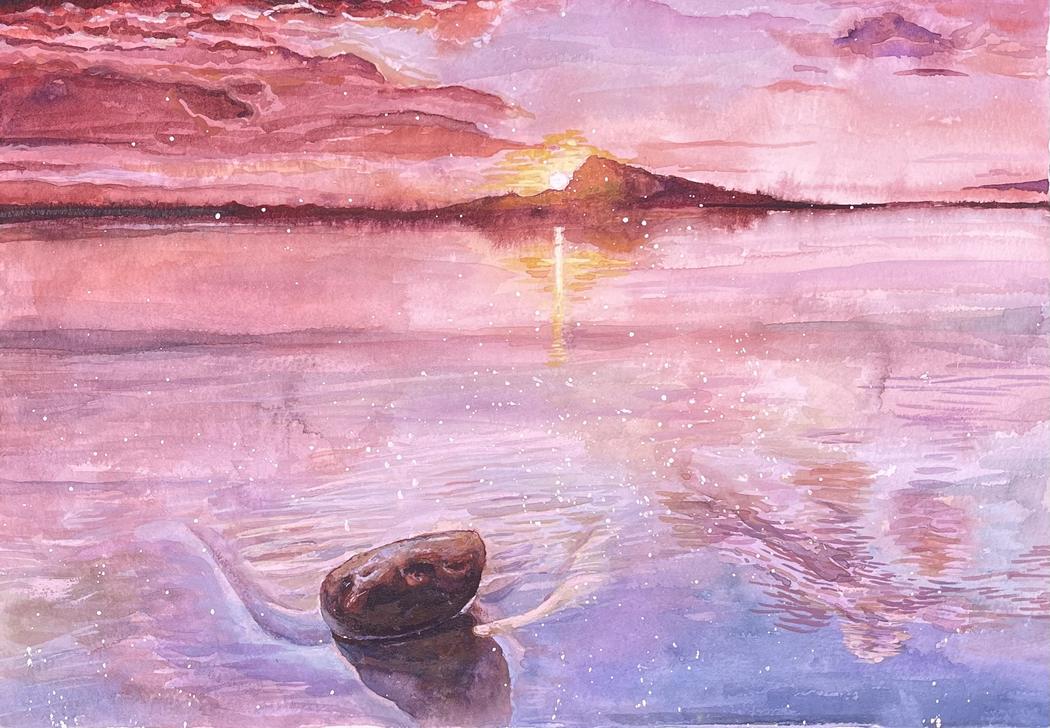 Zhe Yang | Colorful Landscape
Your works demonstrate a balance between Abstractism, Surrealism, and Hyperrealism. How do these different visual languages coexist in your artistic practice?
Artistic creation itself is diverse, and I have been trying various artistic expression techniques. The infiltration of emotion injects fresh vitality into artworks. Whether it’s the minimalist thinking of Abstractism, the specific forms depicted by Surrealism, or the microscopic expression methods of Hyperrealism, these ways of conveying artistic emotions are not contradictory. They are all means to serve the main theme of the picture. In artistic practice, they each perform their roles, helping to better present the content of the picture to the audience.
You often explore themes such as existence, self-consciousness, and the fragility of human life. How did these thoughts first appear in your works?
My works do not have strong criticality; instead, I focus more on expressing and thinking about people’s own feelings. Art itself is an exploration that serves human inner emotions. Human self-consciousness injects a soul into art. Works without emotional infiltration are lifeless, which is what I have always pursued to show in my works. I pay more attention to the sensitive and delicate side of human life, which is a subconscious rooted deep in my memory. Looking at the entire world, humans in the long river of history are like a speck of dust. The birth and death of life are just a matter of a thought. What role do humans play? What function do they perform? What position do they occupy? This was the initial idea behind my creation. In subsequent creations, I am committed to exploring human existence, development, self-consciousness, and life emotions, integrating these feelings into my works to provoke people’s thinking and thus generate resonance.
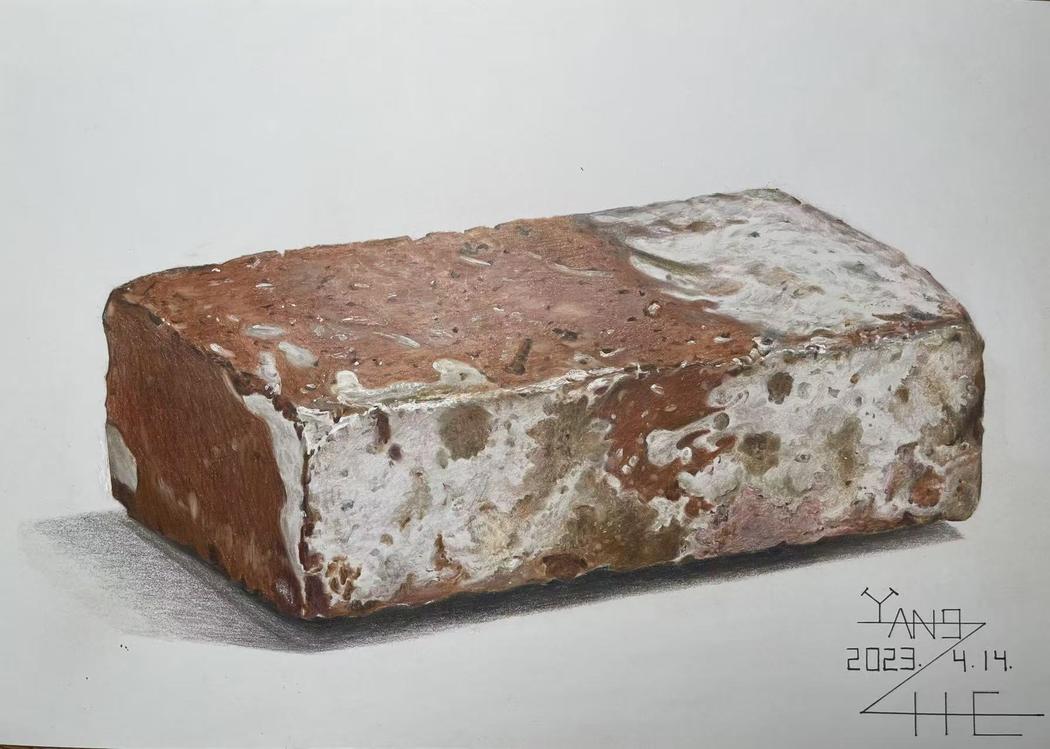 Zhe Yang | A Corner Of Life
In your self-description, you mentioned ‘the existential crisis brought by the dissolution of the body.’ Could you elaborate on this view from both a personal and artistic perspective?
The Nightmare series of works is a series of paintings that explore the state of life and spiritual consciousness. From the moment of birth, humans actually have to face death. At different periods, the perspective on death varies because humans are complex emotional carriers, and various consciousnesses often float in the mind. However, in reality, most fantasies seem unattainable. Only in a half-dreaming, half-awake state does the soul and body seem to find a balance where they no longer compete. In this state, we start to think: How do the physical body and spirit coexist? How profound is the impact of the existential crisis brought by the dissolution of the body on spiritual consciousness? How does this impact lead us to survive in real life? These are all Integrate into my creative thinking, and I continuously present them to the audience one by one.
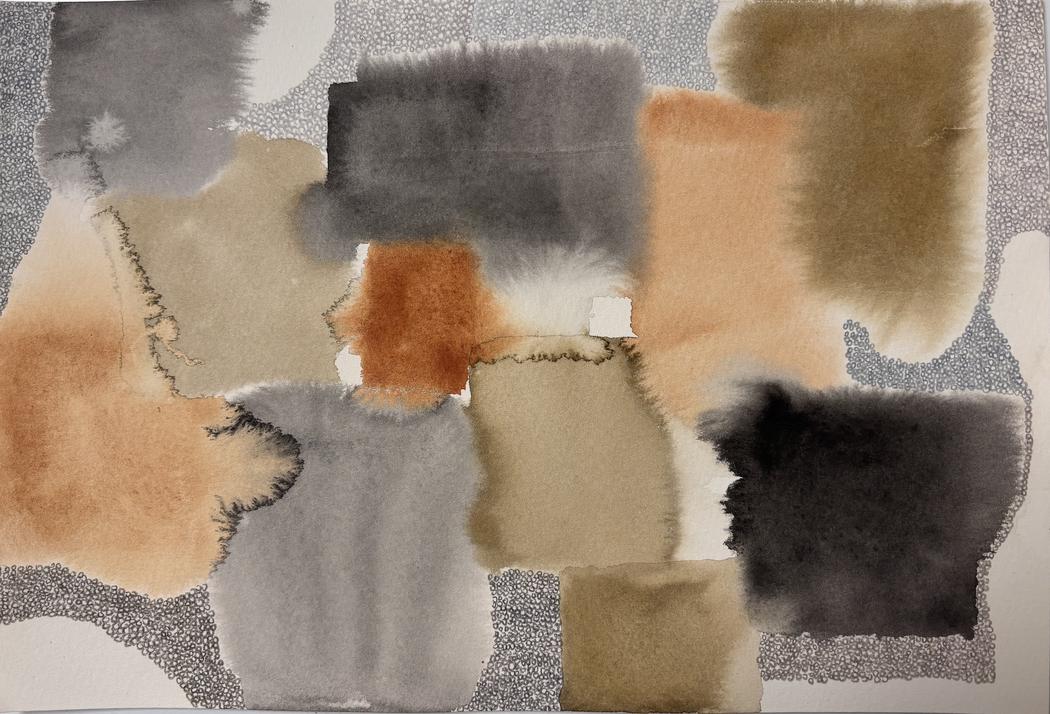 Zhe Yang | A Discussion About Order
How do dreams and subconscious imagery influence your creative process?
Emotions that cannot be immediately realized in reality tend to attach themselves to the subconscious, entering dreams. This is the source of complex emotions in my creations. Some fleeting scenes from daytime interact with my rational thoughts in dreams, transforming into memory fragments capable of conveying emotion. In the creative process, I organize these conscious fragments from dreams, reassemble them, and consider composition, color, and form settings, thereby completing artistic creation.
Can you describe your approach to handling color and composition, especially in the transition between abstract and narrative works?
All choices of color and composition serve the overall expressive needs of the Scene. Color is full of vitality; various color combinations convey completely different emotions—passionate and unrestrained, calm and rational, or elegant and gentle—all products of color combinations. My abstract work, ‘A Discussion about Order,’ uses a minimal palette of only three to four colors. I pursue the structural recombination of pure colors to bring a sense of visual order, exploring the order and decorative qualities derived from the combination of basic painting elements like points, lines, and planes. In my narrative series ‘Nightmare,’ I adopt the expressive habits of Pointillism, relying on multiple color combinations and collisions to To set off; the thematic idea, creating a cluttered and uneasy Scene effect and enhancing the decorative quality of the painting.
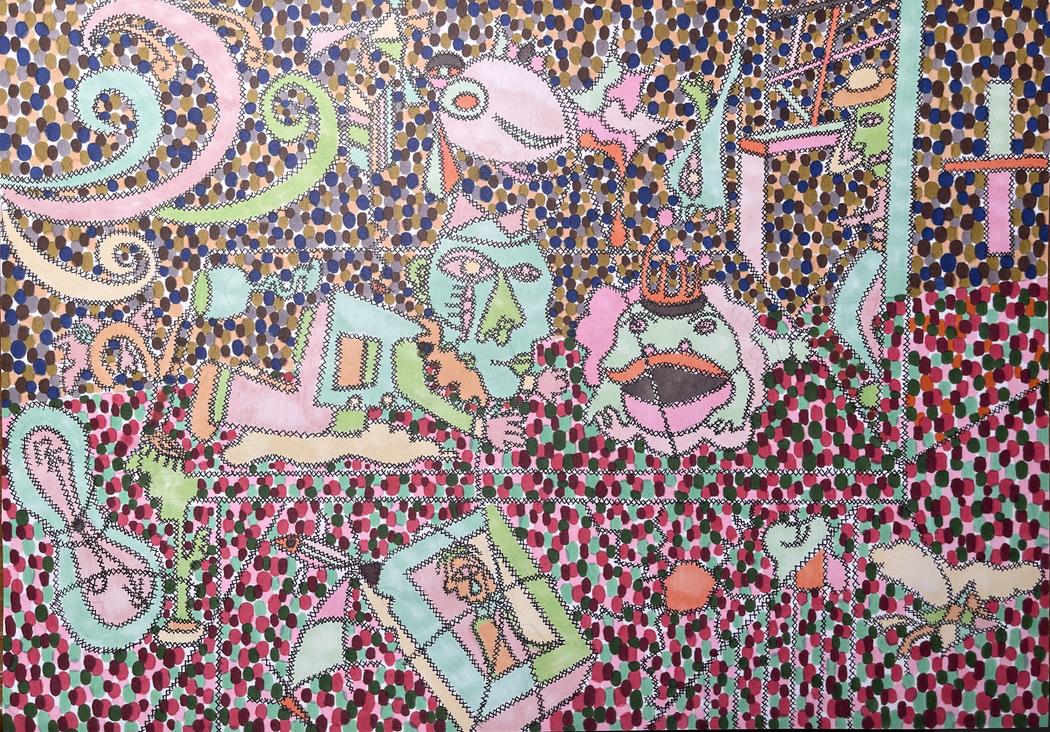 Zhe Yang | Nightmare 1 – Transformation Plan
How has your background in sculpture and craftsmanship influenced your flat (2D) creations?
I majored in Decorative Sculpture, having been exposed to many types of creative techniques such as wood carving, ceramic art, metal craftsmanship, and clay modeling. Learning these techniques has given me more creative insights. I tend to integrate decorative effects into my painting creations, thinking three-dimensionally about the artistic tension brought by the creation itself. Combining the rich textural sensations, order, and decorative space expressions gained from studying sculpture and metal craftsmanship, all of this continuously enriches my habits in flat creation, allowing me to express unique inner emotions more freely and skillfully.
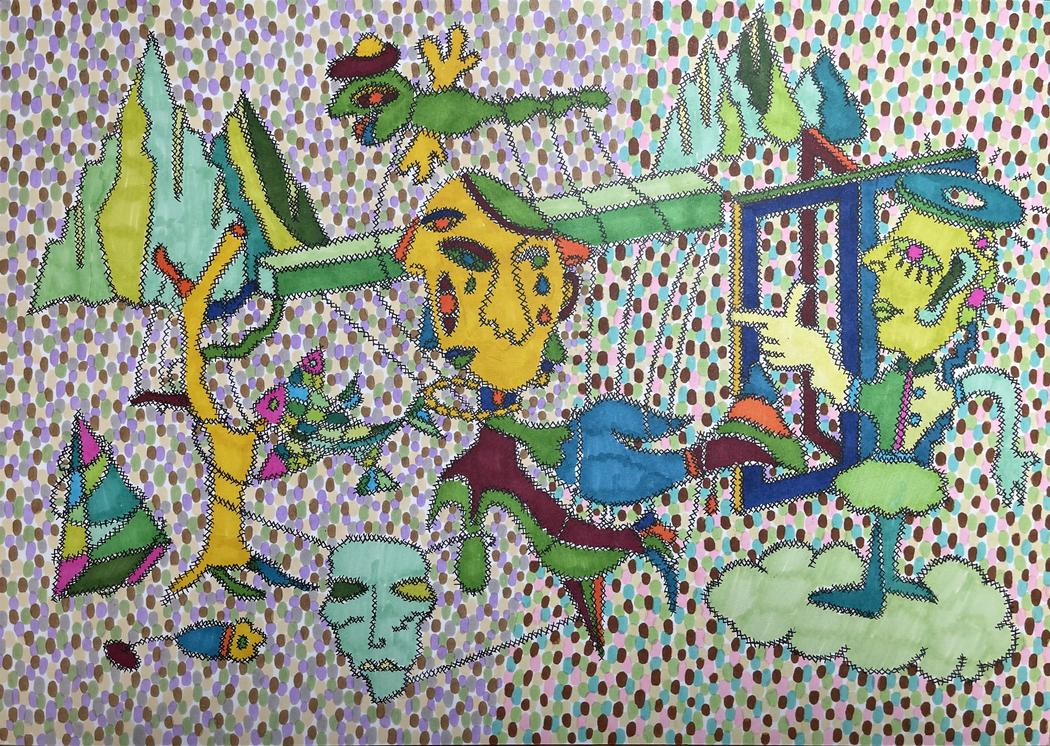 Zhe Yang | Nightmare 2 – Curse
The textures and patterns in your paintings are full of vitality, as if breathing. What role does materiality play in emotional transmission?
Materiality in emotional transmission is more like a medium and a catalyst. All emotional transmission in paintings is based on the utilization of materiality. Just as a texture, a color, a form, or other Scene elements are formed through materiality, achieving a specific combination. These combinations together create a distinctive formal sense, sending signals collectively to convey the visual intention of the entire Scene, thereby transmitting tangible and moving emotions.

Leave a Reply
You must be logged in to post a comment.