
Anastasia Yunkina
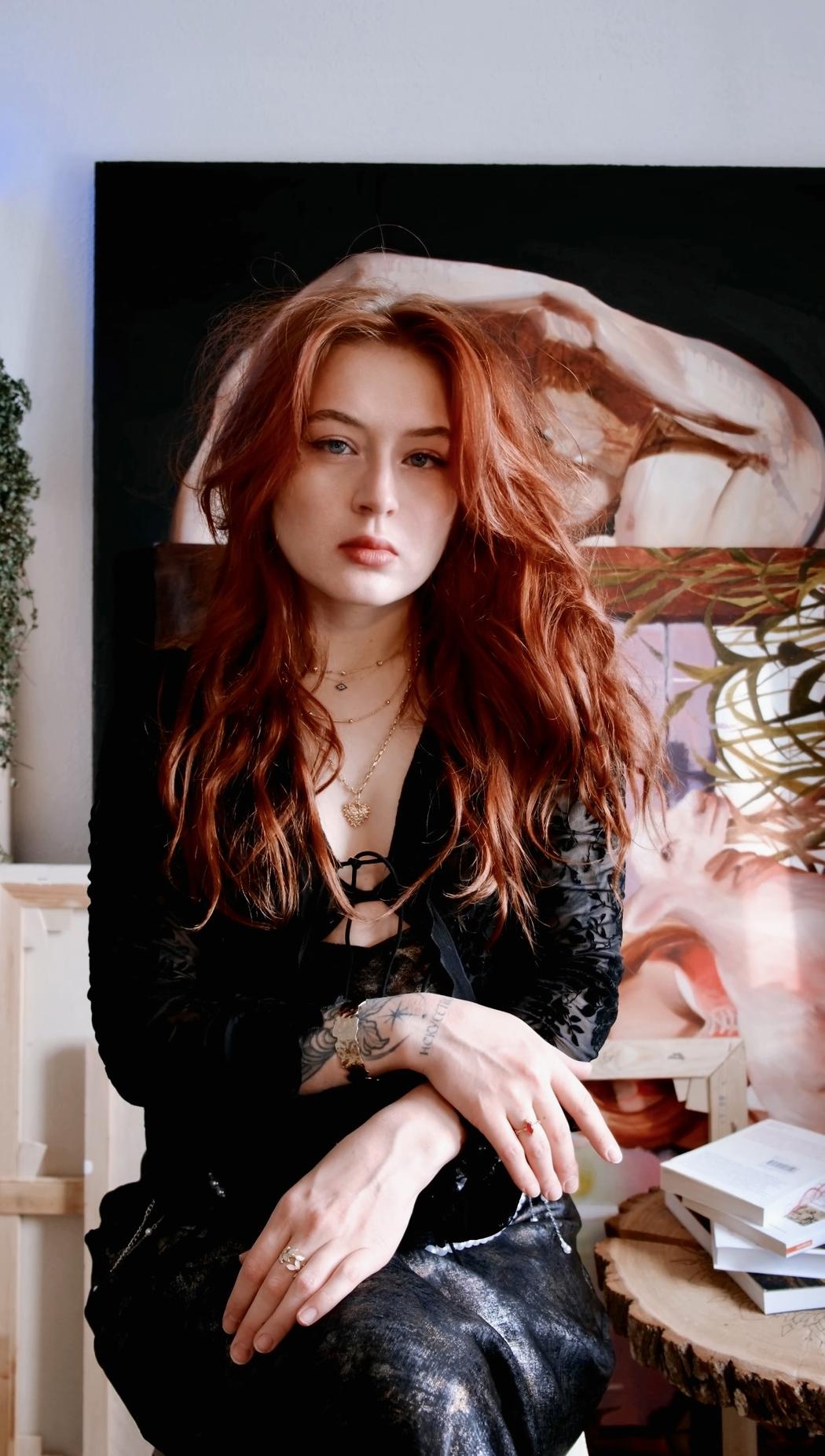
Your recent series is dedicated to childhood, adolescence, and youth. Which emotions or memories were the most difficult to relive during the process?
The most difficult for me was reliving the period of youth. It is a time of inner conflict—when you want to resist everything, yet you still don’t fully understand yourself. During this period, vulnerability is felt especially strongly, when any external evaluation is perceived painfully and almost as defining. The emotions of youth turned out to be heavier than childhood memories because they are sharper and more conscious. That is why this painting and the period associated with it were the most difficult to revisit during the process.
While working on the series, I had to return to these states and moments that in everyday life have already been suppressed or reinterpreted. This made the process not only creative but also, in a sense, therapeutic.
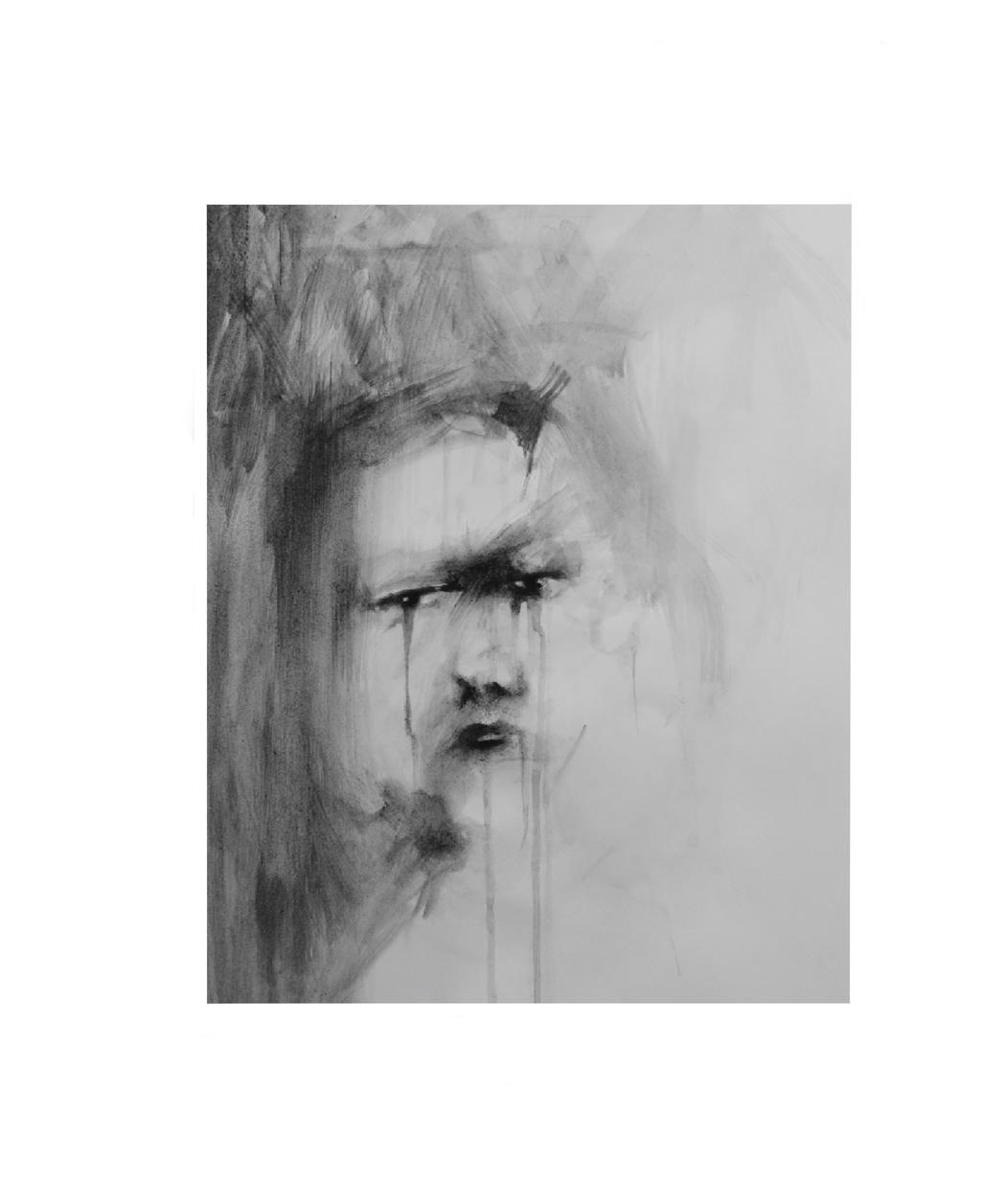 Anastasia Yunkina | Adolescence | 2025
You started drawing at 17, and after a break fully returned to painting. How did this experience influence your artistic language?
Before fully immersing myself in painting, I worked in artistic tattooing for 8 years. This experience had a strong impact on my artistic language. Tattooing taught me to make decisions more quickly and trust my intuition, since there is no opportunity for endless corrections.
My painting became more structured and confident. I began to work more with composition, complicate the form of the work, and think more about how the image is perceived by the viewer. This resulted in a bolder and more concise visual language.
Meeting a large number of people also helped me better understand human nature, which I later used as a central theme in my work.
Your works appear deeply psychological and introspective. What role does personal experience play in your creative process?
Personal experience is the foundation of my work. I start from my own emotions and transform them into visual images when developing a new series. For me, it is important not only to capture an emotion but to understand it—its nature and its cause.
This analytical process becomes part of the preparation and directly affects the final result. In a way, each series is an attempt to structure internal experience and visualize it on canvas.
I believe that without a well-thought-out concept, it is impossible to create something truly meaningful—something that invites exploration, recognition, or contrast. That is why I carefully collect my own emotions and feelings and try to express them as clearly and precisely as possible.
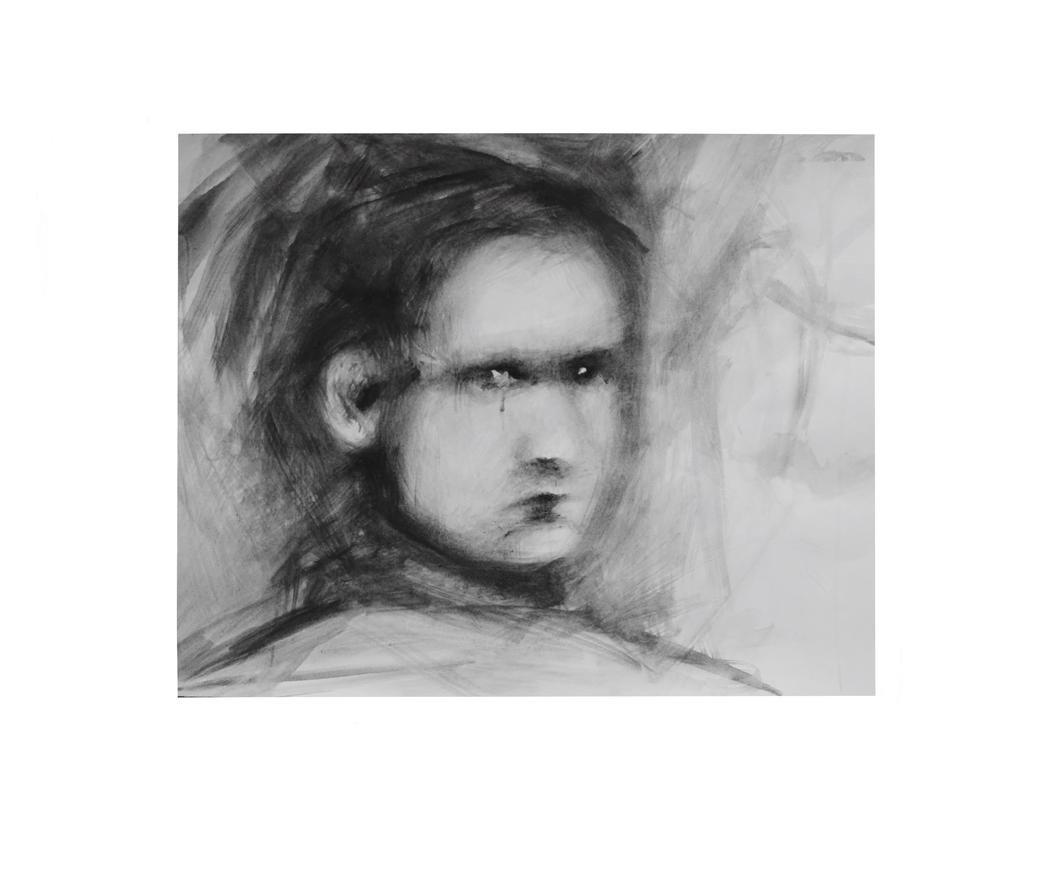 Anastasia Yunkina | Childhood | 2025
Why did you choose charcoal, water, and dry brush for this series? What do these materials allow you to express?
The series “Three Ages” was created as a memory of a long-lost and forgotten world of childhood, filled with nostalgia and warm recollections. Charcoal, water, and dry brush create a sense of sharpness and the fleeting nature of time, which is sometimes difficult to keep up with, while water adds fluidity and blur.
This material was new to me—just like everything we experience in childhood—and I believe it perfectly reflected my memories. Together, they help convey the fragility of memory.
It was important for me that the materials work on a sensory level, not only on a formal one. Their behavior on paper is largely unpredictable, which adds a sense of vitality and naturalness. This approach allows me to avoid excessive precision and preserve spontaneity, which is close to the nature of memory.
Many of your portraits include blur and fragmentation. Is this related to memory, identity, or something else?
Yes, this is directly connected to the theme of memory. Memories are rarely complete, so I express this through form—breaks, drips, and the absence of clear boundaries.
It is important for me to preserve a sense of openness, allowing the viewer space for their own interpretation. Fragmentation here is not a flaw but a method of engagement—the viewer completes the image internally. This makes the perception more personal and subjective.
I am particularly drawn to combining textured and graphic elements with very soft and fluid transitions, as seen in the “Three Ages” series, where paint flows sit alongside rough brushstrokes.
This reflects my personal sensations and memories. In my life, they are always two opposing facets forming a single whole, and I aimed to convey that same feeling on paper.
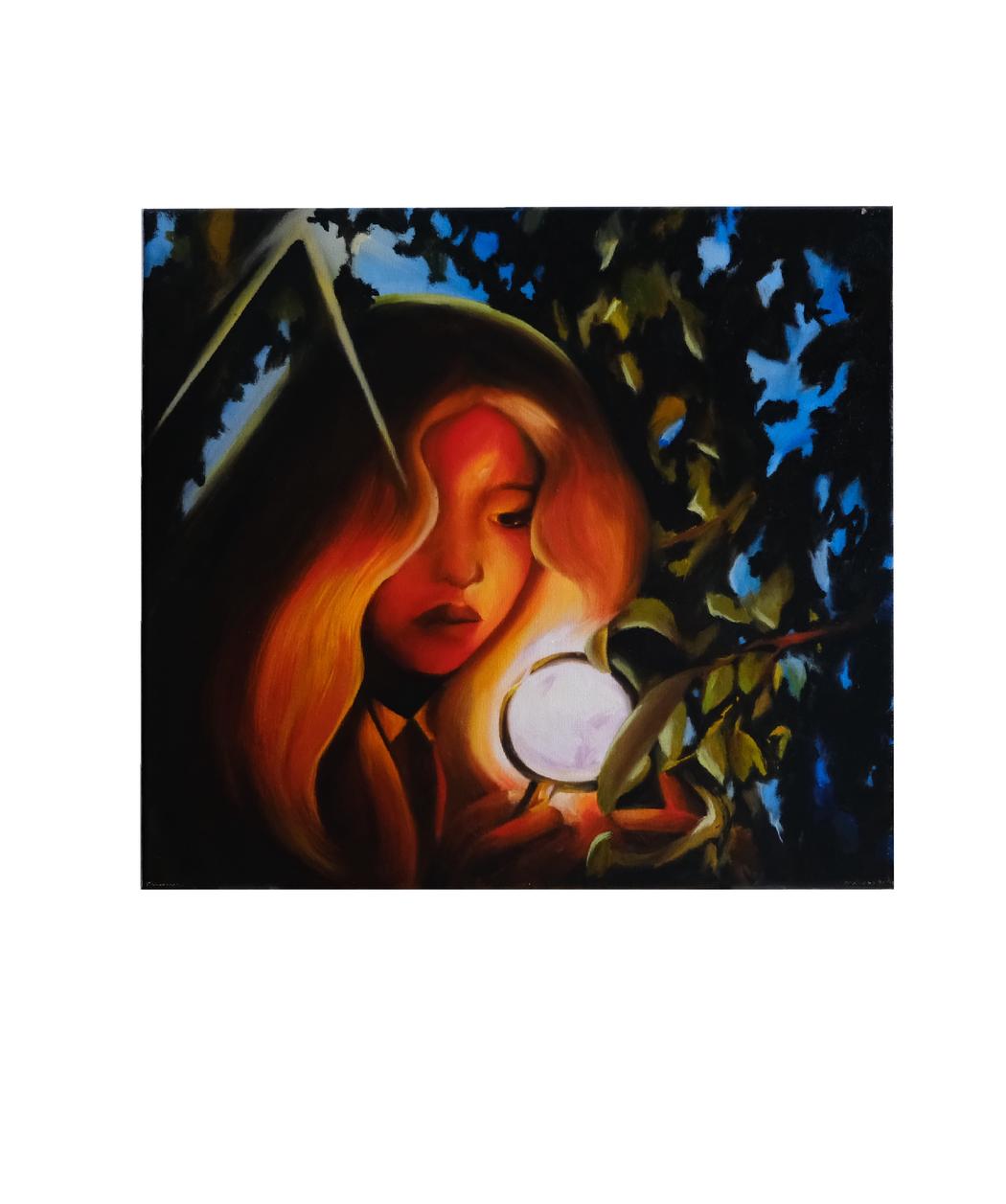 Anastasia Yunkina | Quaesitor | 2025
How do you convey emotion in portraiture without relying on detailed rendering?
I deliberately avoid detailed rendering in order to preserve the feeling of a living emotion. The drawing therefore cannot be perfectly refined or constructed. It will contain roughness, inaccuracies, blurred outlines—everything that corresponds to the emotional state a person experiences.
Emotions are always a complex interweaving of many elements, and just like in life, they are difficult to separate. A freer form allows me to convey a state rather than a specific expression.
For me, this contains a greater sense of honesty, because emotions are rarely clear or complete. In portraiture, it is more important for me to convey a state, so I express emotion through form and texture rather than detailed depiction.
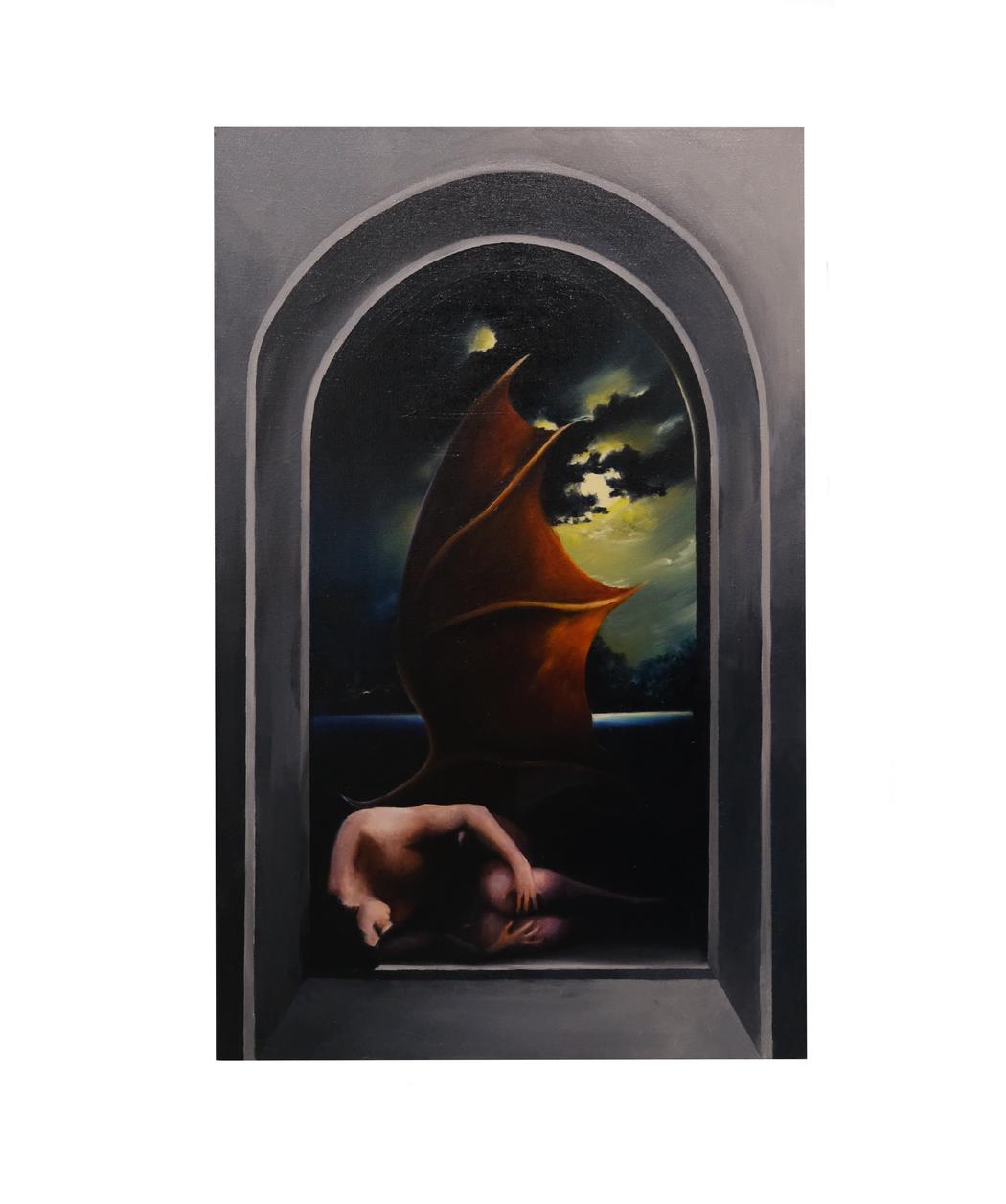 Anastasia Yunkina | Renascitur | 2025
What would you like the viewer to feel or reflect upon when engaging with your work?
It is important for me to create a point of connection where the viewer can relate what they see to their own experience. I do not aim to provide a definitive interpretation; rather, I prefer to leave space for a personal response.
In this dialogue between the artwork and the viewer lies the main value for me. I would like the viewer, when looking at any of my works, to immediately understand what it is about and find a reflection of themselves.
These emotions and sensations may vary, but what matters most to me is to be understood and heard—to find my viewer, whether they share my values or reject them, but never remain indifferent. I want the viewer to recognize themselves in these works and not remain unmoved. Any reaction is important to me—engagement, disagreement, even rejection—but not indifference.
Leave a Reply
You must be logged in to post a comment.