
Duke Windsor
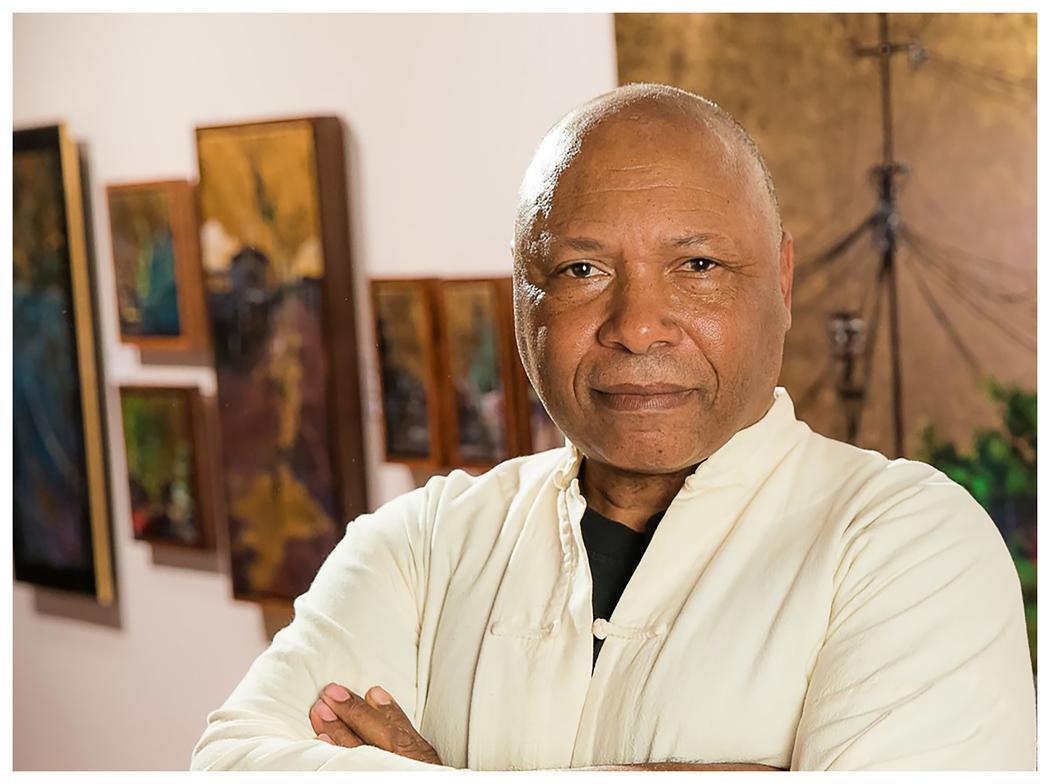
Your background spans the Marine Corps, museum exhibition design, opera performance, martial arts, and visual art. How have these seemingly different disciplines shaped your approach to painting?
My approach to painting is deeply informed by the breadth of my lived experience, ranging from my service as a Marine Corps combat illustrator to my work in museum exhibition design, my training as an opera performer, and my long-term practice in martial arts. Each discipline has contributed to foundational principles that manifest in my visual art in distinct but interrelated ways.
My time in the U.S. Marine Corps as a combat illustrator trained me to observe quickly, synthesize information under pressure, and distill complex scenes into decisive visual forms. That background sharpened my sense of composition and narrative clarity, both of which remain central to my cityscapes and figurative work. The military environment also instilled discipline and work ethic that supports the rigor of my studio practice.
Years of designing and preparing exhibitions in major museums strengthened my understanding of how artwork exists in space, how viewers move, perceive, and engage with visual information. This curatorial sensibility influences how I construct pictorial space and how I integrate gold leaf to guide the viewer’s eye. Exhibition design taught me to think not only about making an artwork, but about orchestrating an experience.
My training and performance experience in opera cultivated my sensitivity to rhythm, tone, and emotional pacing. Painting, much like music, operates through movement and resonance, qualities I explore through brushwork, layering, and the luminous counterpoint created by gold leaf. The performance of opera also informs the emotional register of my figurative and narrative works.
My long-term practice in martial arts contributes a sense of balance, intentionality, and physical awareness to my artmaking. Martial arts emphasize economy of motion and clarity of purpose, principles that parallel the deliberate gestures in my painting process. The discipline also reinforces patience, repetition, and mastery over foundational forms.
Together, these experiences shape a practice that is simultaneously disciplined and expressive, structured yet intuitive. They inform the way I construct images, how I use light and material, and how I frame ordinary subjects with a sense of reverence. My work becomes a convergence point where technical rigor, performative sensitivity, spatial intelligence, and embodied discipline meet on the canvas.
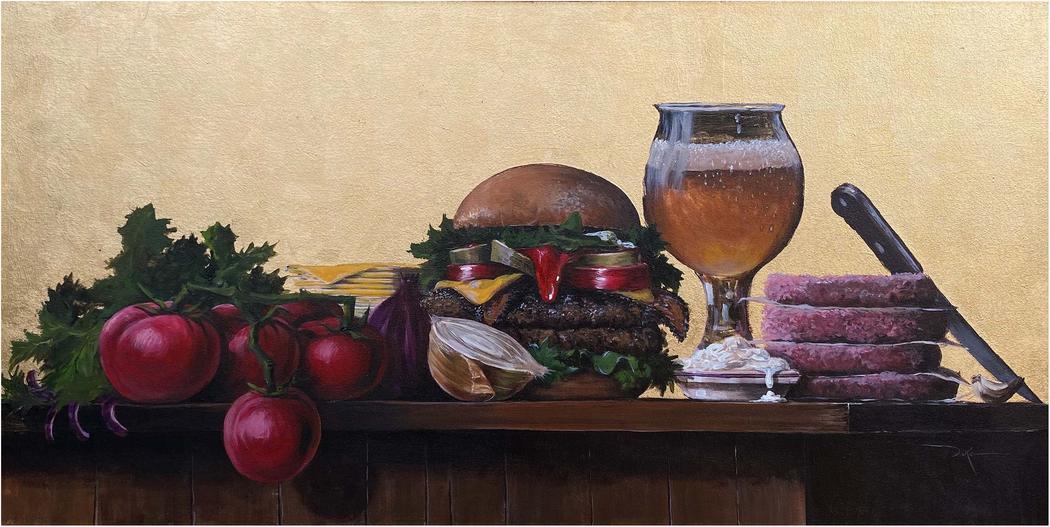 Duke Windsor | An American Icon
The hamburger is both ordinary and iconic. What drew you to this subject as the central focus of your series Nothing’s Impossible?
Artists such as Warhol, Van Dyck, Van Gogh, Louise Moillon, and Cézanne all explored the still-life tradition, using food to reflect the cultural values of their time. From ancient Egyptian carvings of crops to the Dutch masters’ hyper-realistic fruit, food imagery has long served as a window into everyday life.
A visit to a museum exhibition of Russian icons, with their luminous gilded surfaces, deeply influenced my work. Although gilding is often viewed as merely decorative, I draw on these techniques to evoke a sense of reverence and radiance in my paintings.
My focus is not on isolating ingredients but on capturing the sensory anticipation of a first bite. Can paint provoke desire, allowing viewers to “taste” and “smell” with their eyes? My intention is to create a visual experience that stirs the senses, from my palette to the viewer’s imagination.
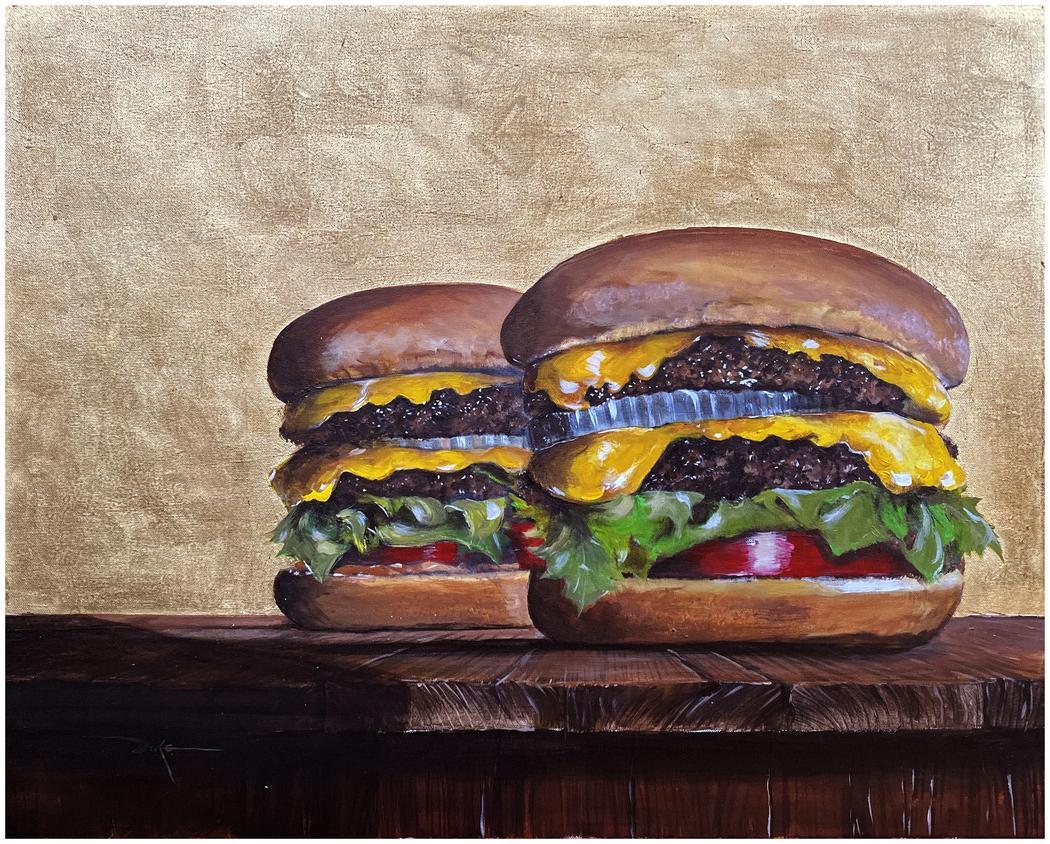 Duke Windsor | SEEING DOUBLE-DOUBLE
You elevate a fast-food staple through the use of gold leaf, referencing Klimt and Russian iconography. What does this transformation say about contemporary culture and values?
I’ve been working on an essay about this. Here’s from my notes on what I’ve been working on to approach this question:
Transforming a fast-food hamburger, a symbol of convenience, mass production, and American consumer culture, into a gilded, icon-like object fundamentally reframes how I look at everyday objects. When I elevate a burger using gold leaf and visual references to Klimt and Russian iconography, I find that several cultural conversations begin to emerge.
I use gold leaf because it has historically signaled the divine, the untouchable, and the spiritually significant. By applying it to a fast-food item, I intentionally create a tension: What does it mean when something disposable is treated like something sacred?
This transformation reflects my belief that contemporary culture often places reverence on consumption itself. In a society where brand loyalty, convenience, and indulgence are celebrated, the humble burger becomes, in my hands, a modern-day “icon.”
My use of gold leaf also underscores how consumer culture has become a kind of devotion. Fast-food chains function as global institutions with their own rituals, symbols, and shared meanings. By presenting the burger as a precious object, I invite viewers, and myself, to consider: Have consumer goods become our new symbols of identity? What do we worship today, transcendence or convenience?
By drawing on the visual language of religious icons, I highlight how advertising and branding often mimic the aesthetic power of spiritual imagery.
Referencing Klimt and classical iconography places my work in dialogue with artistic traditions known for their opulence, craftsmanship, and spiritual weight. Placing a burger in that lineage challenges the traditional hierarchies that define artistic worth.
It forces me to ask: Why do we revere some images and dismiss others?
By merging fine-art techniques with everyday subject matter, I push against the boundary between “high” and “low” culture and question who gets to decide what is worthy of artistic elevation.
Gold has always symbolized purity, wealth, and permanence, qualities that starkly contrast with the fast, disposable nature of fast food. This juxtaposition allows me to comment on how quickly we consume, how little we value durability, and how often we prioritize immediate gratification.
Through this lens, the artwork becomes a mirror of contemporary values: shiny, enticing, and fleeting.
By gilding a burger, I also reconnect with the longstanding tradition of food as symbolic subject matter. Historically, still life conveyed abundance, mortality, or spirituality. My work updates that tradition for the 21st century, reminding viewers that our “everyday objects” reveal just as much about us as grapes and goblets once did for the Dutch masters.
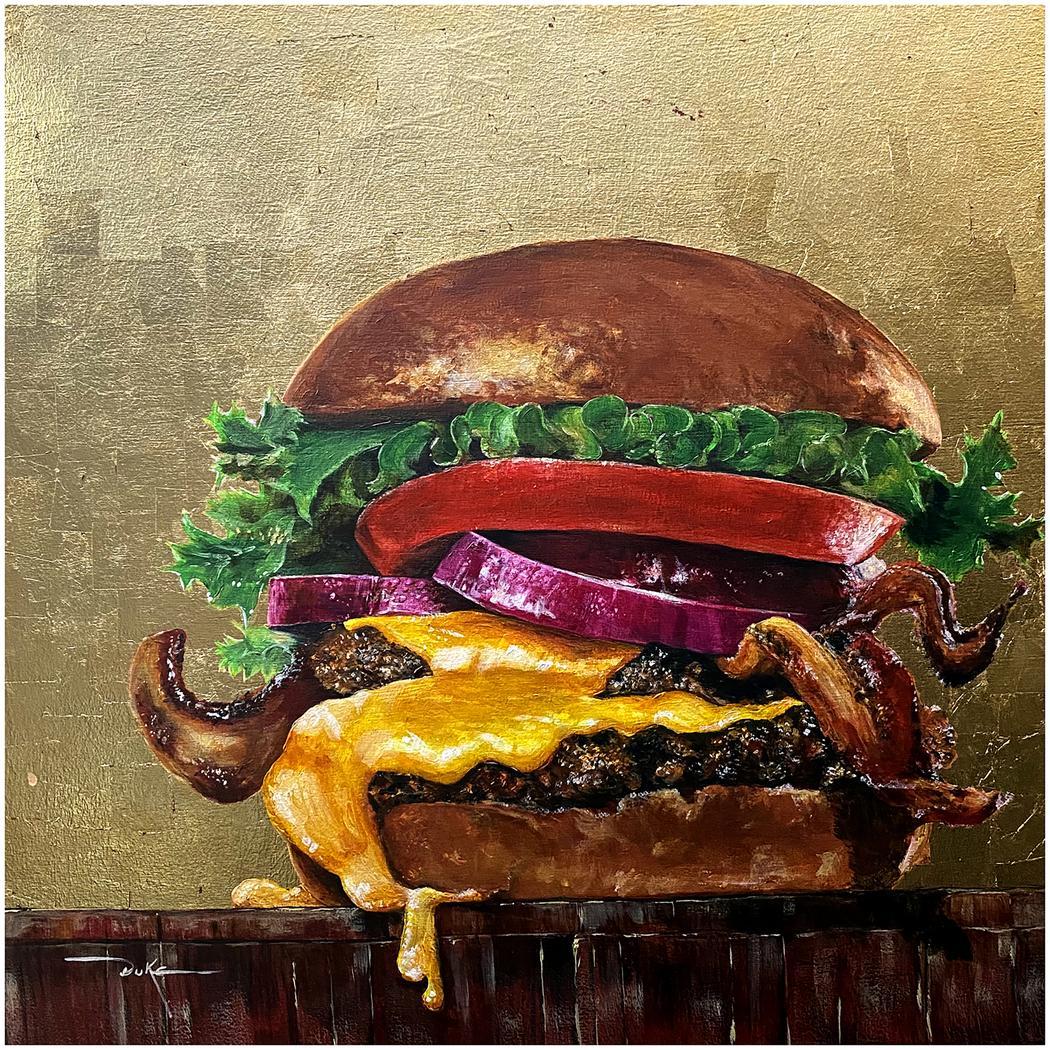 Duke Windsor | Lets Eat
Your paintings feel both reverent and playful. How do you balance humor with a sense of grandeur in these compositions?
The balance between reverence and playfulness in my work comes from my interest in elevating the ordinary without stripping it of humanity. I’m drawn to subjects, like burgers, alleys, everyday objects, or working-class scenes, that are grounded, familiar, even humble. By pairing these motifs with gold leaf and a sense of dramatic lighting, I frame them with the visual language of grandeur, almost as if they’re receiving the same treatment traditionally reserved for sacred or historical subjects.
The humor comes from the contrast: when something as everyday as a cheeseburger or a cluttered alley is given the glow and solemnity of a Renaissance altarpiece, the viewer can’t help but smile. That moment of recognition, ‘Why does this humble thing feel so exalted?’, is part of the spark I’m after. The humor isn’t parody; it’s an invitation. It encourages the viewer to engage, to look closer, to recognize beauty in places they may have overlooked.
The sense of grandeur emerges from my technique. The gold leaf carries an inherent history of reverence; it immediately shifts the visual weight of the composition. My layering process, attention to light, and impressionistic handling of form all work together to create depth and atmosphere. In this way, the composition holds a certain dignity, no matter how playful the subject might be.
For me, the real art lies in holding both tones at once, allowing humor to coexist with a sincere appreciation for the subject. I’m not mocking the everyday; I’m honoring it. The playfulness keeps the work accessible, while the luminosity and compositional rigor give it emotional and aesthetic resonance.
Food has long been a subject in art history – from Dutch masters to Warhol. Where do you see your work positioned within that tradition?
Food imagery has a long and complex lineage, from the symbolic opulence of Dutch Golden Age still life to the ironic mass-culture commentary of Warhol’s Pop Art. My own food paintings, particularly my burger still life, occupy a space that draws from both traditions while recontextualizing them through materials and contemporary cultural lenses.
Like the Dutch masters, I approach food as an object worthy of contemplation. Their still life used meticulous detail, dramatic lighting, and symbolic materiality to elevate everyday items into meditations on abundance, mortality, and beauty. In a similar way, I use controlled lighting, careful compositional structure, and layered acrylic painting to give my subjects, often humble, familiar foods, a heightened presence.
The key difference is that instead of referencing vanitas symbolism, I position contemporary food icons, like the cheeseburger, as artifacts of modern desire and culture. The act of elevating such a commonplace object disrupts expectations and invites the viewer to consider its aesthetic and cultural weight.
My work also speaks to the Pop tradition, particularly Warhol, whose depictions of soup cans and hamburgers treated consumer items as emblems of American identity. Where Warhol approached these objects with an ironic flatness, I bring them back into the realm of the painterly and the luminous. By rendering mass-produced food with impressionistic brushwork and gold leaf, I blend the sacred and the commercial.
In doing so, I’m acknowledging Pop Art’s legacy while resisting its detachment. My intention is to let the viewer experience delight, humor, and reflection, not merely commentary on mass culture.
The incorporation of gold leaf is where my work diverges most sharply from earlier traditions. Borrowed from religious icon painting and illuminated manuscripts, gold leaf creates a sense of reverence and grandeur. When applied to food imagery, it produces a deliberate tension: the sacred and the mundane collide.
This tension positions my paintings in a hybrid space, one where the visual rhetoric of the sacred is applied to the symbols of everyday American life.
So, within art history, my food paintings stand at a crossroads:
– They carry forward the Dutch masters’ sense of still-life drama and reverence.
– They engage in the Pop Art exploration of consumer culture.
– They use gold leaf to introduce a contemporary, almost liturgical sense of importance.
The result is a body of work that both honors and gently disrupts the tradition of food painting, recasting familiar subjects in a way that is humorous, reflective, and visually elevated.
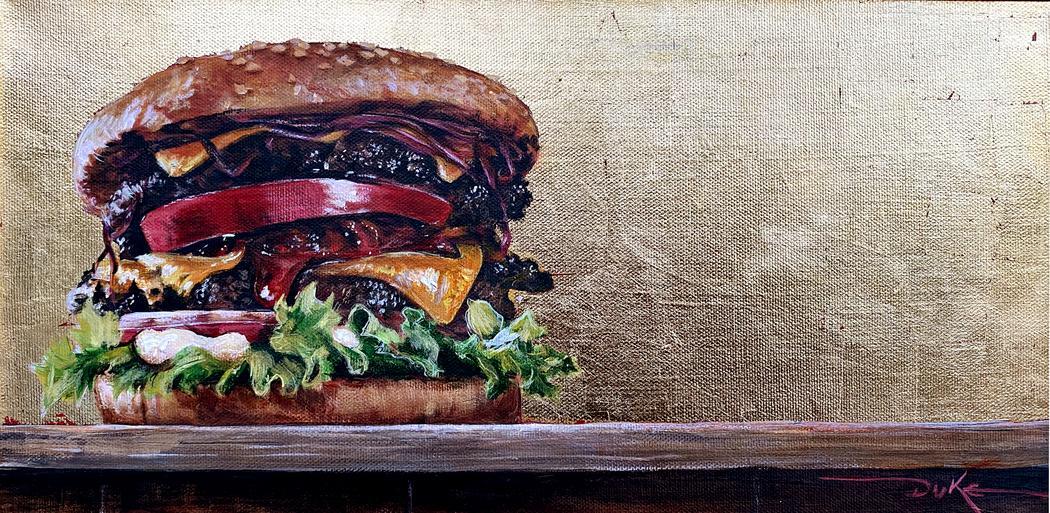 Duke Windsor | Nothings Impossible
Many of your burgers are depicted at the moment just before the first bite. Why is that moment of anticipation so important to you?
Many of my burgers are portrayed now just before the first bite, and that instant of anticipation carries deep meaning for me. It’s a charged moment, brief, intimate, and universal. Before the burger is consumed, it exists in a perfect state of promise. It represents desire, hunger, nostalgia, temptation, and the pure potential of satisfaction. Once the bite is taken, that perfection disappears. But in that suspended second beforehand, everything is still possible.
I’m fascinated by how this moment mirrors the broader human experience. We often find ourselves caught between wanting and having, between longing and fulfillment. That tension reveals something essential about contemporary culture: our relationship to consumption is not just physical, it’s psychological, emotional, even spiritual. By freezing the burger at the brink of its transformation, I’m highlighting the ritual, the impulse, and the reverence we attach to everyday indulgence.
On a visual level, I treat that pre-bite moment as a contemporary still life, not yet altered, not yet “ruined” by action. It allows me to elevate a familiar object to the level of contemplation and symbolism. It becomes a standing for desire itself. The gold leaf amplifies this, turning a simple burger into something iconic, sacred, and almost untouchable. It reframes hunger, not just for food, but for comfort, identity, pleasure, and belonging.
By focusing on this exact moment of anticipation, I’m inviting the viewer to pause with me, right there at the edge of satisfaction, and consider what we’re hungry for.
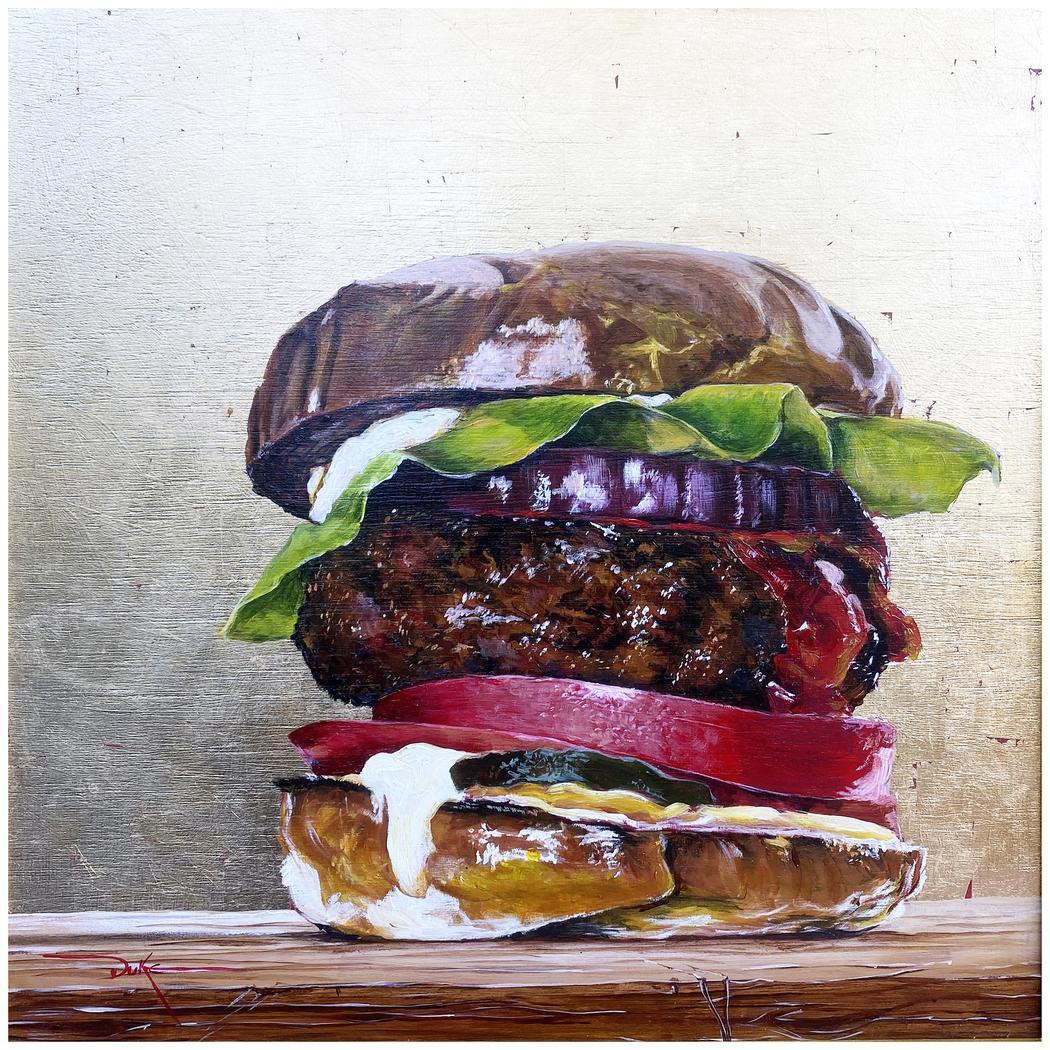 Duke Windsor | WHERE S THE BEEF
If viewers walk away from your exhibition remembering just one thing, what would you hope it is?
If viewers walk away from my exhibition remembering just one thing, I hope it’s the realization that even the most ordinary objects in our lives carry layers of meaning, cultural, emotional, and spiritual, when we truly stop to see them. I want them to understand that a simple hamburger, something fast and disposable, can become a mirror reflecting our desires, our habits, our values, and the things we quietly worship without noticing.
If they pause later, maybe in a restaurant, maybe in their own kitchen, and see an everyday object differently, with a little more awareness or reverence, then my work has done its job. I hope they remember that beauty and meaning aren’t reserved for what society labels “important.” They’re already embedded in the world around us. My paintings simply hold up the gold leaf so the light can catch it.
Leave a Reply
You must be logged in to post a comment.