Jeanne Bertrand-Faure
 Jeanne Bertrand-Faure | Crowd
Your practice combines collage, photography, and fragments of text. What first attracted you to working with this intersection of image and language?
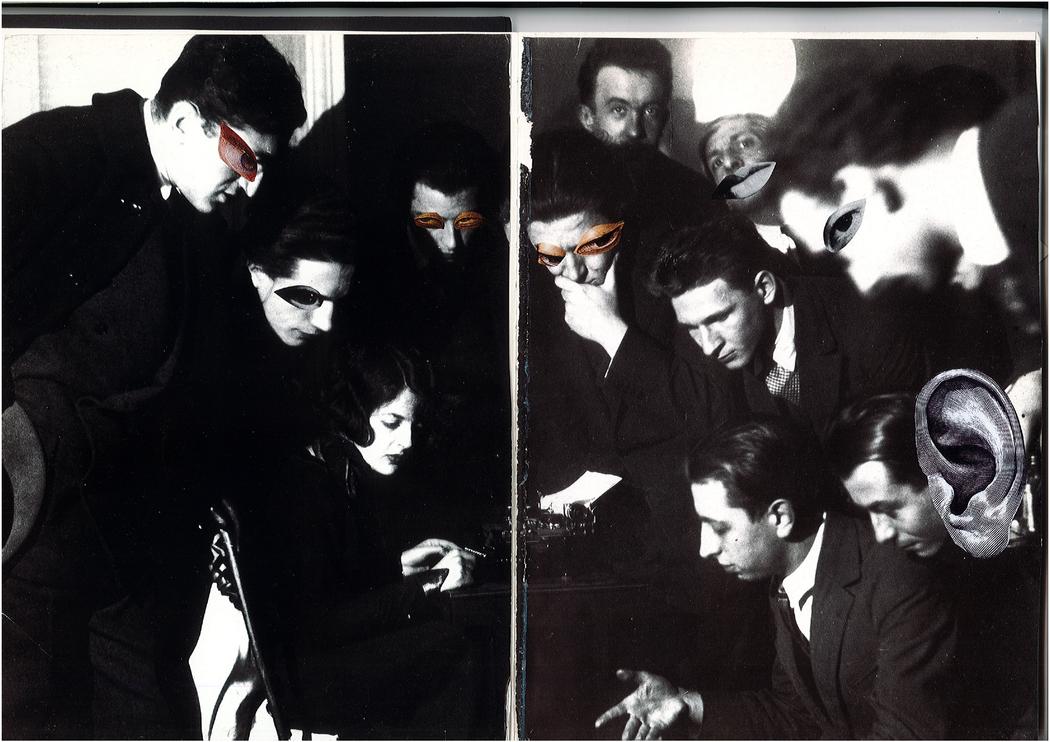
I have always been a writer, even before I engaged in visual arts. Sometimes I write automatically and using images after helps me make sense of the writings I have produced, sometimes it is the other way around. I feel like my practice is a representation of the way my mind works, as an aggregation of images, memories, feelings, poetry. Creating helps me put together all these scraps and create a visual story to share.
Black-and-white imagery plays an important role in your work. What draws you to this visual language instead of color?
There is a sort of directness and purity that I really like in black and white images. Usually we associate color with meaning: blue with peace, green with nature, yellow with joy. Here, the brain doesn’t have a specific color to associate with a mental category because that color is not there, hence the image has a lot interpretative potential. It can at times be dramatic, peaceful, dark or chaotic according to what we are feeling. Moreover, I associate black and white with memories. I want to convey the feeling of when you close your eyes before sleeping and some shapes define themselves on a black screen. It is nostalgic but also full of potential, something that brings you home while showcasing possible futures.
 Jeanne Bertrand-Faure | Childhood
Your project “La brute ou l’amour silencieux du monde” is inspired by a novel about a blind, mute, and deaf man. What aspects of this story resonated most strongly with you as an artist?
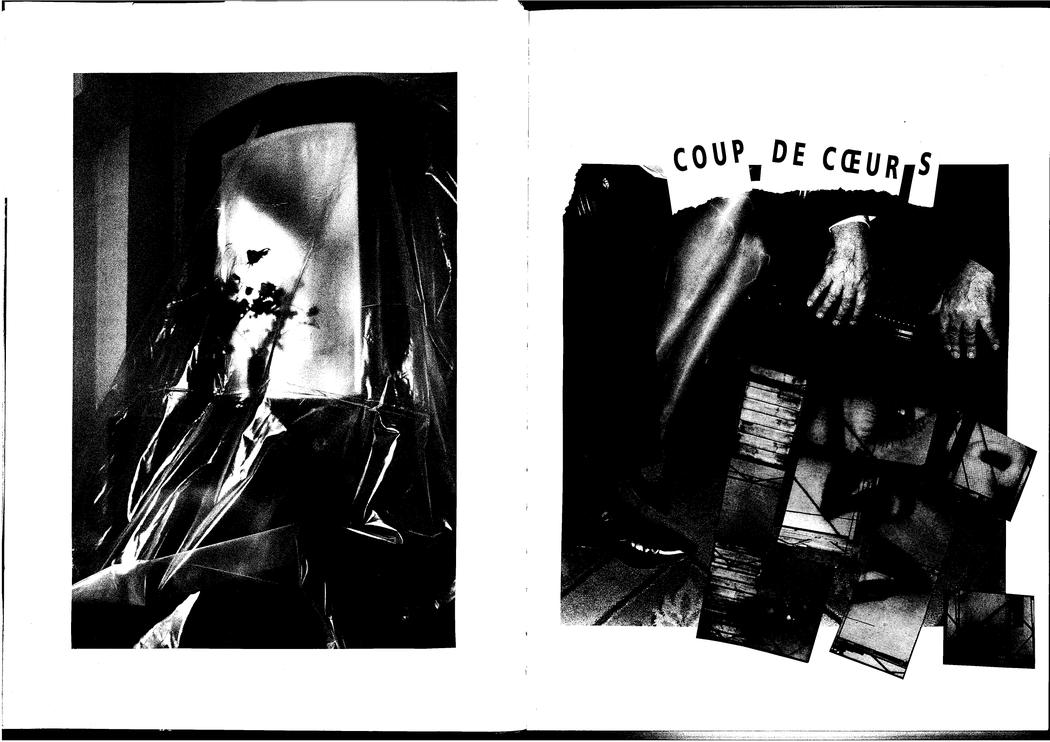
As an artist as well as a person, I rely on my senses a lot. So to imagine living without them was a challenge : is it not our senses that make us truly human? What can the world look like? How do you cope with everyday life ? But the biggest challenge was trying to go beyond them. One particular part of the story was really striking to me, which is the part where the narrator tells the great love story of the main character. A feeling that does go beyond words or visuals, that can happen through touch and scent. Seeing his story being told by others who couldn’t really guess what he must have felt was eye-opening because it was very raw, focused on physical appearance.
 Jeanne Bertrand-Faure | Coup de coeur(s)
Many of your works incorporate pages from books directly. How do you choose the texts that become part of your collages?
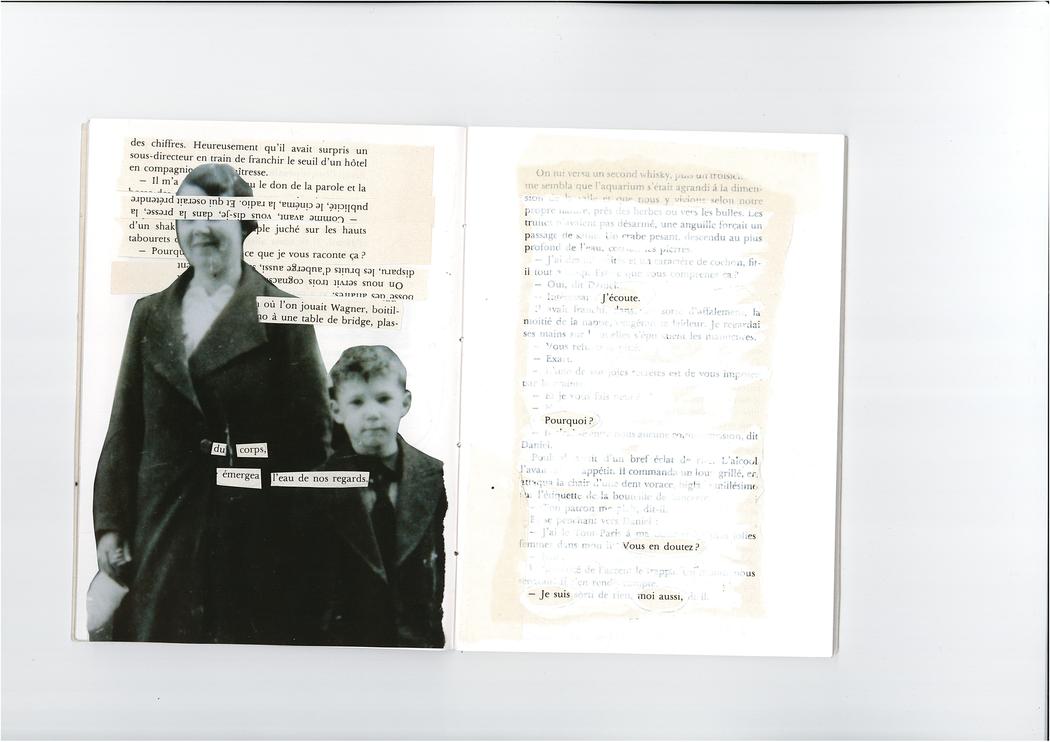
I work strictly with secondhand objects. Most of the books I use are found in the street or in charity shops for a few euros. My process kind of resembles the way I pick clothes : I look at the cover first, the colors, the shape, the size of the object. Then I read the titles, and if I’m intrigued, I will read a few pages to see if the writing inspires me. Then I try to imagine the kind of work I could produce with it. I think I started to use this material to desacralize the idea of the book that you read once and never touch again. I’ve always been a big reader, but it has always broken my heart to let them get dusty on a shelf, I yearned to give them a new purpose. I also have this perfectionist view of words. There are so many poems or novels I’ve never finished because I wasn’t able to convey my exact feelings yet. Now, I can destroy books if they make me angry, turn the words into something of a new nature, make it fit into my world. I can make a final product with an unfinished thought, or an unfinished collage with a finished book -which also becomes a well of inspiration when I lack it.
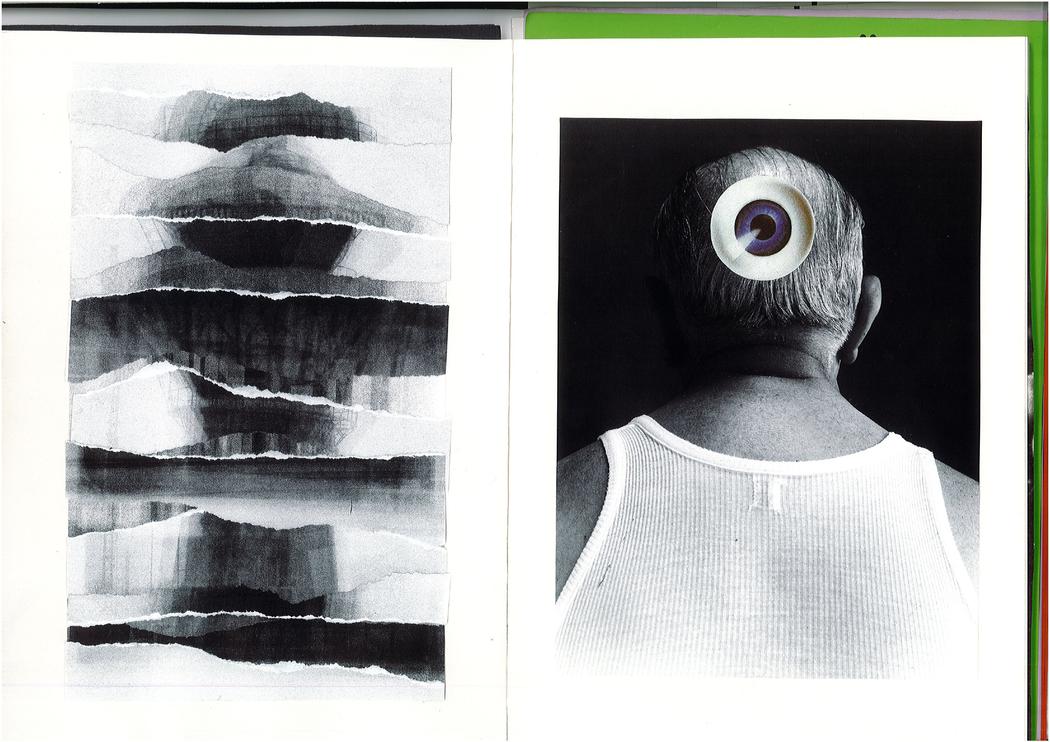 Jeanne Bertrand-Faure | Striped eyes
In your collages, fragments of text often appear partially erased, isolated, or rearranged. What role does erasure or fragmentation play in your artistic process?
Erasure is very symbolic in my work because it represents a choice. In real life, you don’t really choose what to remember or not, your unconscious does it for you. Why is it that some memories are so clear while others remain blurry? Why do we remember certain moments and not others? Sometimes we also unconsciously choose to forget. Fragmentation then becomes complementary to erasure: when a memory is not effaced, it most likely has been rearranged in our minds, and put into words to make it an eligible story to tell others. We reminisce, shed a certain light, choose for certain words or touches to remain. I have to admit; I even choose a song to go with it like it’s a movie scene sometime. Lastly, I think these two principles of erasure and fragmentation go against everything we praise in today’s society where images rule. We take pictures to remember everything, and either we have trouble erasing certain things, or we think that erasing the picture will erase the story. We don’t really praise fragmentation or paradoxicality. Social media has trained us to have one homogenous image, one personal brand, an objective, a balanced life. I think as artists it’s also our duty to show that being fragmented, lost and contradictory is not only okay but inherent to our human experience.
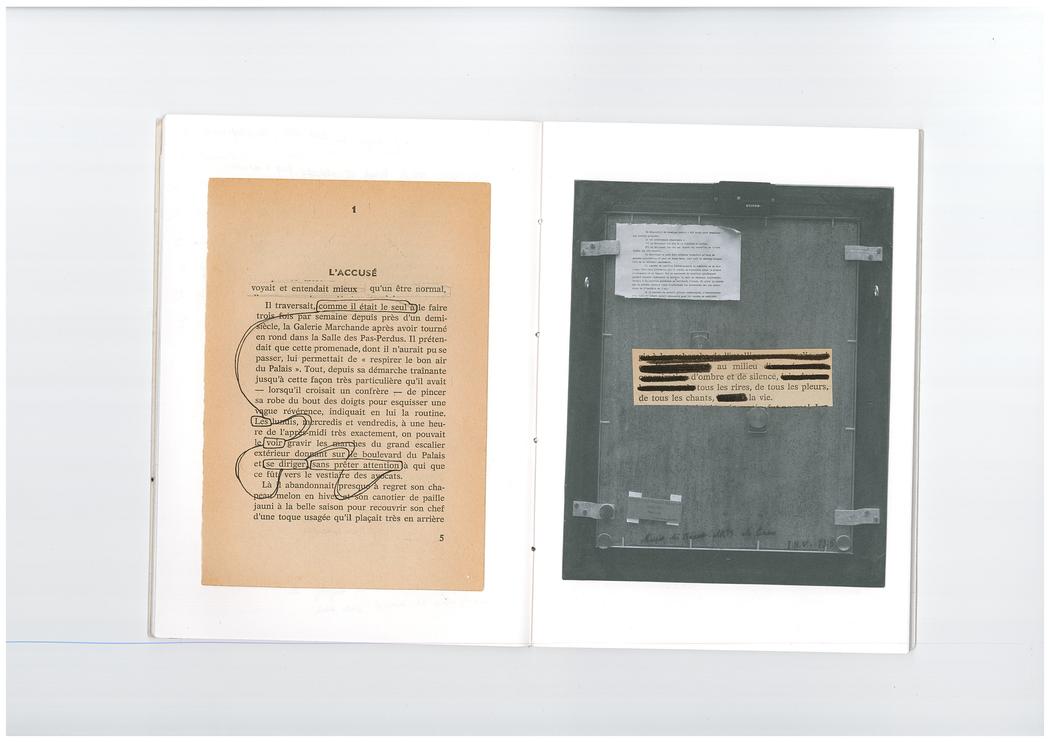 Jeanne Bertrand-Faure | Erasure
Your project invites viewers to imagine the sensory world of someone who cannot see, hear, or speak. What do you hope viewers reflect on when experiencing your work?
After reading this book I wanted my work to reflect the depth and diversity of experience. Maybe viewers could feel that even though they have nothing to do with the main character or have not read the book, that some of that experience can still be relatable.
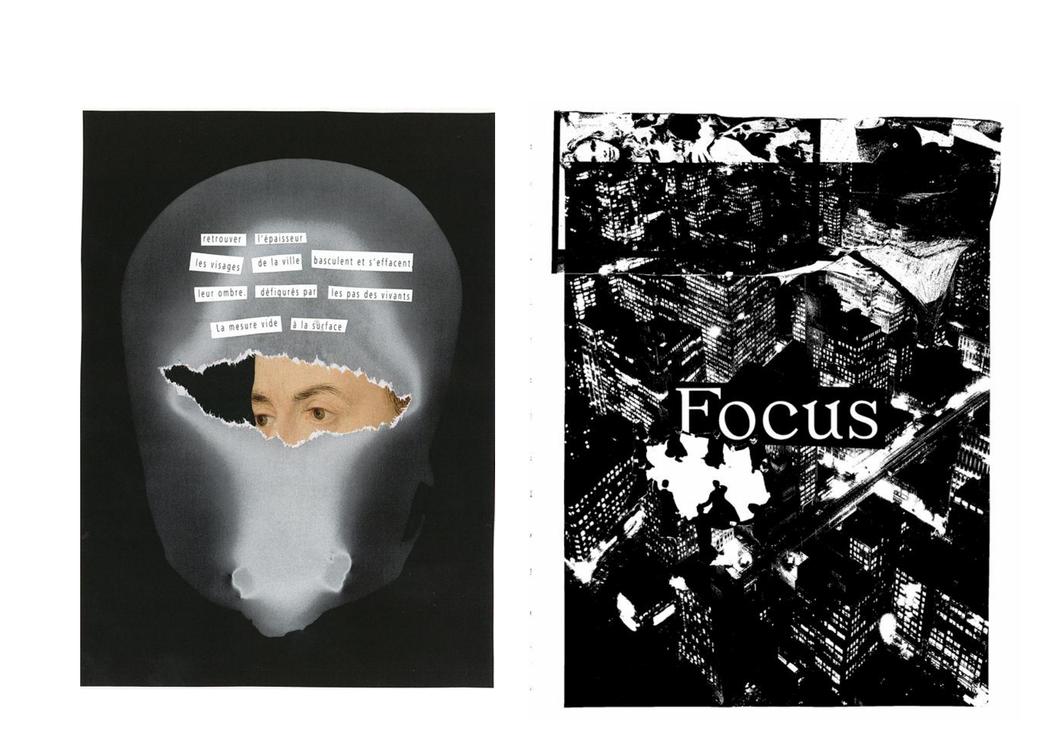 Jeanne Bertrand-Faure | FOCUS
Do you see your collages as narrative works, or are they more like fragments that the viewer must complete with their own interpretation?
I definitely encourage viewers to complete the works with their own interpretation. My collages ae not finite stories. It would be even more interesting if other artists could use them again, to create something new. I want the stories and images to circulate rather than create an exact meaning.
Leave a Reply
You must be logged in to post a comment.