
Manuela Prince (Alma Colours)
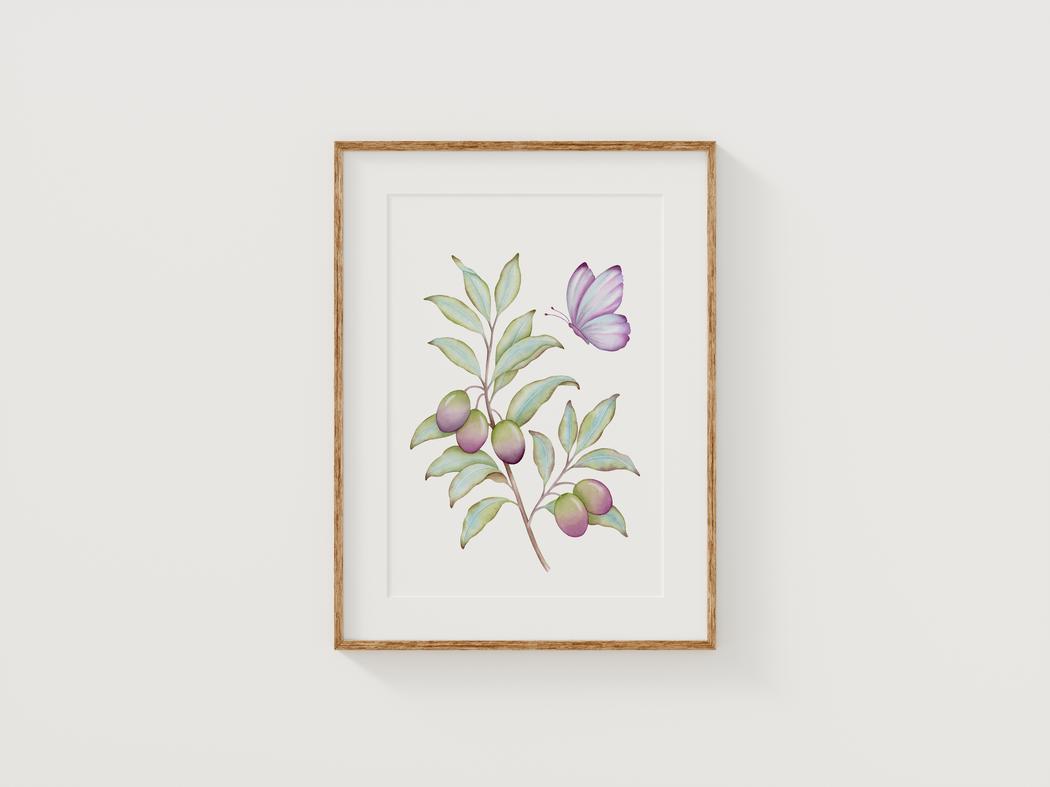 Manuela Prince (Alma Colours) | The Messenger | 2025
You describe yourself as a self-taught watercolour artist. How did your journey with watercolour begin, and what drew you specifically to this medium?
My watercolour journey started during a long period of health uncertainty. For years I had been searching for answers, with symptoms repeatedly dismissed by doctors, until I was finally diagnosed with a rare genetic disorder, Ehlers-Danlos syndrome (EDS). Then my young daughter received the same diagnosis. I remember the strange mix of relief and grief: having a name for the pain, while also knowing what it might mean for her.
I was referred to a therapist who specialised in supporting people living with chronic illness. In one of our conversations, she mentioned that some of her patients had found painting helpful in their healing process, and I could not stop thinking about that on the way home.
Drawing with pencils was one of my favourite pastimes as a child, but painting was entirely new to me. One day, after a few online tutorials and some reading about art as therapy, I picked up my children’s watercolours and simply began to play, with no plan and no expectations.
What drew me to watercolour immediately was its sense of movement and light. I was captivated by the way it flows across the paper, its transparency, luminosity, and how it seems to have a mind of its own. I experimented with realism for a few months, but soon realised I wanted something more evocative. My work gradually evolved into a blend of observation and imagination, rooted in nature but filtered through feeling. That is what feels unique about this medium: it holds both precision and softness, reality and dream.
Your work is deeply inspired by nature. When you observe flowers and butterflies, what do you look for first: their form, their colour, or their symbolic meaning?
It’s really a combination of all three, but colour is usually the first thing that catches my eye, because it can suggest a feeling before anything else. A soft pink feels very different from a bold orange, for example.
Then I look more closely at form, movement, and character. I love observing nature in everyday life, and whenever I go for a walk, I’m constantly taking photographs of flowers, leaves, and anything with an interesting shape or rhythm that feels both beautiful and emotionally expressive. This is often when I get an idea, or a concept I want to explore. I am also incredibly lucky to spot many butterflies fluttering by where I live; some of my regular “friends” are the Blue Pansy and the African Monarch, both already on my painting list!
Symbolism comes in once I feel connected to the subject. Sometimes I already know the meaning of a flower or butterfly, and sometimes I research it after I’ve chosen it. What matters is that all three elements support each other. If one feels out of sync, I keep searching until everything aligns.
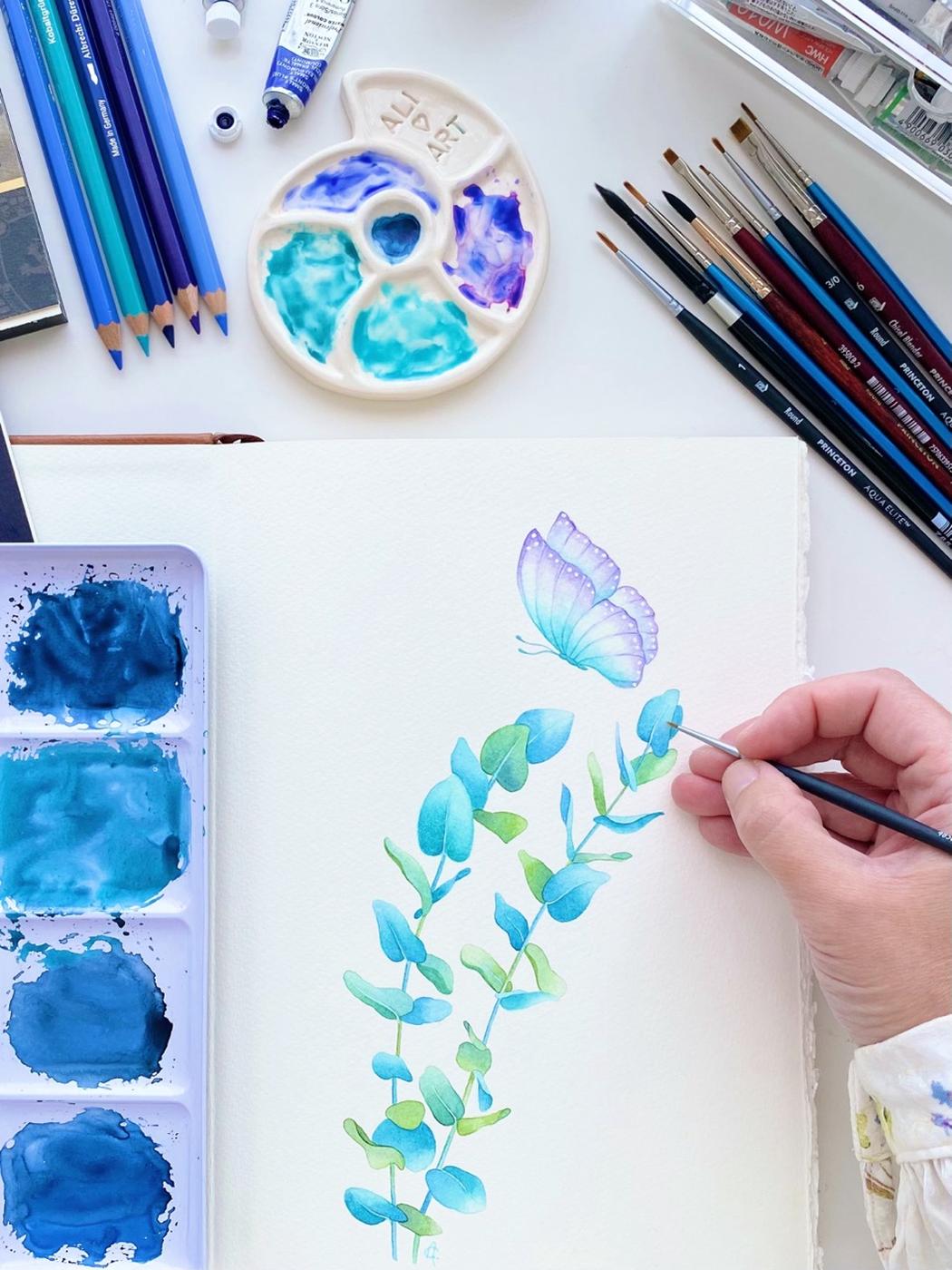 Manuela Prince (Alma Colours) | Butterfly and Eucalyptus Study
In The Messenger Collection, each butterfly acts as a carrier of emotion. When you begin a new painting, does the message come first, or does it emerge organically during the process?
In The Messenger Collection, the message came first. I began with a clear emotion I wanted for each piece — peace, love, friendship, and hope — and then I chose the butterfly and botanical pairing that could translate that feeling visually. The series grew from my belief that nature communicates without words, in small moments we often overlook: a butterfly passing by, dew drops on a petal, or a colour that appears only at a certain hour.
That said, while the message stays consistent, the way it comes through evolves as I
paint. Watercolour has its own voice, and decisions made in the process, such as how soft the edges are, how much detail to add, and how light or saturated to keep the palette, ultimately shape how it is felt in the final piece.
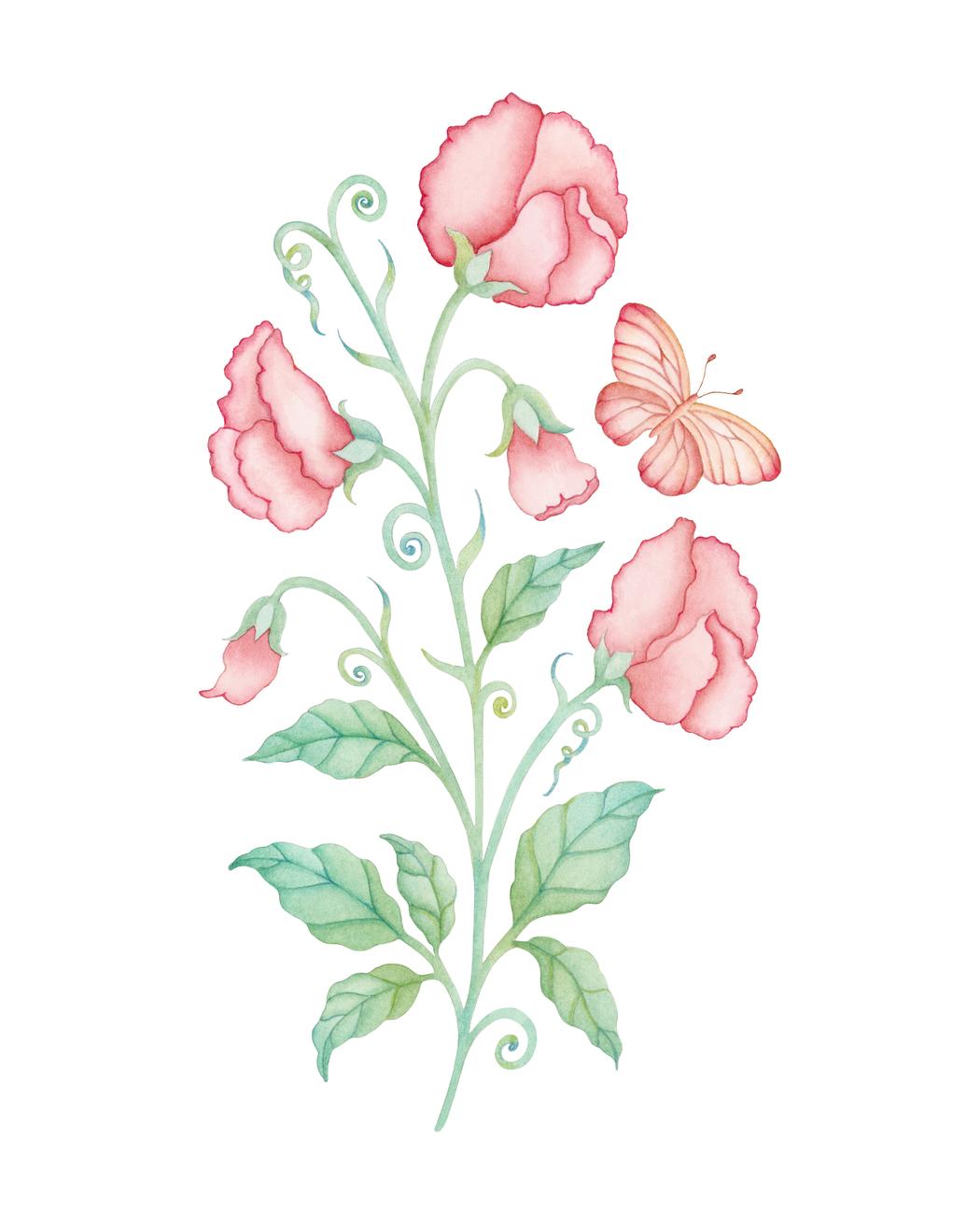 Manuela Prince (Alma Colours) | The Friendship Garden | 2025
The olive branch, tulips, sweet peas, and daffodils each carry strong symbolic associations. How do you choose the botanical elements for a new piece, and do their meanings ever evolve for you personally?
I would say it’s a mix of intuition and research. I’m intrigued by the language of flowers and I have a few books in my studio for reference. I read about what they represent across various cultures and traditions, then check what feels true for the painting I’m working on.
For The Messenger Collection, I chose the olive branch as my starting point because it’s such a recognisable, widely understood symbol of peace. This seemed especially important to me in a world increasingly marked by conflict, uncertainty, and division. Peace is something we long for collectively, but also something we seek within ourselves.
I then looked into the flowers that could express the other emotions in the series: pink tulips for tenderness and love, sweet peas for friendship, and daffodils for hope — those bright early blooms that arrive when winter still lingers.
Their meaning does evolve for me. Once I’ve painted a subject and lived with it for hours, it stops being “just a flower” and becomes tied to my own memories. That is one of the things I find most fascinating about art: it may begin as a shared message, but it becomes, in the end, deeply personal.
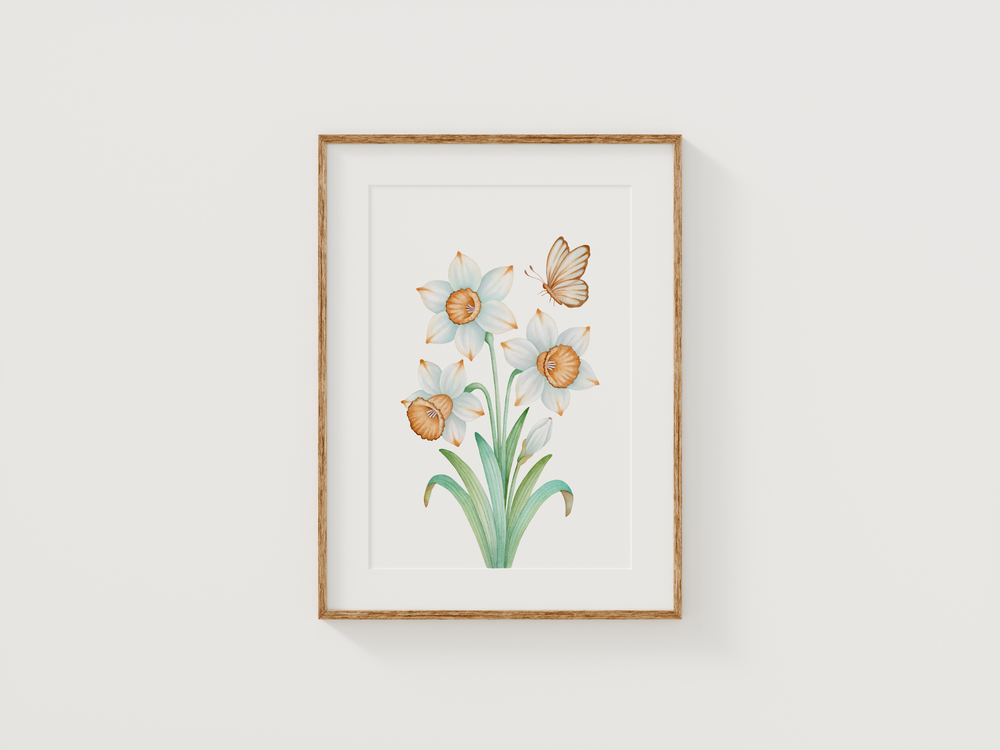 Manuela Prince (Alma Colours) | Where Hope Blooms | 2025
Butterflies appear in every painting in this series. Has their symbolism changed for you over time, especially in relation to your own life experiences?
Butterflies have always felt magical to me! As a child, I saw them almost like tiny fairies: beautiful, delicate, free, and enchanting. But over time, especially during more difficult chapters in my life, I’ve come to understand why butterflies, throughout history, have been associated with the soul and transformation.
Their metamorphosis is a powerful lesson: becoming takes time, change can be painful, and most of the time it happens out of sight. Living with chronic illness has taught me that transformation can be slow, disorienting, and full of recalibration. Your body changes, your plans change, your identity shifts. You adjust expectations and daily routines, and you learn how to begin again inside new limits. Yet it can also lead to a strength you didn’t know was possible, and a deeper self-understanding.
When I paint butterflies now, I think of them as messengers of resilience as much as beauty. I notice how they hover from flower to flower, constantly having to choose where to land, when to move on, and how to stay safe. In a way, we all make similar decisions as we navigate life, adjusting, adapting, and finding our way forward as circumstances change.
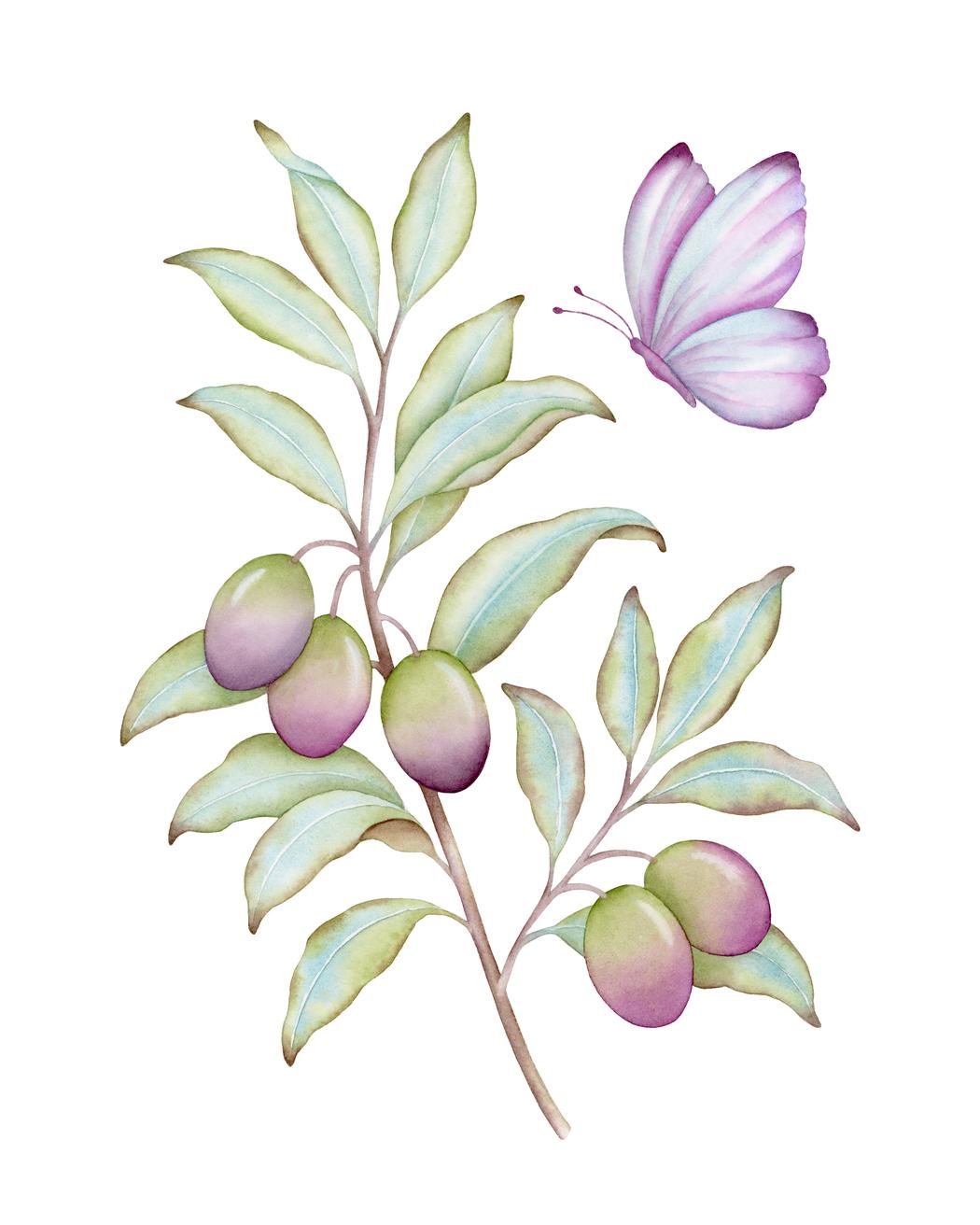 Manuela Prince (Alma Colours) | The Messenger | 2025
What role does healing play in your creative process? Do you see painting as a personal ritual, a message to others, or both?
Painting has definitely become a personal ritual, one that grounds me. When I sit down at my desk, I feel my nervous system settle. Wetting the paper, mixing colours, testing a wash, watching pigments move and dance together: it helps me focus when everything else feels unpredictable, and it reconnects me with that feeling of wonder we sometimes lose as we grow up.
At the same time, I’d like my paintings to speak beyond my experience. I believe in the therapeutic power of art, not as a luxury reserved for artists, but as something fundamentally human. We are all creative as children; we explore, experiment, and make instinctively. Part of healing, I think, is finding our way back to that open, curious part of ourselves. Many people stop making things because life gets busy, or because they convince themselves they’re not good at it. I would love for my art to remind them that creativity is still there, and it’s never too late to return to whatever brings them joy.
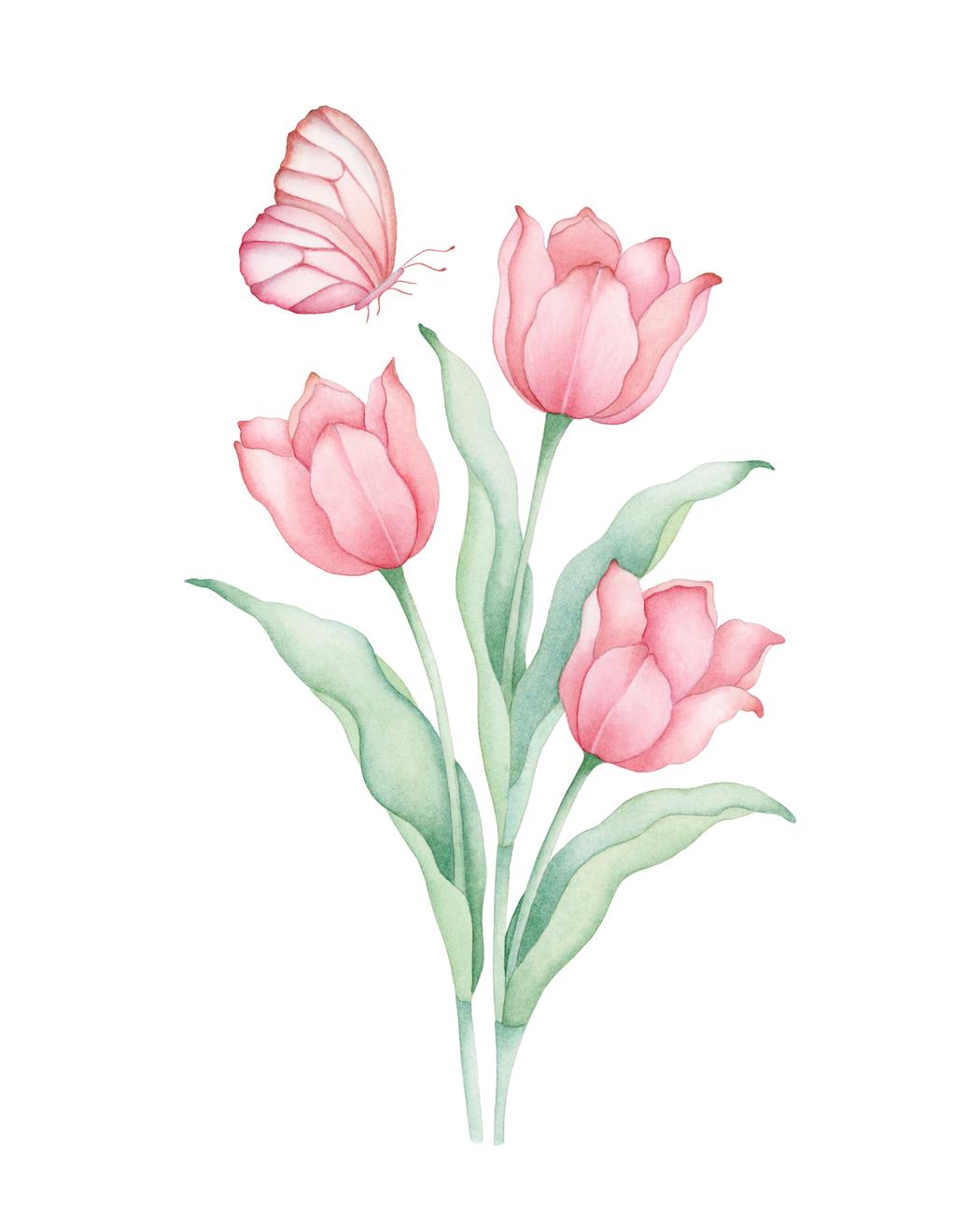 Manuela Prince (Alma Colours) | With Love | 2025
When viewers encounter The Messenger Collection, what kind of emotional response or reflection do you hope they experience?
Art is very personal, so even though each piece has a theme, I don’t expect viewers to interpret it in one fixed way. I hope the collection gives people space to reflect so they can bring their own stories to what they see.
Someone might look at the olive branch and think not only of peace, but of forgiveness. Perhaps the tulips bring to mind a person they love deeply, or someone they miss. The sweet peas may trigger memories of friends who showed up when no one else did. And the daffodils may land as a reminder that seasons change, even when it doesn’t feel like they will.
I’m always interested in the different ways people respond to a painting, and that’s the beauty of it. But if it prompts a memory or a thought, and someone leaves with a little more light than they arrived with, even if they can’t quite explain why, that’s a meaningful outcome for me.
Leave a Reply
You must be logged in to post a comment.