
Nicole Traver
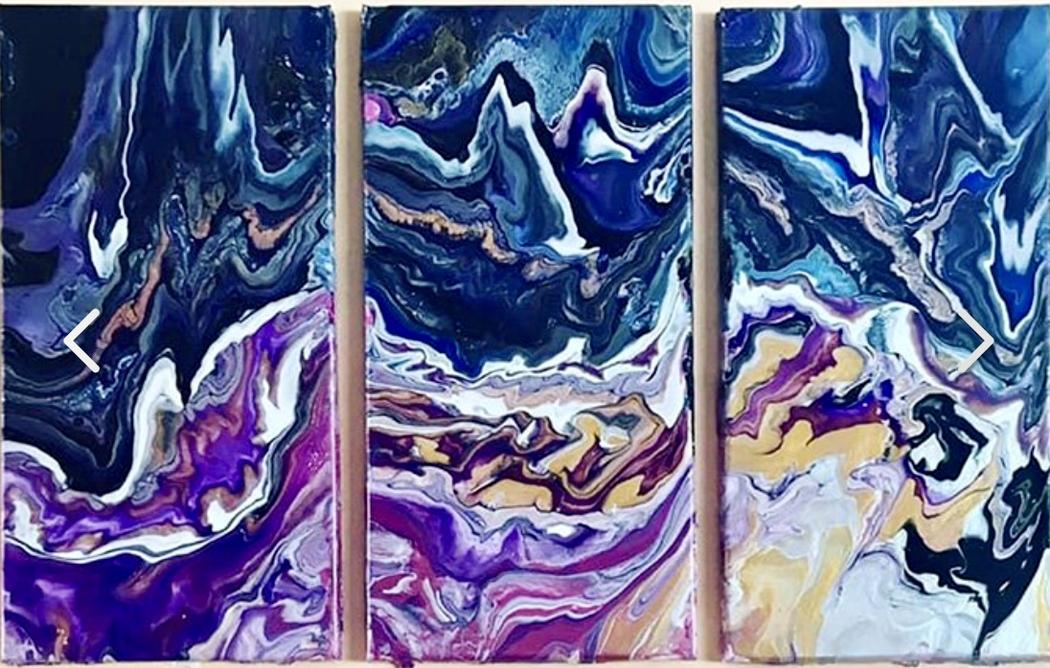
Your journey into art began during the Covid pandemic when you discovered acrylic pour painting on YouTube. What was it about this technique that immediately captured your imagination?
During the Covid pandemic, like many people, I found myself searching for a new creative outlet. I’ve always been drawn to art, but when I discovered acrylic pour painting on YouTube, something about it immediately captivated me. The technique felt both spontaneous and expressive—the way colors move and interact on the canvas creates results that are never completely predictable. I was especially drawn to the abstract nature of it. Each piece becomes open to interpretation, and I love that different people can look at the same painting and see something entirely unique. That sense of color, movement, and individual perspective is what first pulled me in and continues to inspire me today.
Your life story shows incredible resilience, especially after many surgeries and years of physical therapy. In what ways has your personal experience shaped your artistic voice?
I was born with spina bifida, and my life has included many surgeries and years of physical therapy. Those experiences have shaped who I am, both personally and creatively. Living with a disability has taught me resilience, patience, and determination—qualities that naturally carry over into my art.
I don’t see my disability as something that limits me creatively. In many ways, it has made my voice as an artist stronger. Through my work and my journey in the art world, I hope to show that being different or having a disability doesn’t mean you can’t succeed. If anything, those challenges can give you a unique perspective and strength that shapes what you create. My goal is to use my creativity not only to express myself, but also to inspire others to see that limitations don’t define what you’re capable of achieving.
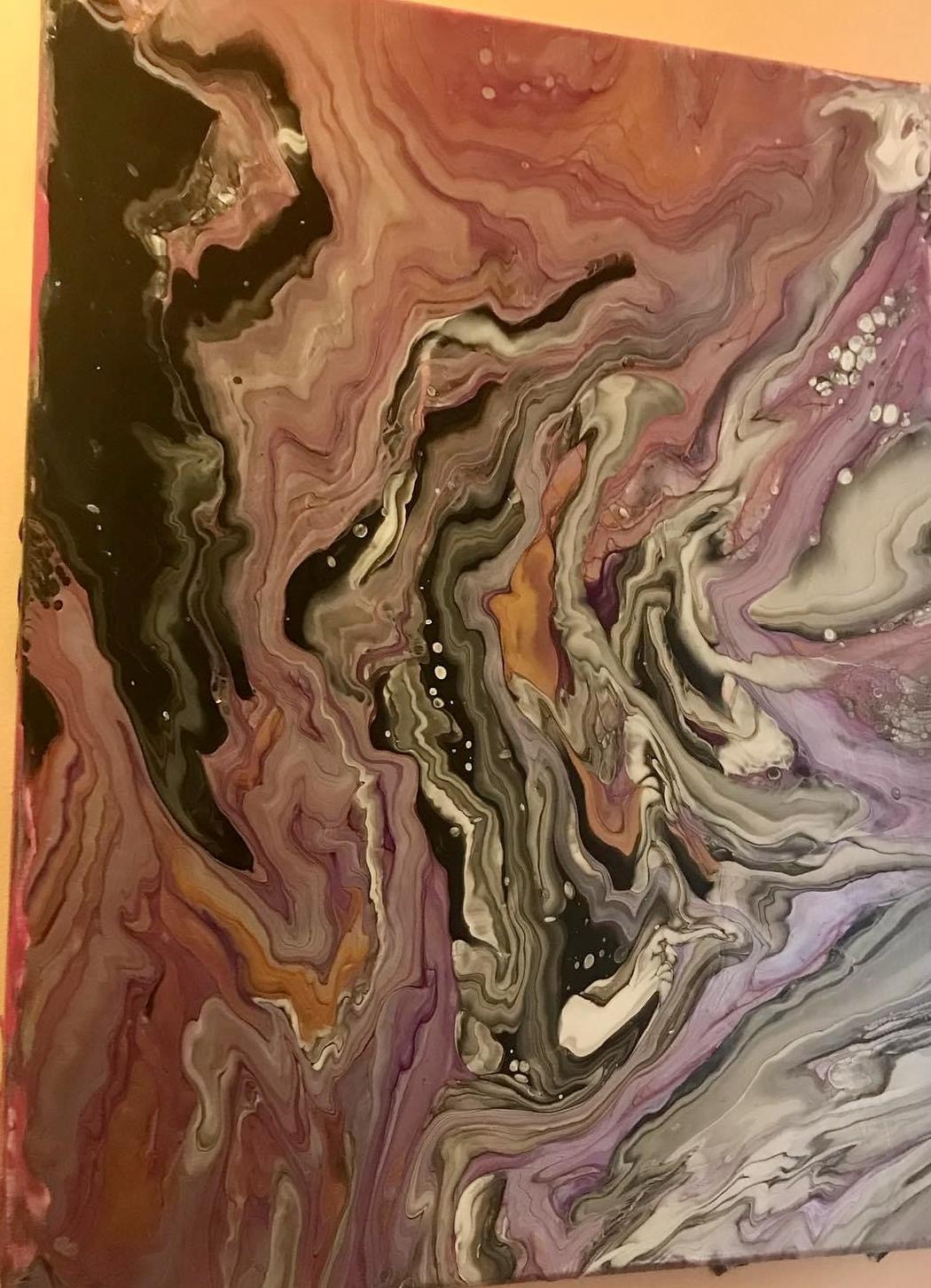
Acrylic pouring often embraces unpredictability. How do you balance control and spontaneity when creating your compositions?
Acrylic pouring is a fascinating balance between intention and unpredictability. Before I begin a piece, I make several creative choices that guide the direction of the painting. I carefully select the color palette and decide which pouring technique I want to use, whether that’s an infinity pour, open cup pour, ring pour, or another style. Those decisions create the foundation for the composition.
Once the paint begins to flow, however, I allow the process to unfold naturally. Part of the beauty of acrylic pouring is that you can’t completely control how the colors interact or how the patterns form. I’ve learned to embrace that spontaneity and trust the process. Often the most beautiful moments in a piece are the ones that happen unexpectedly.
Your works feature flowing lines and vibrant colors that create a sense of movement. What emotions or ideas do you hope viewers experience when they look at your paintings?
One of the things I love most about abstract art is that every viewer brings their own perspective to a piece. When I create a painting, I’m drawn to movement and vibrant color because they naturally evoke energy and emotion, but I don’t try to dictate exactly what someone should feel when they look at it.
What fascinates me is how the same painting can inspire completely different interpretations from different people. One person might see a landscape, another might feel a certain emotion, and someone else might see something entirely unexpected. Hearing those different reactions is incredibly meaningful to me because it shows how personal the experience of art can be. In many ways, the viewer becomes part of the creative process through their own interpretation.
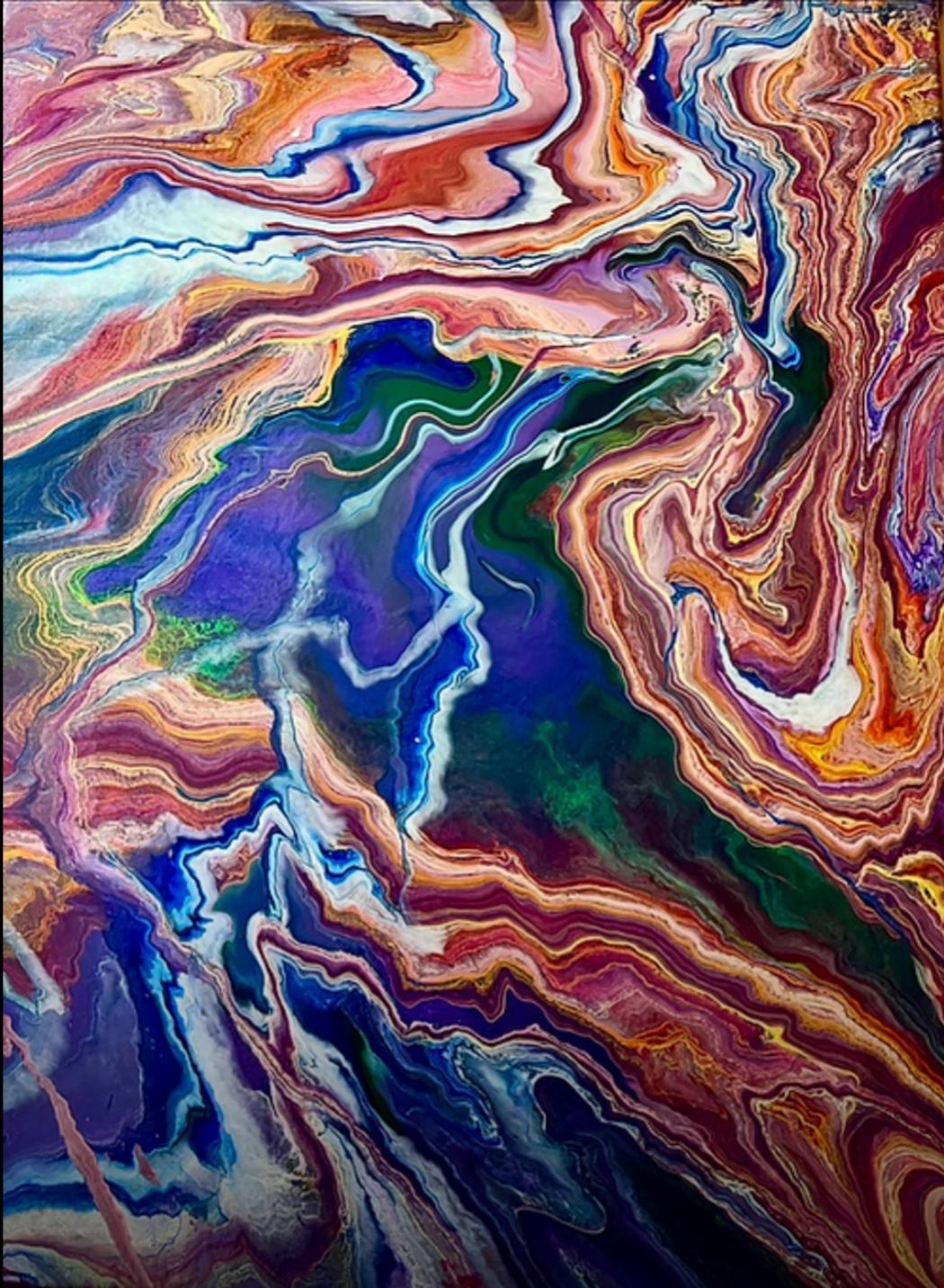
You began by painting on canvases and later expanded to objects like vases, coasters, and ornaments. What attracts you to experimenting with different surfaces?
I originally started by pouring on canvases, but over time I began thinking about ways to share my artwork with others in a more personal way. I had the idea to start giving some of my pieces as gifts for birthdays and holidays, and eventually I began participating in craft fairs around the state. While I still love creating on canvas, I realized that objects like coasters, vases, ornaments, and flower pots make beautiful and functional gifts that people can use in their everyday lives.
Experimenting with different surfaces also opened up new creative possibilities. Each material—whether it’s canvas, glass, wood, or even plastic—interacts with the paint in its own unique way and can create completely different patterns and effects. I really enjoy exploring those differences and seeing how the same technique can produce something entirely new depending on the surface.
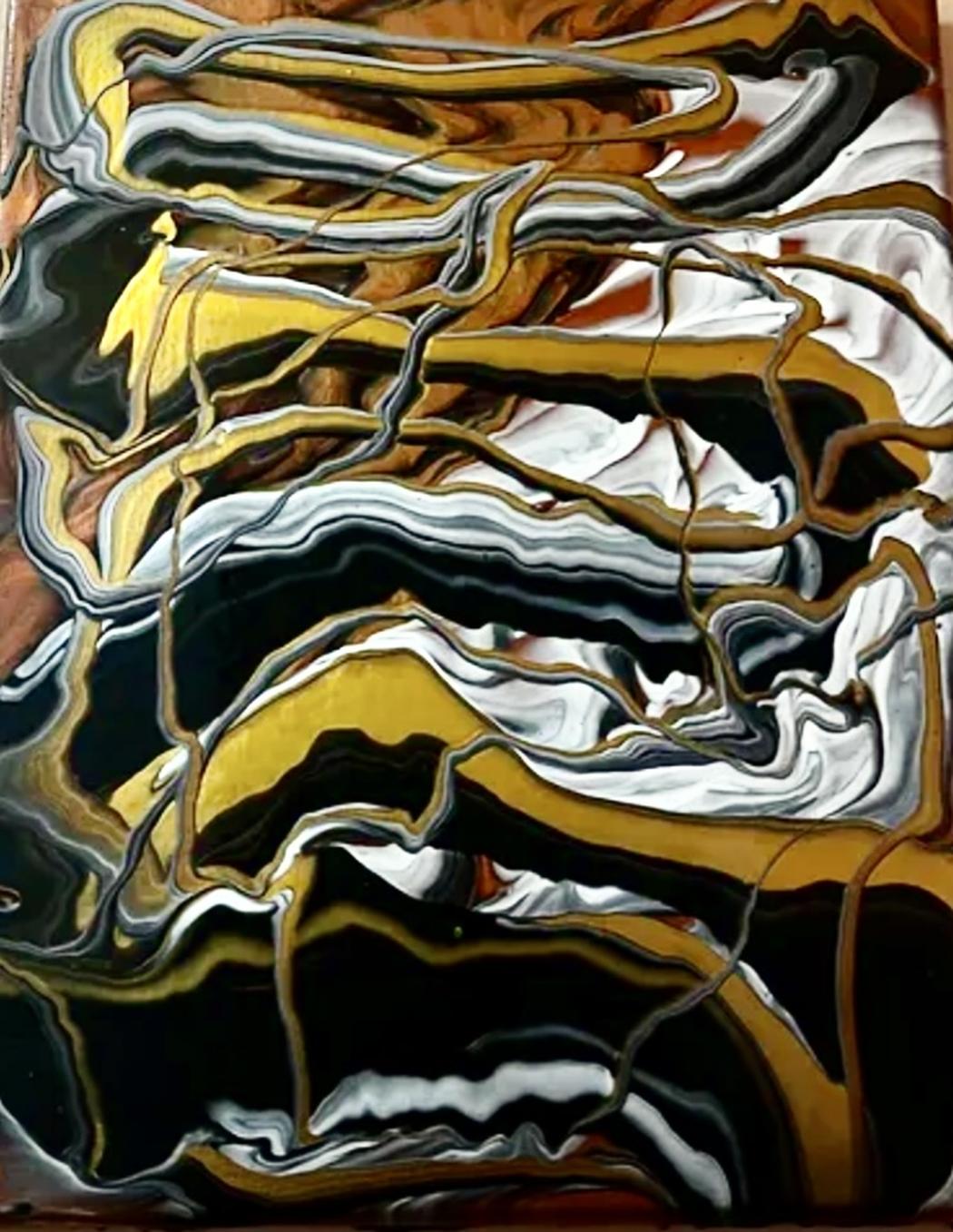
Many viewers describe acrylic pour paintings as almost geological or cosmic in appearance. Do you see natural or universal forms reflected in your work?
I think it can really vary depending on the colors and techniques used in each piece. Different combinations can create very different visual impressions. Sometimes the flowing patterns and cells can look almost cosmic or galactic, while other times they feel more earthy, like stone, lava, or natural landscapes.
I’ve definitely seen both reflected in my work, and viewers often point out things I hadn’t even noticed at first. That’s one of the things I enjoy most about acrylic pouring—the way it can mirror forms we recognize from nature or the universe. Some of my titles even reflect that inspiration, like “Out of the Lava,” “Cosmic Amethyst,” “Galactic Dreams,” and “Into the Fire.” Those kinds of images seem to naturally emerge from the movement of the paint.
Your story is also about overcoming limitations and redefining possibilities. What message would you like your journey and your art to send to others who face challenges in their lives?
One of the biggest things I’ve learned through my journey is that challenges don’t have to define or limit what you’re capable of. Everyone faces obstacles in life, but those experiences can also shape your strength, perspective, and creativity.
Through both my story and my art, I hope people see that it’s possible to build something meaningful even when life doesn’t follow the path you expected. For me, art became a way to express myself, find joy, and connect with others. If my journey shows anything, I hope it’s that challenges can become part of your strength rather than something that holds you back.
Leave a Reply
You must be logged in to post a comment.