
Varvara Obrosova
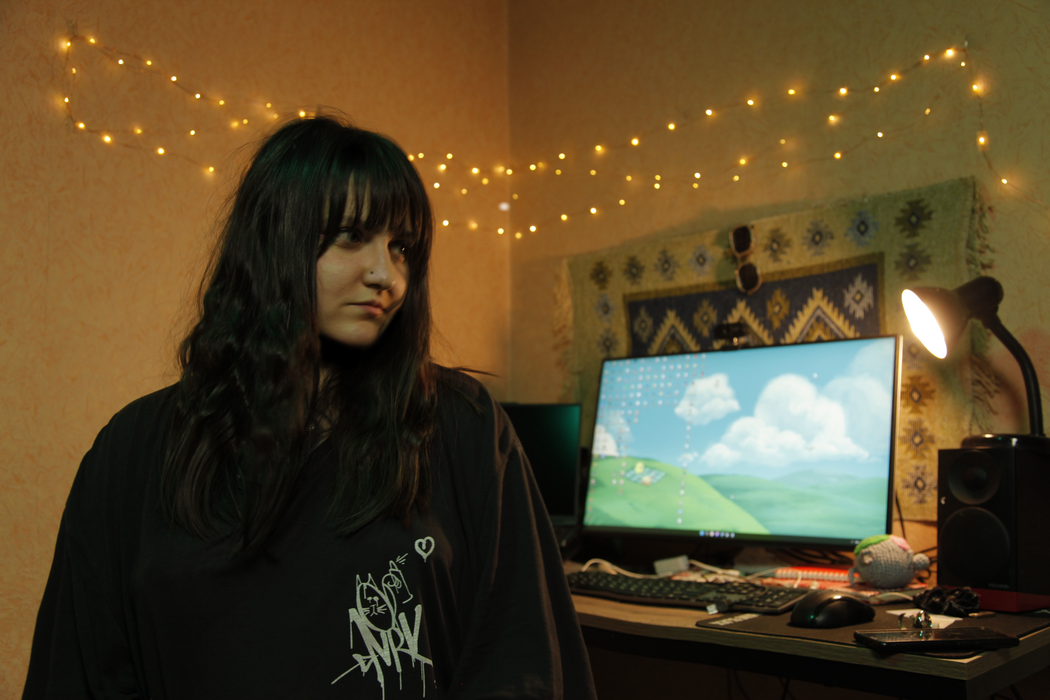
Your works depict fishing as a ritual rather than an everyday activity. When did you first start perceiving fishing as a symbolic or sacred act in your artistic practice?
I have been fishing since childhood, and I’ve always felt a sense of passion while doing it. About five years ago, I became interested in the theme of the fear of aging, so I started working on a project dedicated to elderly people. While viewing many photographs of seniors as references for inspiration, I really liked the texture and external monumentality of the indigenous people of the Sakha Republic.
Studying their traditions and daily life inspired me to create my first works about fishing. During this research, fishing in my paintings ceased to be a mundane activity and became intertwined with motifs of shamanism and images of other worlds.
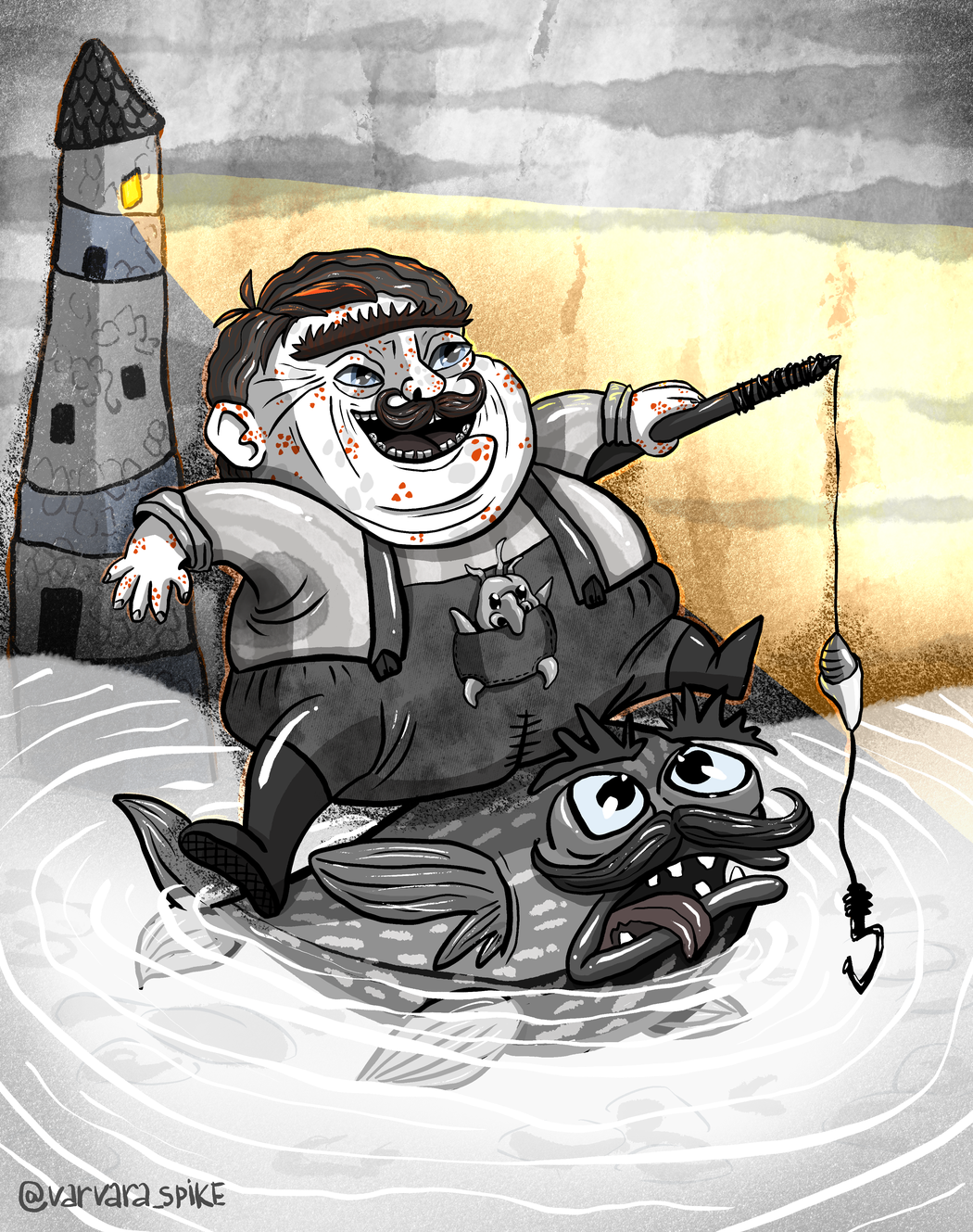 Varvara Obrosova | Catching A Fish Double | 2025
Many of your characters seem to exist in a liminal space – between worlds, times, and states. How do you personally understand this “in-between” condition?
I view this “in-between” state from two angles. The first is when the character is like a cat: they see both our world and the otherworldly one, but perceive it as a unified whole.
The second is a certain moment of timelessness, as if the flow of time has been paused; the significance of the backstory is lost, and only the current moment remains.
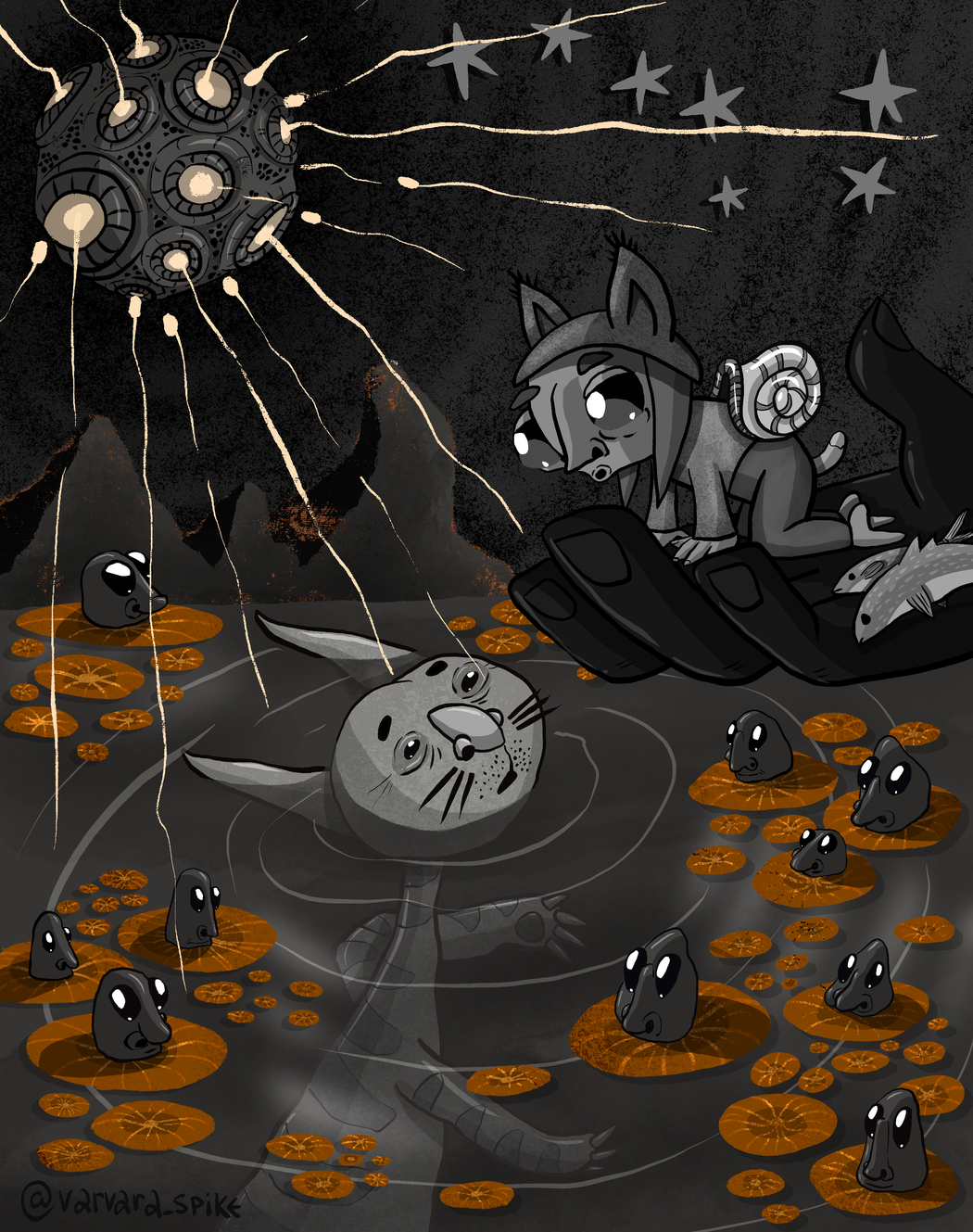 Varvara Obrosova | Looking For Fish | 2025
Folklore and mythology play a key role in your work. Are there specific myths, rituals, or cultural traditions that most strongly influence this series?
This project is a totality of my knowledge, ideas, visual experience, and background. Here, I did not rely on specific myths or plots but pulled it out from the depths of myself. However, in general, this series of works was influenced more by the European tradition than the Asian one, as was the case in my earlier paintings.
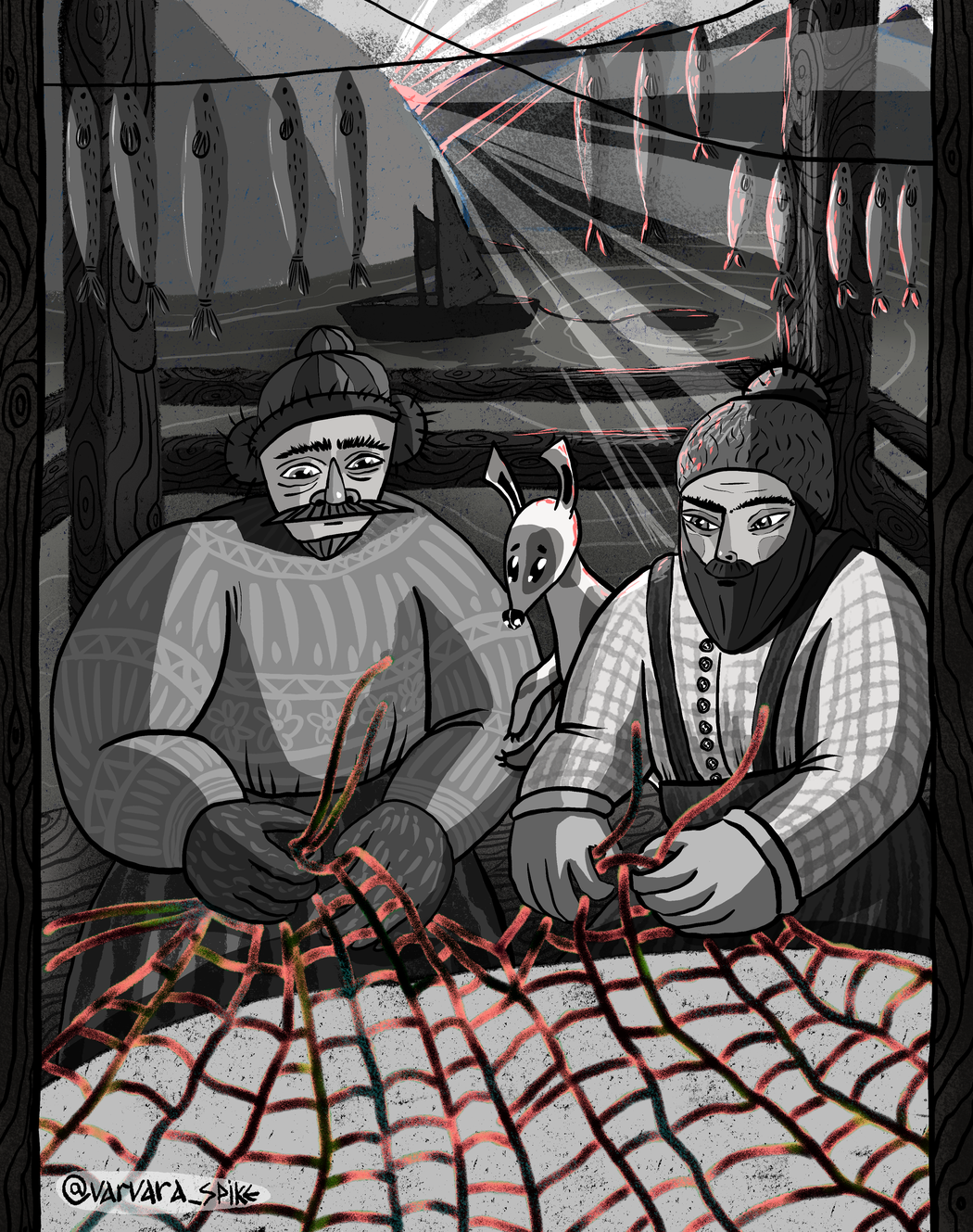 Varvara Obrosova | Netting | 2025
Your visual language combines dark melancholy with subtle humor and surreal elements. How do you balance darkness and irony in your storytelling?
It is a pleasant surprise to me that irony can be seen in my works. How do I manage to balance it? It is such a natural part of my worldview that I don’t even notice it myself.
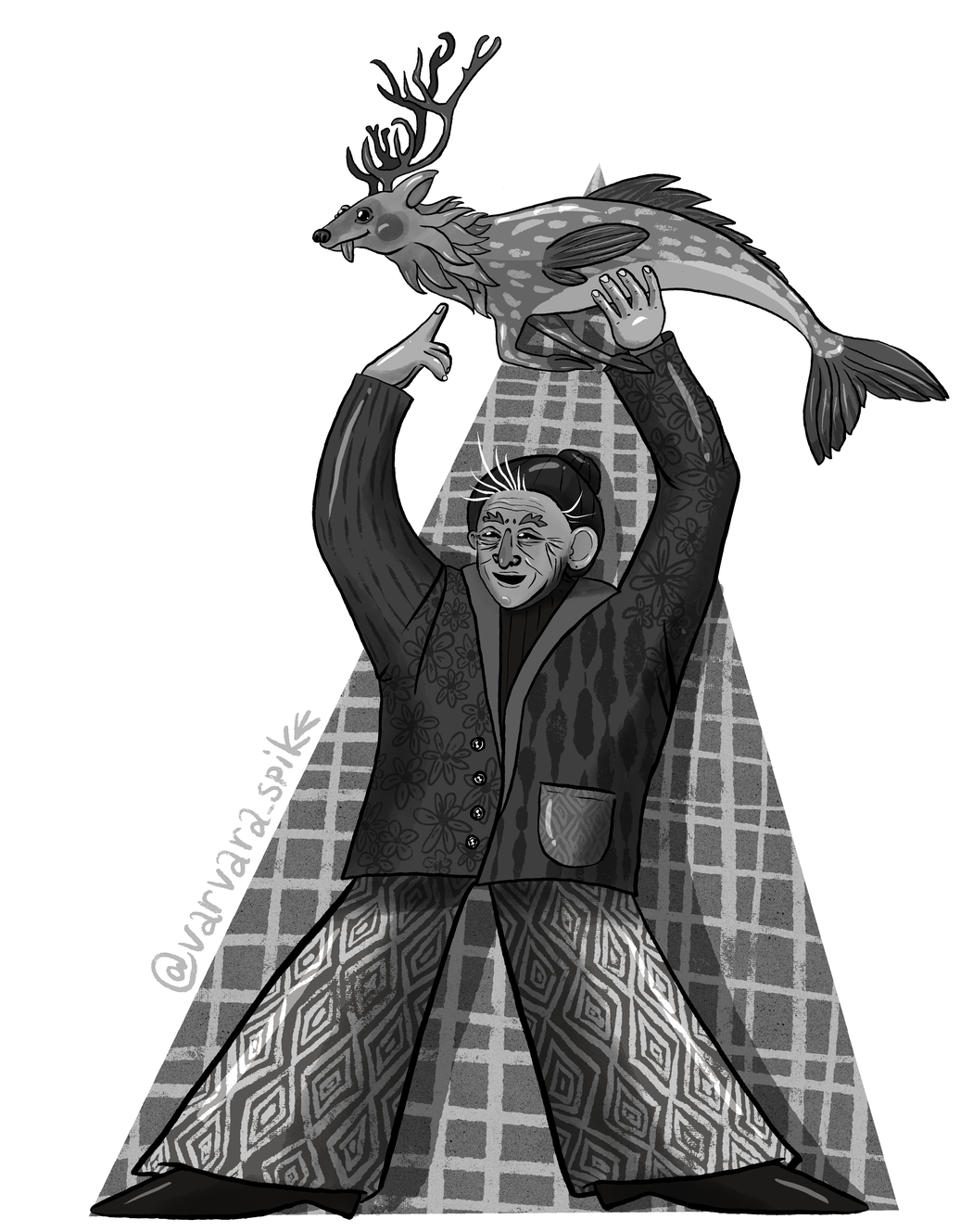 Varvara Obrosova | Unusual Catch | 2025
Your figures often appear anonymous and archetypal, inviting viewers to intuit their stories rather than presenting them directly. How has your background in screenwriting and documentary filmmaking shaped this approach to narrative and character in your visual art?
The story in my paintings is assembled like a mosaic from a multitude of details and attributes: the imperfection of the characters’ belongings, their facial expressions, and their poses. From all of this, the viewer can intuitively read the characters’ past and imagine what brought them to the current moment in time.
It is not my goal for the viewer to immediately read the personal stories of the characters. For me, it is primarily important to convey the truthfulness of the moment, not a retrospective. I carried this approach over into my art from my time as a documentary film director. History and plot are certainly important, but in my works, they are not the main object, but rather additional content.
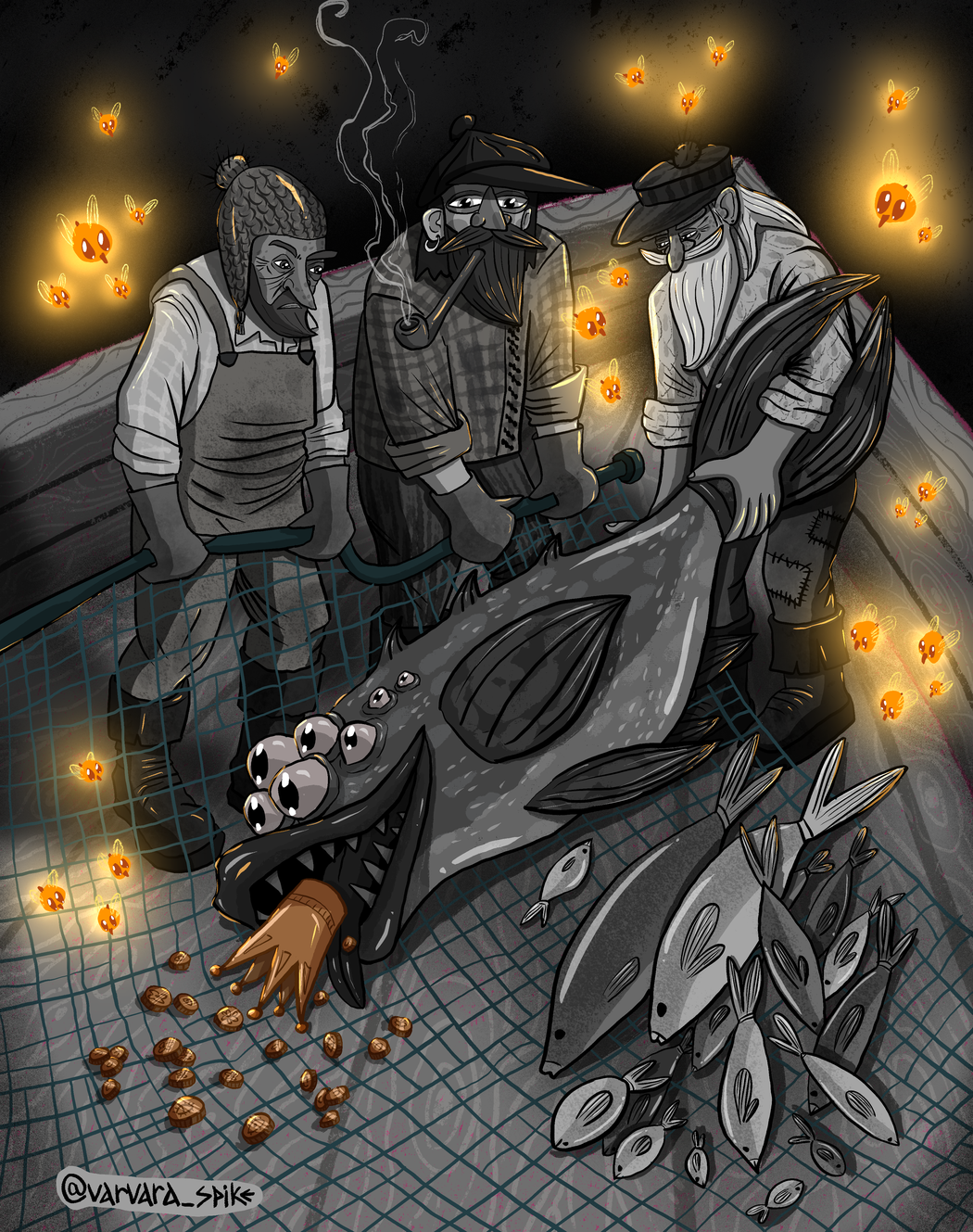 Varvara Obrosova | Night Fishing | 2025
What do you hope the viewer experiences when entering the world of this fishing series – contemplation, discomfort, recognition, or something else?
I would like the viewer, when looking at my paintings, to undergo a certain spiritual experience, to feel curiosity, and a desire to get involved in a wild adventure.
I would like the viewer to have the desire to return to the world I have created for them, and to want not just to immerse themselves in the atmosphere, but to decipher this world like a hieroglyph. I want the viewer to feel like Indiana Jones solving a mysterious riddle.
Leave a Reply
You must be logged in to post a comment.