
Ryanne L Bonde
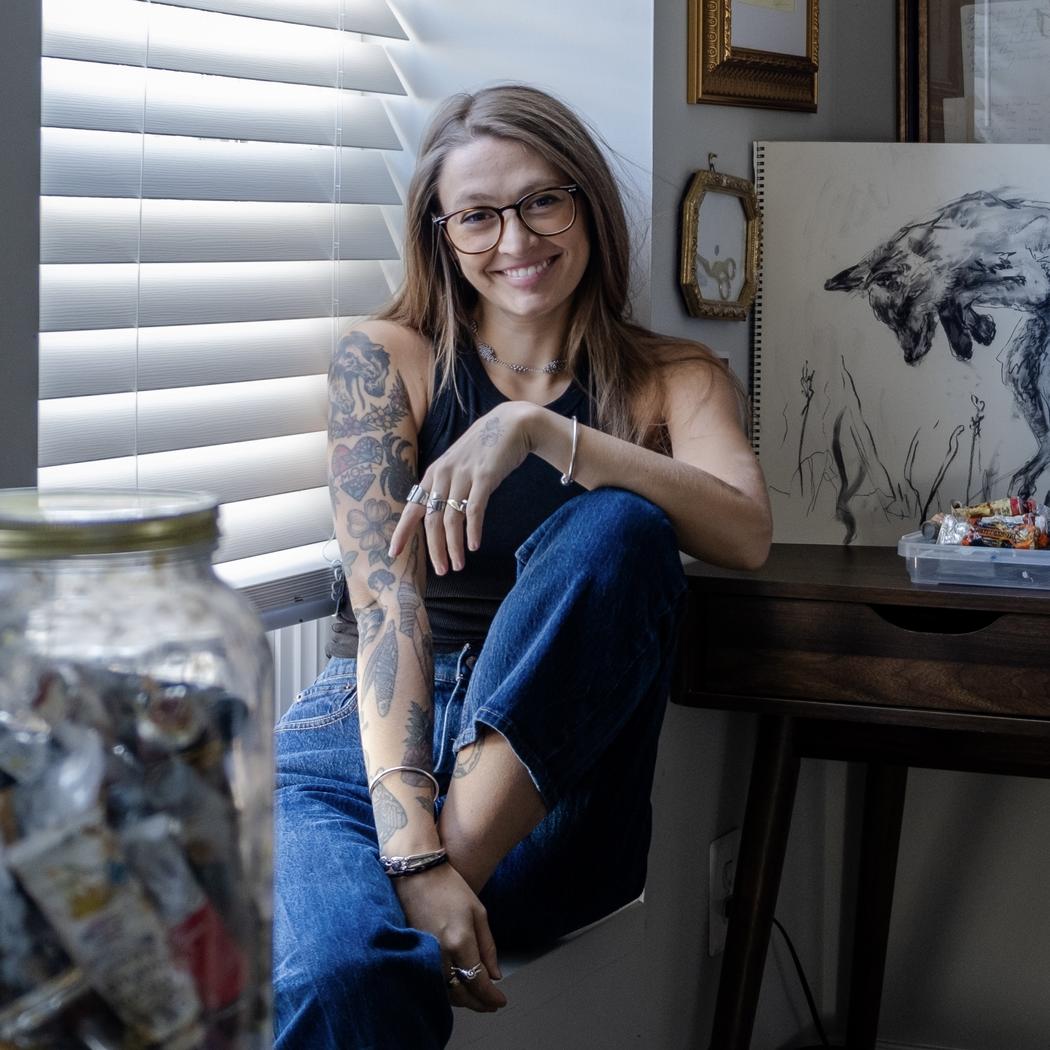
Your paintings often feel like familiar scenes tilted slightly out of balance. What draws you to that “almost-but-not-quite” feeling in an image?
That “almost-but-not-quite” feeling mirrors how I experience daily life: recognizable initially, but full of strange undercurrents; anxieties, memories, private narratives. I’m interested in the moment when a scene stops reading as purely ordinary and starts to feel slightly biased by my perspective or by the subject’s. I want the image to hover in that space where viewers recognize the setting but sense that something is skewed, that they are seeing it through someone’s specific lens. I like to leave the discomfort or unknowing unresolved.
How does your background as a school psychologist influence the emotional language of your work?
For me it’s a bit of a chicken-or-egg situation. My sentimentality and sensitivity probably pushed me toward both school psychology and painting, rather than one field directly causing the other. My day-to-day work is writing the narratives of students’ lives; identifying their needs and tracing root causes. I’ve always been an impassioned girl. That same emotional intensity shapes my art. The work and the paintings come from the same place: a tendency to look under the surface of behavior, to hold multiple truths at once, and to stay with discomfort.
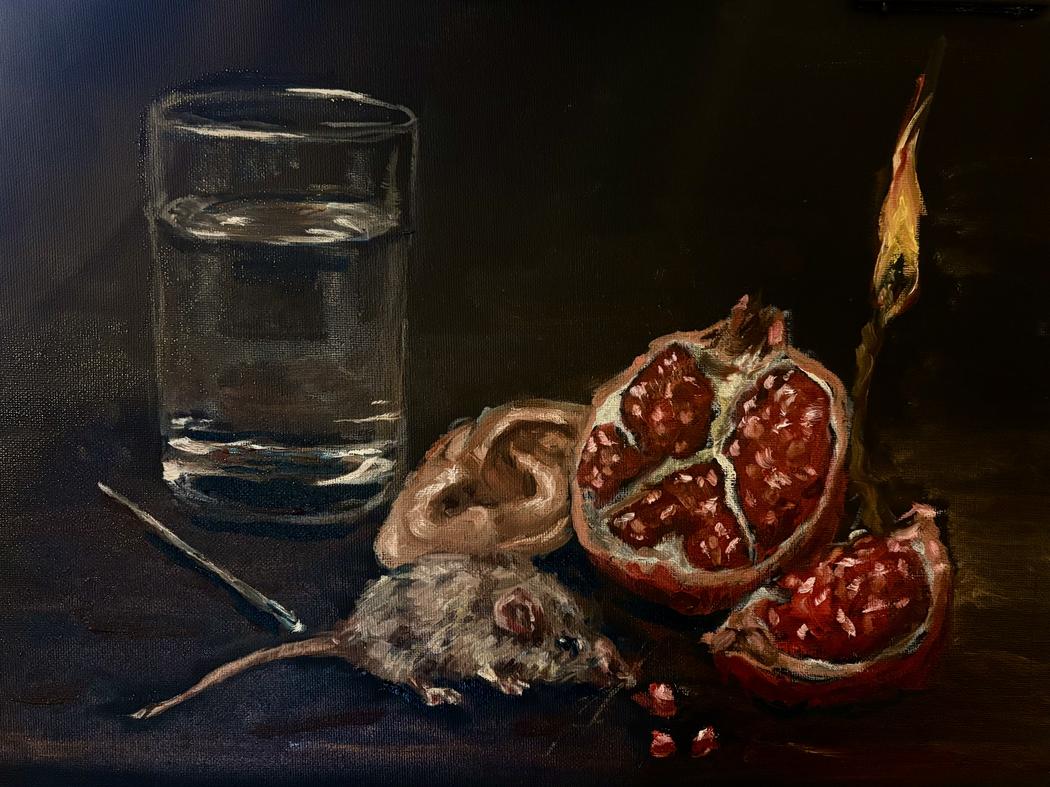 Ryanne L Bonde | Devices Of Discipline | 2025
Many of your pieces explore the boundaries between observer and subject. What interests you most about that relationship?
I often feel an impulse to paint certain subjects even if that content ends up coded in symbolism. I know exactly what the viewer is looking at because it has passed through my mind and my private association with that story. In that sense, the subject, the painting, and I share something the viewer may never fully access. I like the idea that I can immortalize something ghastly, frightening, or historically violent and quietly force viewers to gaze at it, sometimes without them ever knowing the source material. They feel the strangeness and sense that there is more underneath, but the specific connection can remain private between me and the work. That gap between what is shown and what is known is the boundary that interests me.

Your compositions often hold tension and tenderness at once. Is this contrast something you plan intentionally or does it emerge naturally during the process?
This contrast emerges very naturally. The images usually arrive in my mind as fully formed flashes, and I honor them as they come. I make surprisingly few changes to the original mental picture. Often, the meaning only reveals itself later, through coincidence, research, or odd little “signs” that connect the image to something larger. Because I’m not over-engineering the concept at the front end, tension and tenderness tend to coexist in the original vision. I follow the image’s initial charge first, and only later understand why those opposing qualities needed to sit together.
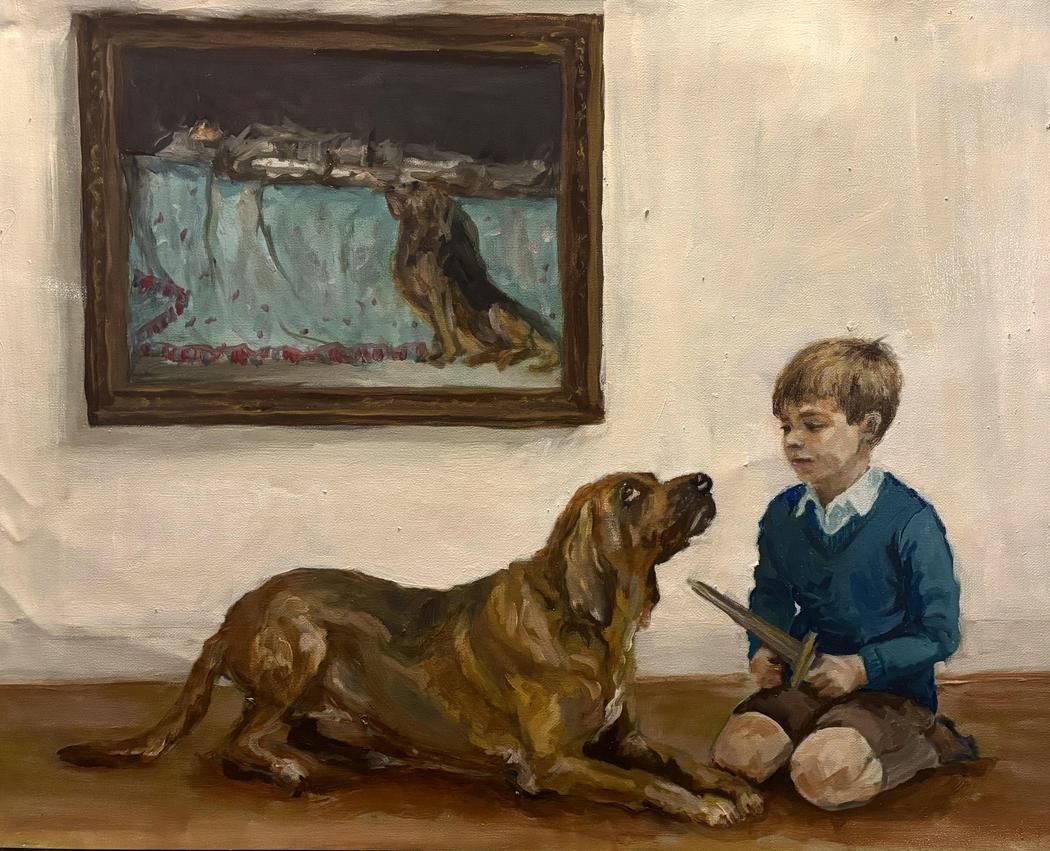 Ryanne L Bonde | Worthy Of Knighting | 2025
You frequently use muted palettes punctuated by sudden contrasts. What role does color play in shaping the psychological atmosphere of your work?
Honestly, I just prefer muted palettes in life, in clothes, interiors, light. I like things quieter, calmer, dimmer, softer, and that preference has generalized to my painting. A subdued palette keeps the atmosphere low to the ground and lets the emotional content feel lived-in rather than theatrical. But at the core, the muted colors reflect how I want to move through the world: without too much noise.
Animals appear frequently in your paintings—sometimes innocent, sometimes unsettling. What draws you to them as emotional or narrative carriers?
I use animals both as stand-ins for human stories and as subjects in their own right. When I’m thinking about forcing a gaze onto injustice, animal welfare is an obvious, ever-present example: cruelty and adaptation happening all around us. In my work, I like to free animals from the toil we put on them and preserve moments of their resilience or vulnerability. For example, my Siena horse painting is based on a racehorse, but the jockey and gear are gone. The horse exists alone; no spectacle, no control, just the sprint.
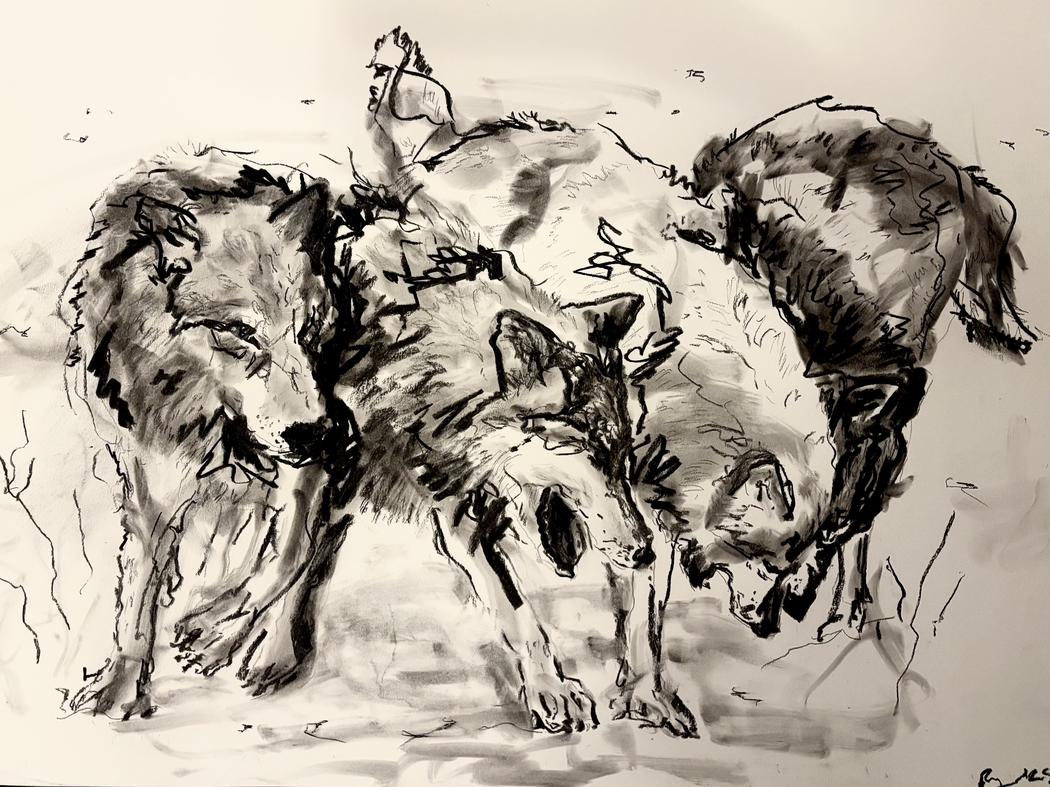 Ryanne L Bonde | Wolves | 2025
Your works feel like thresholds—spaces between states. What do you hope viewers experience when they step into these in-between worlds?
I hope viewers observe my work thinking more deeply and feeling more softly toward others. If the paintings function as thresholds, I want them to open onto a slightly altered emotional disposition, one where empathy is more available. I’m not interested in closing everything down to a single interpretation. I want the work to be a place where ambiguity is allowed to exist, where beauty and unease sit together without being resolved. Ideally, viewers leave with a sense that the image is still working on them after they’ve looked away.
Leave a Reply
You must be logged in to post a comment.