
Bob Holmes
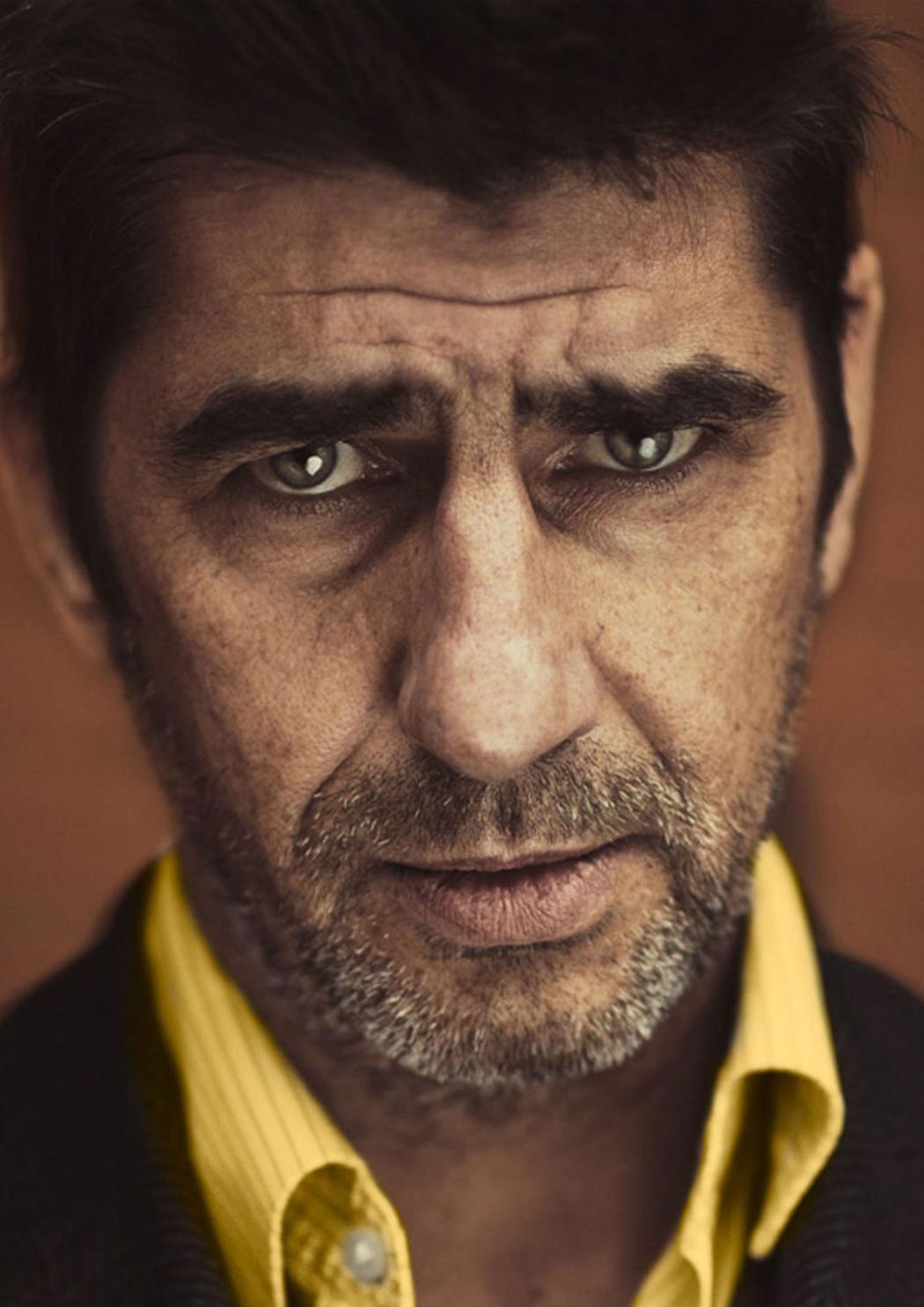
Your work often merges myth, dream imagery, and contemporary ecological concerns. What initially drew you to this intersection of the mythical and the environmental?
I was drawn to this intersection because myth offers a language spacious enough to hold the emotional weight of our possible ecological collapse. Myths reveal how humans once saw themselves as part of a living, intelligent world, and I use that symbolism to re-imagine our relationship with nature today. Dream type imagery lets me bypass literal representation and speak to the subconscious, where fear, grief, and hope for the planet are often tangled. Bringing these elements together allows me to explore environmental concerns not as distant issues but as intimate, inner experiences.
 Bob Holmes | Broken Continuum
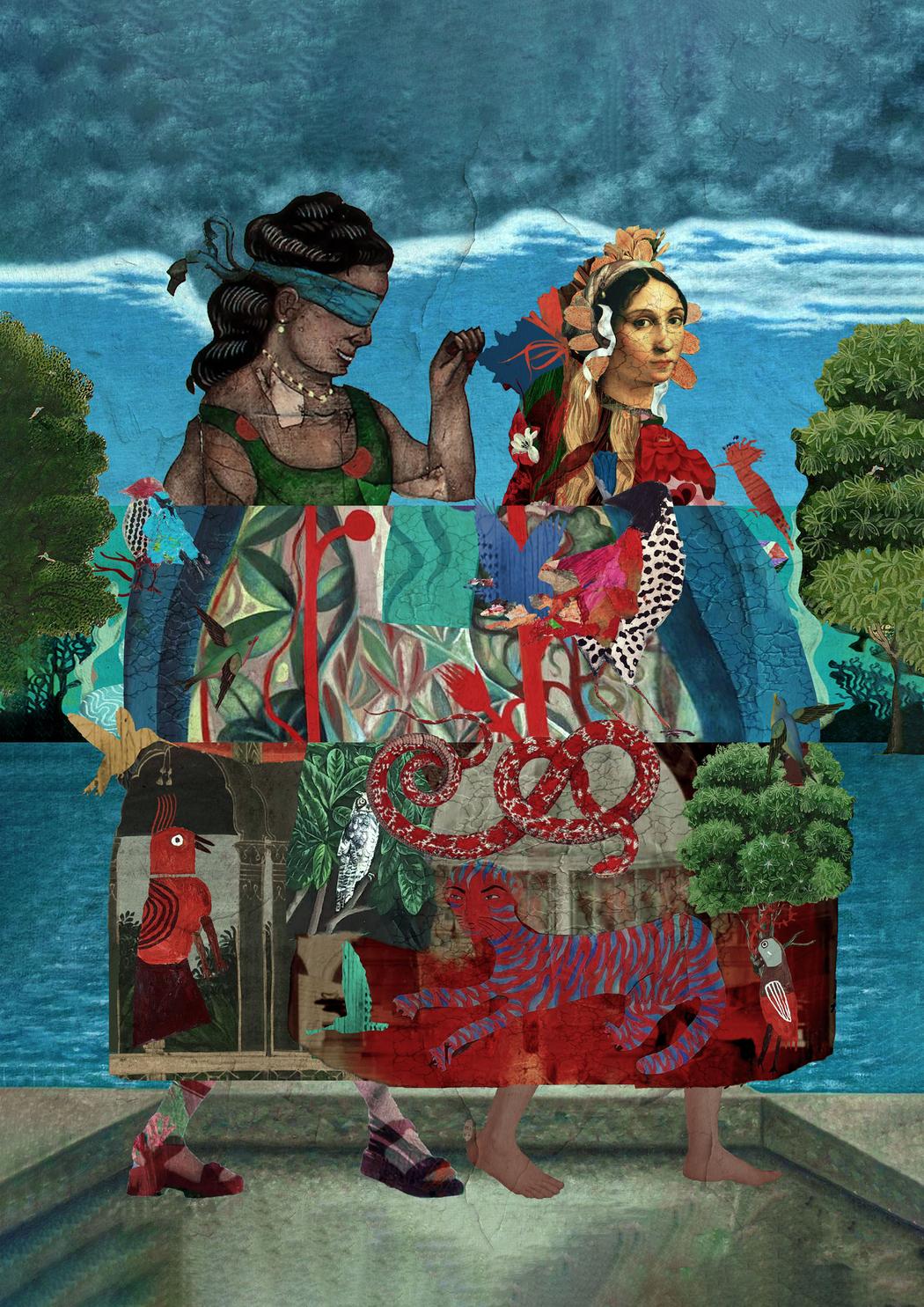
In “Broken Continuum”, two female figures become one fragmented entity. What inspired this exploration of duality and fluid identity?
These figures, assembled from fragments, emerged from an interest in how identity is layered, unstable, and shaped by multiple internal and external influences. The idea of deconstructed figures disrupts the usual borders of the body and tries to reflect themes of fluid gender identity, cultural hybridity, and the idea that identity is continuously constructed rather than predetermined. By seemingly fusing two women into a single, shifting entity, the work explores ideas of the self never really being one thing, it is a continuum, constantly in the process of becoming.
Animals, birds, and botanical forms frequently appear in your compositions. How do you choose the symbolic roles they play within each piece?
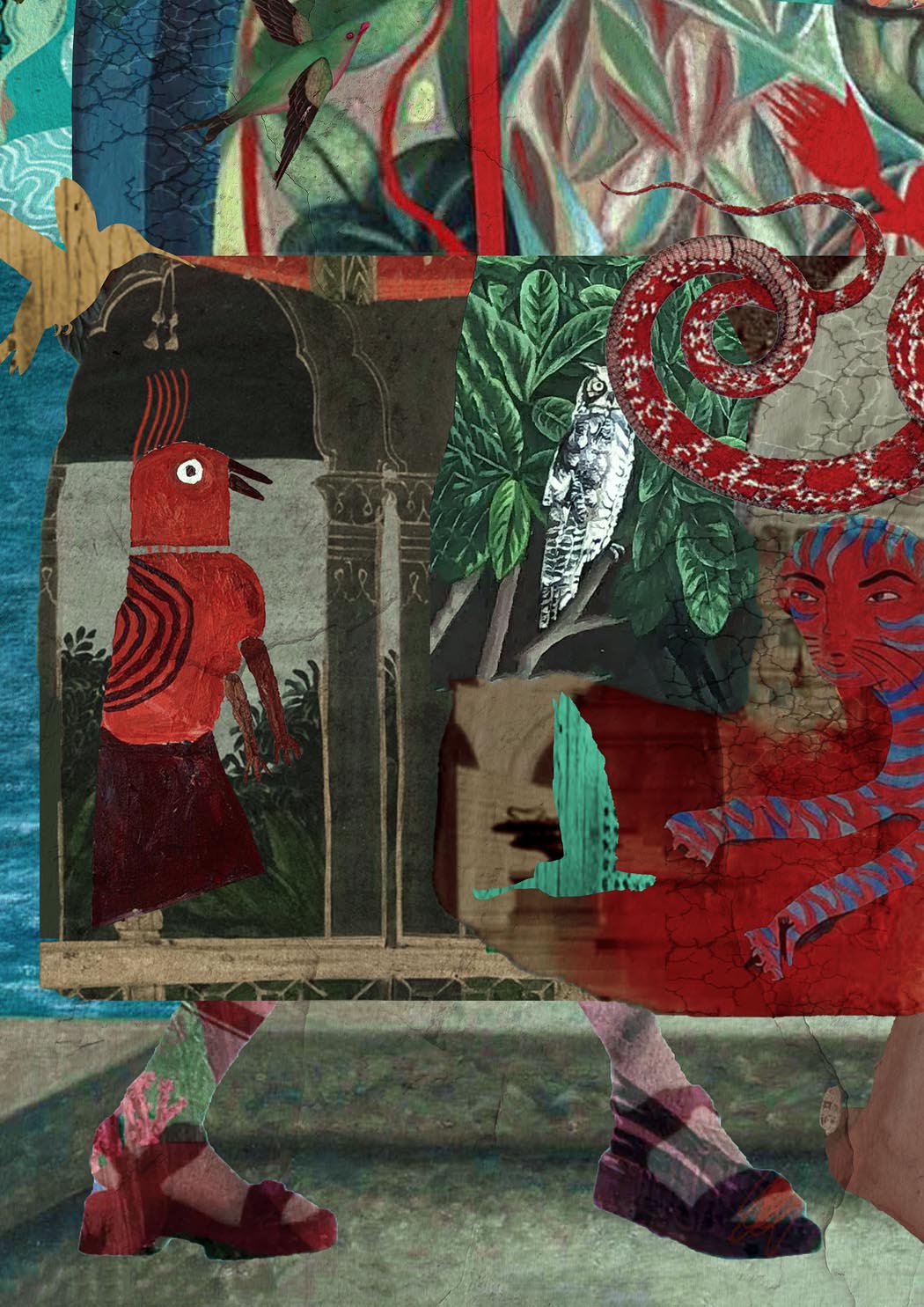
I choose their roles intuitively at first, letting their natural behaviors suggest emotional or symbolic functions. As I researched art symbolism,I found that there was already a strong tradition: birds for example often represented freedom, spirituality, and the soul, other animals embody instinct or vulnerability, and plants reflect cycles of growth or memory. As the composition evolves in my work, I refine those roles so each form supports the atmosphere or narrative the piece needs.
 Bob Holmes | Broken Continuum
You mention that nature in your work is a living, sacred force rather than a backdrop. How has your understanding of nature evolved throughout your artistic practice?
My view of nature has indeed shifted from seeing it as scenery, to recognizing it as an active presence with its own agency. In my earlier work, I treated landscapes as settings, but over time I became more aware of their rhythms, fragility, and depth. Now nature functions as a kind of collaborator in the work: shaping mood, symbolism, and meaning rather than merely framing it.
Your technique blends classical painting aesthetics with digital collage and mixed media. How did you arrive at this hybrid visual language?
I arrived at this ‘hybrid’ language by experimenting over many years. I trained in traditional painting and printmaking techniques, but using digital tools daily opened possibilities that felt equally tactile and intuitive. In time, I stopped treating them as separate practices and began layering them, hand-painted textures, scanned materials, found objects, and digital collage all informing one another. The mix lets me shift between precision and spontaneity, tradition and invention, until the image finds its own equilibrium.
 Bob Holmes | Broken Continuum
Your art often highlights a subtle tension between beauty and unease. How intentional is that emotional duality in your creative process?
That is completely intentional. I begin by trying to pursue compositionally balanced forms, using inviting colors, but I let small disruptions remain: an odd shape, changing perspectives, a tension in scale, a detail that feels slightly off. Those elements introduce unease, which I see as essential. It keeps the work from becoming decorative and invites viewers to look more deeply. The interplay between harmony and disquiet is where the emotional truth of the piece often emerges.
 Bob Holmes | Broken Continuum
Living and working in London, a highly urban environment, how does your surroundings shape your reflections on humanity’s relationship with nature?
Living in London lets me explore the tension between urban life and the natural world. Amidst the noise and concrete, hidden green spaces often reveal history and resilience. They shape how I think about our relationship with nature, how we overlook it, rely on it, and how it endures even in dense cities. I seek out those small moments where urban and organic meet, and imagine what a more balanced connection could be.
Leave a Reply
You must be logged in to post a comment.