
Najla Bdeir
Your work often feels very personal and narrative-driven. How do your own memories and experiences shape your artistic process?
To me, art is a form of self-expression and design is a form of communication. Most of my artwork and design projects are rooted in personal experiences – nothing I create is accidental. Over time, I’ve developed a keen eye for finding meaning in even the most ordinary moments, allowing me to build deeper narratives from things we often take for granted. This perspective guides my process, ensuring that every color, form, and composition serves a purpose and contributes to a larger story.
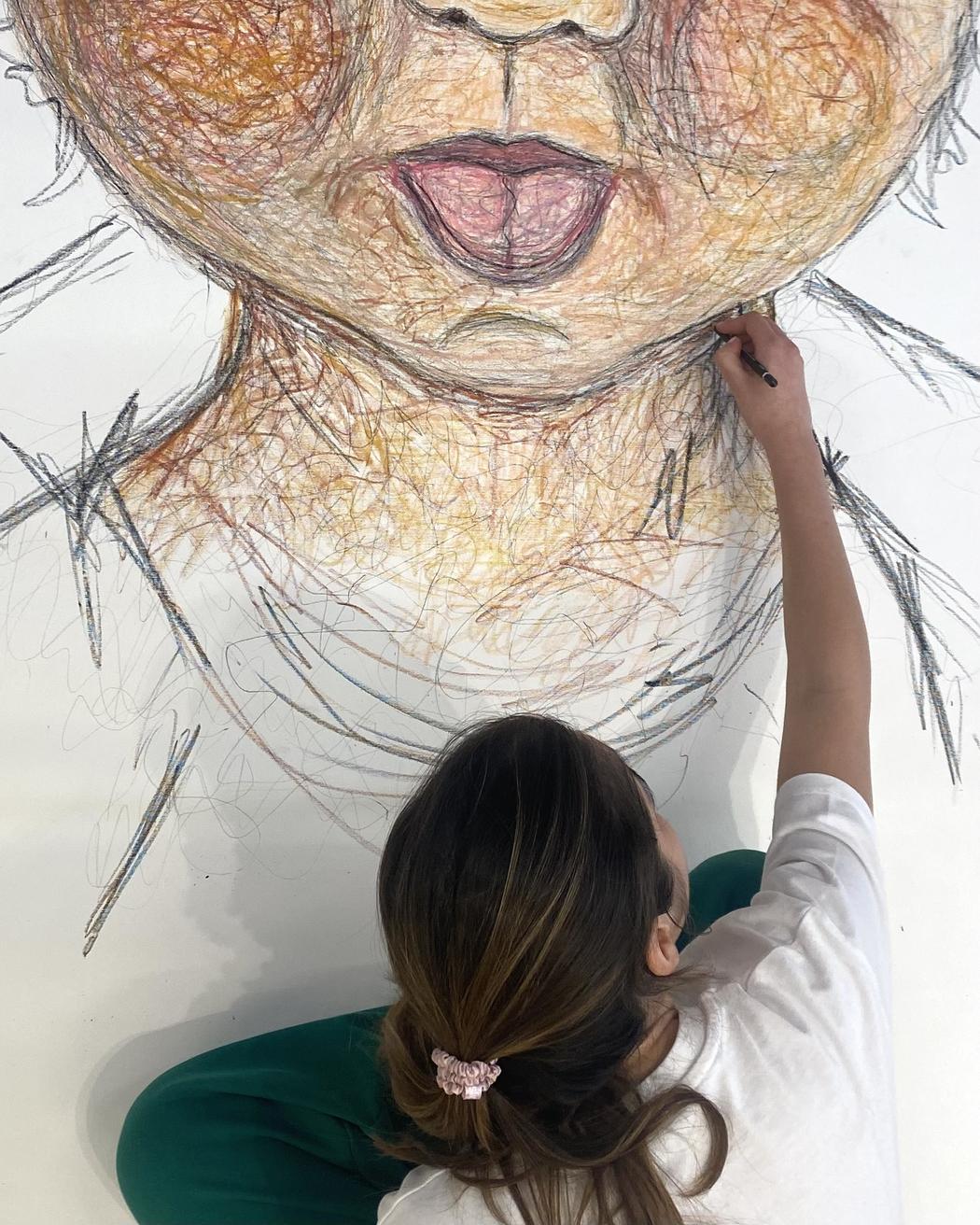
In “Bless This Mess”, you revisit your infancy through a self-portrait. What was it like to translate such an early and distant memory into a large-scale work?
“Bless This Mess” is inspired by my early childhood days, a time defined by creativity and a very uninhibited sense of self. Growing up, I was often taught to color between the lines, but time taught me that coloring outside the lines can be much more fun, and that is where expression truly happens. To create this piece, I revisited my early artwork from preschool and kindergarten – work that is characterized as messy and unfiltered – and I translated that work into a large-scale self portrait.
What made this work meaningful was the ability to turn something distant and almost intangible into something physical and intentional. Looking back, this piece reconnects me with a childhood dream of pursuing art, but now through a more professional and skilled lens.
The theme of “wide eyes” connected to your name is very poetic. How does identity influence your artistic language?
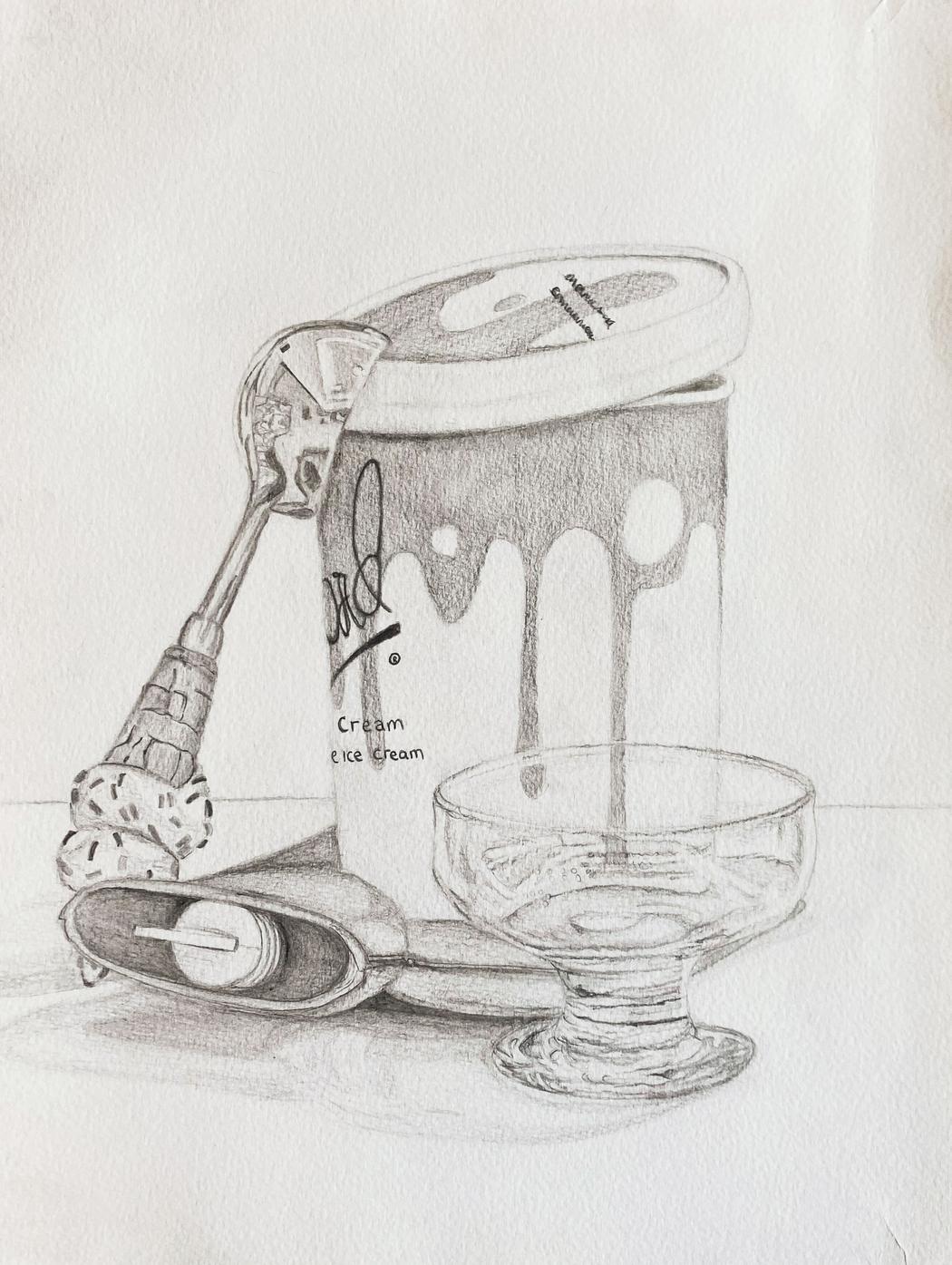
Identity is definitely central in influencing my artistic language. Growing up in a relatively homogenous environment, I became more aware of the importance of embracing and understanding my identity from a young age.
The theme of “wide eyes” is directly connected to my name, Najla, and reflects a way of seeing the world with openness and curiousity. In that sense, my work is not only about expression, but also about exploring my identity.
You work across multiple mediums – graphic design, sculpture, textiles, and drawing. How do you decide which medium best suits an idea?
The concept always leads the medium. I begin with the message I want to convey and then choose the form that can express it most effectively. Each medium offers something different – graphic design allows for clarity and structure, while textiles offer tactile and spatial depth.
There is always an intentional connection between the idea and material. For example, in “For the 0 of Tennis”, I used clay to build the sculpture, referencing the material of tennis court grounds. That relationship between concept and medium is what gives the work its meaning and depth.
In “For the 0 of Tennis”, you transform a personal observation into a sculptural piece. How important is family and everyday life as a source of inspiration for you?
In many ways, art and design are about obeserving and reinterpreting ordinary moments, whether they come from family interactions or daily experiences. “For the 0 of Tennis” showcases one of those experiences, where a simple, personal observation becomes something more permanent, noticeable, and reflective through art.
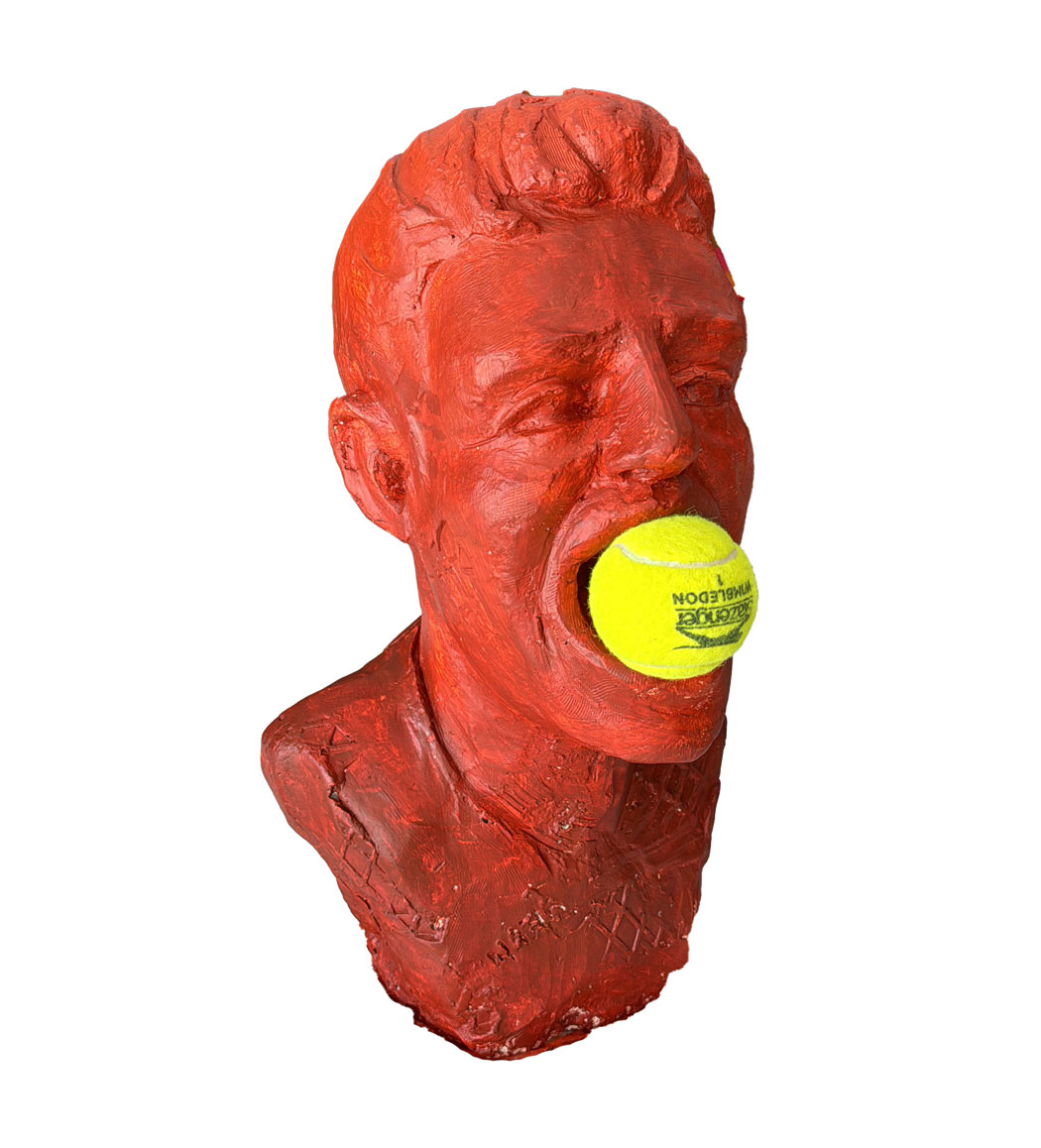
Najla Bdeir | For the 0 of Tennis
“Cold Hands, Warm Heart” brings together contrasting elements like warmth and cold. Are you generally interested in dualities in your work?
Dulaities aren’t necessarily my starting point, but they can naturally appear as I explore and reinterpert daily moments. The basis of my work is intention, and through that process, contrasts, irony, and juxtaposition begin to reveal themselves.
“Cold Hands, Warm Heart” reflects this through a very personal contradiction – my love for ice cream, and my lactose intolerance. Ice cream represents happiness, while the hote water bottle represents comfort, yet the two exist in opposition.
Using yarn to build this piece then adds another layer to this duality. It’s a warm, soft material, which contrasts with the coldness of ice cream. Altogether, these dualities and the juxtaposition strengthens the message, making the experience feel more personal, relatable, and visually impactful.
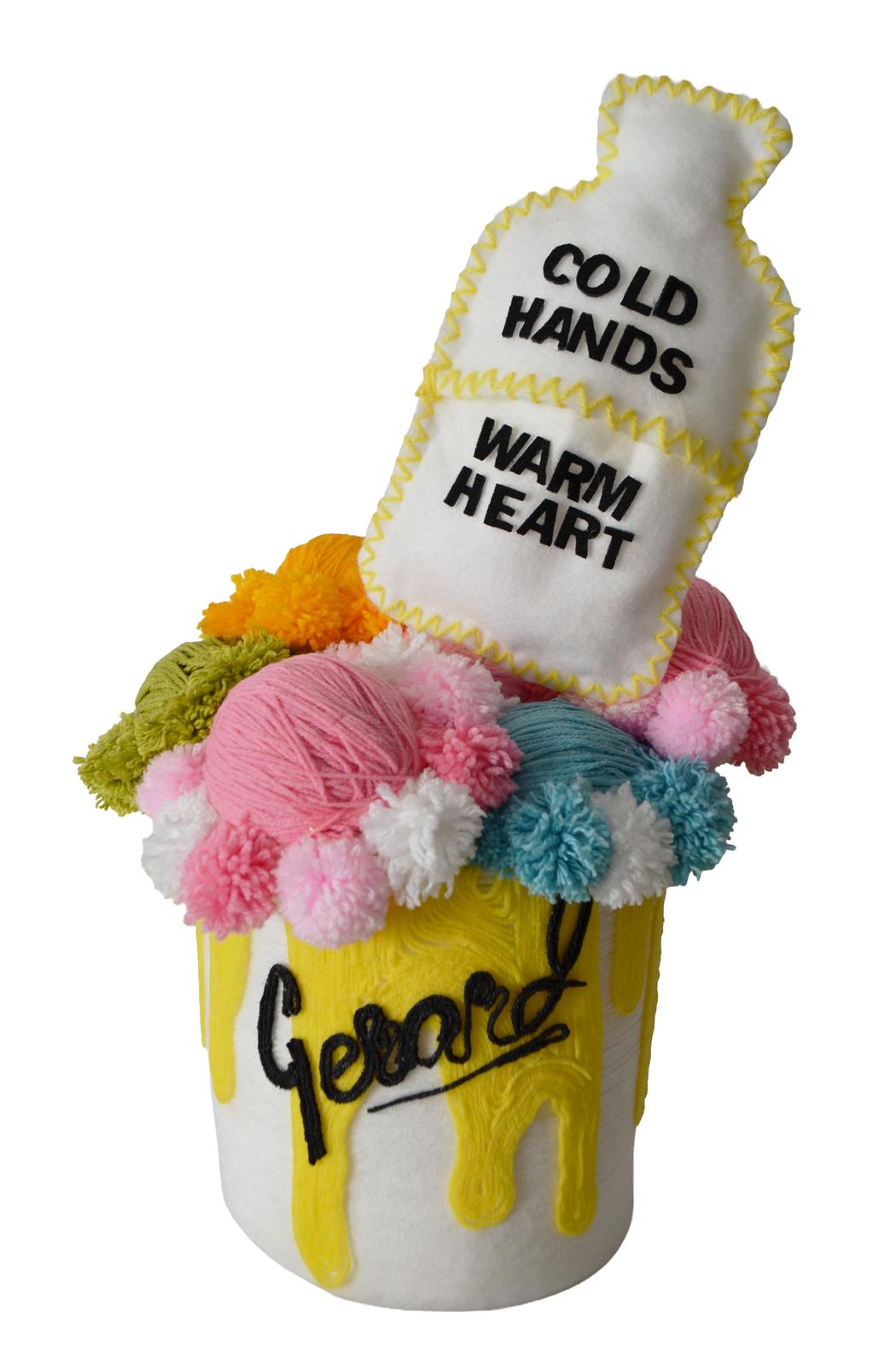 Najla Bdeir | Cold Hands, Warm Heart
Many of your works evoke a sense of comfort and nostalgia. Is creating emotional connection with the viewer important to you?
Creating an emotional connection with the viewer is important, and it is also a natural result of my work. Because my work is inspired by everyday moments, it carries a sense of familiarity that viewers can resonate with in their own way. That sense of connection and comort isn’t forced, but instead comes from the authenticity of the work.
Leave a Reply
You must be logged in to post a comment.