
Yidi Wang
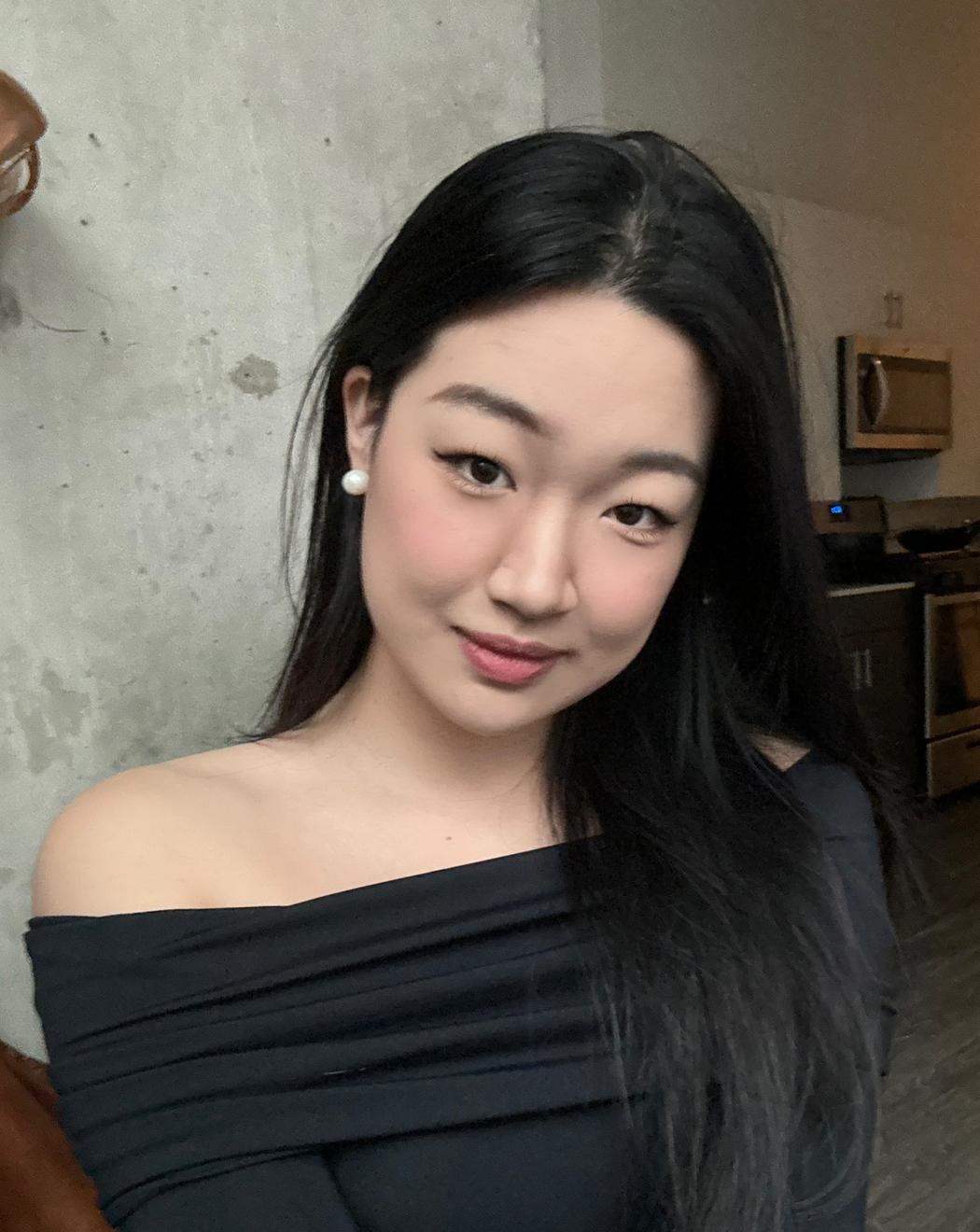
Your work moves between performance, digital fabrication, and speculative design. How do these different mediums help you explore questions of identity and the body?
In my practice, performance and the body itself are my primary mediums. I treat my own body as a material—one that carries memory, vulnerability, and lived experience. Through performance, the body becomes a site where social expectations, gender roles, and personal history are enacted and questioned in real time.
Digital fabrication functions as a way for me to extend the narrative of the body beyond its physical limits. Using tools such as 3D modeling, printing, and sculptural installation, I create objects and environments that expand the body into speculative forms. These works allow the body to exist outside itself—as fragments, organs, or technological extensions.
Speculative design is less a medium and more a method of thinking and research in my practice. It allows me to imagine alternative biological and social systems, asking questions about how bodies might exist in future relationships with technology, non-human organisms, and artificial life. Through this approach, my work explores the shifting boundaries between the human, the technological, and the ecological.
In your statement you describe yourself as “a feminist, a cyborg, and a post-human.” How do these identities coexist within your artistic practice?
My feminist thinking comes from my personal background. Growing up in an East Asian family, I became very aware of the cultural expectations placed on women—especially around care, sacrifice, and family roles. These experiences shaped my understanding of gender and power, and they naturally became part of the narrative in my work. In this sense, feminism in my practice is deeply connected to my own cultural and personal history.
However, I do not want to stop at feminism alone. My work extends toward post-humanism, which offers a broader philosophical framework that moves beyond human-centered thinking. Post-humanism questions the structures that divide beings into hierarchies—whether those divisions are based on gender, race, species, or other categories.
If we begin to see non-human creatures—animals, microorganisms, or artificial systems—as entities that share ethical significance with us, the traditional divisions that structure human society start to lose their authority. Gender binaries, racial hierarchies, and human dominance over other forms of life can all be reconsidered from the root.
For me, identifying as a feminist, a cyborg, and a post-human is also a way of positioning myself within these possible futures. It is not only a theoretical framework, but also a way of experiencing and embodying these ideas through my own practice. Through performance and installation, I place myself within these speculative conditions, exploring what it might mean to live and exist within these evolving relationships between humans, technology, and non-human life.
Many of your works investigate the intersection of gender, reproduction, and technology. What initially drew you to these themes?
My interest in these themes begins from a feminist perspective. I am interested in questioning the traditional structures of reproduction, which have historically defined women’s roles through biological expectations such as motherhood and caregiving. By examining reproduction critically, I want to challenge these systems and rethink how gender roles are constructed.
For me, questioning reproduction is also a way of challenging gender binaries at their root. Many social hierarchies and expectations are built upon the assumption that reproduction must follow a specific biological and gendered structure. When we begin to rethink reproduction, we can also begin to rethink the frameworks that define gender itself.
This is where post-human thinking becomes important in my practice. Post-humanism allows me to imagine forms of life, kinship, and reproduction that extend beyond strictly human or biological systems. The development of technology—whether through biotechnology, artificial reproductive systems, or hybrid technological bodies—is part of what shapes a cyborg or posthuman world.
Through my work, I explore how these emerging possibilities might allow us to rethink reproduction, care, and kinship in ways that move beyond traditional gendered structures.
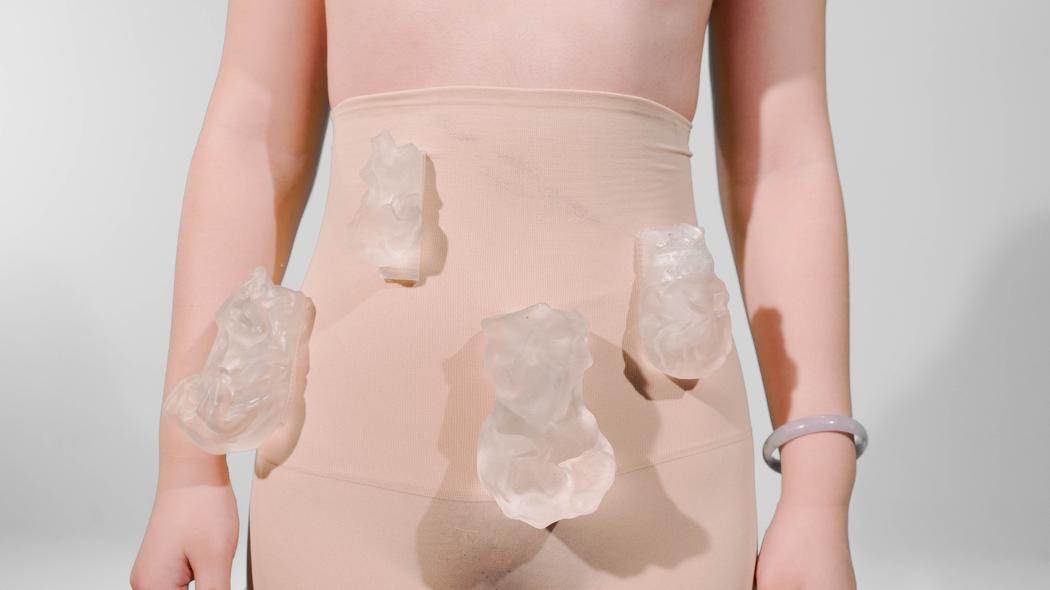
Your own body frequently appears in your performances and installations. What role does vulnerability play in your work?
My body is one of the primary mediums in my work, and vulnerability becomes an important part of how the ideas are experienced. Much of my research challenges traditional concepts of reproduction and motherhood as a way to question gender structures. In order to explore these ideas, I place my own body within the work and allow the audience to witness the process.
In my performance Post-Birth, for example, I constructed a speculative form of motherhood through bacteria cultivated from my own body. By nurturing these microorganisms as a kind of non-human offspring, the work imagines an anti-human-centered perspective, where non-human life can be considered as sharing ethical significance with us. Through this gesture, I explore the possibility of a post-human world where hierarchies such as gender binaries, race, and other human divisions begin to dissolve.
Motherhood in my practice becomes an experimental framework through which these philosophical questions are tested. This theme appears repeatedly in my work, and it is also deeply connected to my personal experiences and reflections.
To apply these ideas in practice requires experimentation and exposure. I must perform, test, and inhabit these speculative conditions myself. In this process, vulnerability emerges naturally. It exists not only within motherhood, but also within the female body, the human body, and even within non-human organisms. By revealing these states of vulnerability, my work attempts to create a shared space of empathy and reflection across different forms of life.
You often invite audiences to actively engage with your performances. How important is the viewer’s participation in shaping the meaning of the work?
Audience participation is important in my work because the meaning of the piece does not exist independently from the people who experience it. Many of my performances and installations are structured as systems of care, observation, or relational interaction. When viewers enter the space, they are not simply observing the work—they become witnesses to the processes that are unfolding.
In works like Post-Birth, the audience observes acts of nurturing, maintenance, and daily care. Their presence transforms the performance into a shared experience. The audience becomes part of the environment in which these speculative relationships between humans and non-human life are revealed.
This participation is not always direct or physical. Sometimes it exists through attention, empathy, and reflection. By witnessing these processes, viewers are invited to question their own assumptions about bodies, reproduction, care, and the boundaries between human and nonhuman life.
In this sense, the audience helps activate the work. Their presence completes the relational structure that the piece proposes.
In an age where technology increasingly mediates our bodies and identities, do you see the idea of the “post-human” as liberating, troubling, or both?
I see the idea of the post-human as both liberating and complex. On one hand, post-human thinking offers the possibility of moving beyond human-centered hierarchies that structure much of our world. These hierarchies often divide beings through categories such as gender, race, species, or technological difference.
Although post-human discourse often appears alongside technological development—such as biotechnology, artificial reproduction, or hybrid technological bodies—the philosophical core of post-humanism does not depend entirely on reaching a certain level of technological advancement. The idea of moving away from human-centered thinking, and recognizing that other forms of life may hold ethical significance equal to our own, is already a liberating shift in perspective.
When we begin to consider animals, microorganisms, or other non-human entities as sharing the same right to exist and participate in the world, the rigid hierarchies that structure human society can begin to dissolve. In this sense, post-humanism offers a way to rethink how we coexist with other forms of life.
At the same time, technological development also raises difficult questions about control, ethics, and responsibility. Because of this, my work does not present the post-human as a simple solution. Instead, it explores it as a space for experimentation and reflection, where we can begin to imagine new relationships between humans, technology, and non-human life.
What role does research play in your creative process, especially when working with new technologies and biological concepts?
Research is the driving force behind my practice. Many of my projects begin with theoretical inquiry, particularly in feminist studies, post-human philosophy, and discussions surrounding biotechnology and emerging technologies. These investigations shape the conceptual foundation of my work and guide the questions I want to explore.
The materials and mediums I choose—whether the body, technological tools, or biological processes—are all determined by the research itself. In this sense, I would describe my practice as research-driven. I select the medium that best allows me to visualize a particular idea and communicate that language to the audience.
Because of this, I do not set strict limitations on media within my practice. Performance, digital fabrication, biological experimentation, and installation are all tools that help translate theoretical questions into tangible experiences. The medium becomes a way to materialize research and invite viewers to engage with these ideas in a physical and emotional way.
Leave a Reply
You must be logged in to post a comment.