
Natalia Semenova
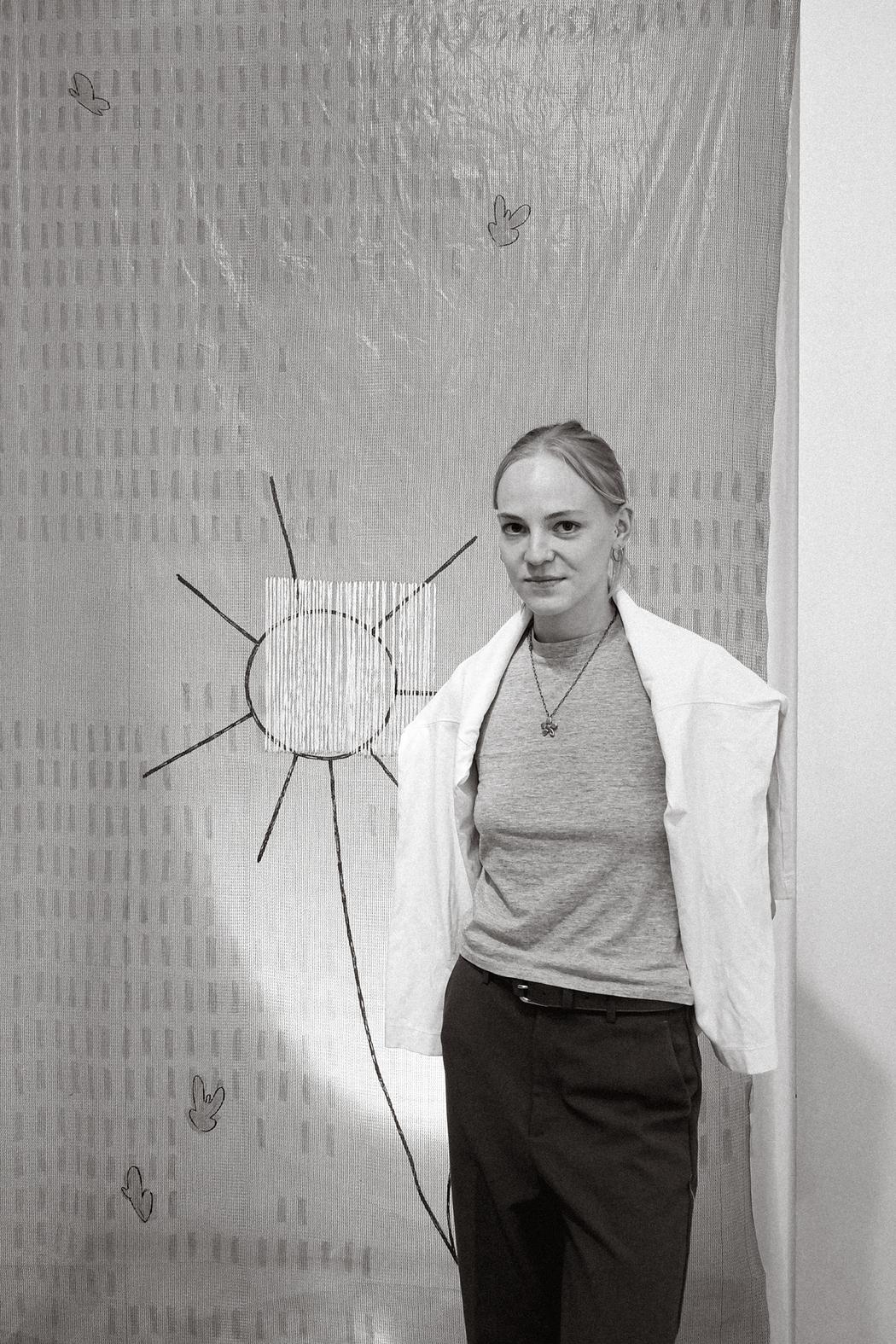
Your practice moves between intimate, wall-based textile works and large-scale public or site-specific installations. How do you decide which format a particular idea requires?
I believe each idea has its own image; colour, material, size, texture and placement serve its unfolding. When an idea first appears, the image can be indistinct, while sometimes particular fragments reveal themselves immediately. When I work with the urban environment I often start from the site itself — its history and the personal memories it awakens in me. Scale affects composition and the viewer’s perception in different ways: a large format defines the environment and creates a sense of scale and significance, while smaller works demand close inspection and attention to detail. I am drawn to the contrast that occurs when a large form, on closer inspection, is made up of finer parts, such as embroidery.
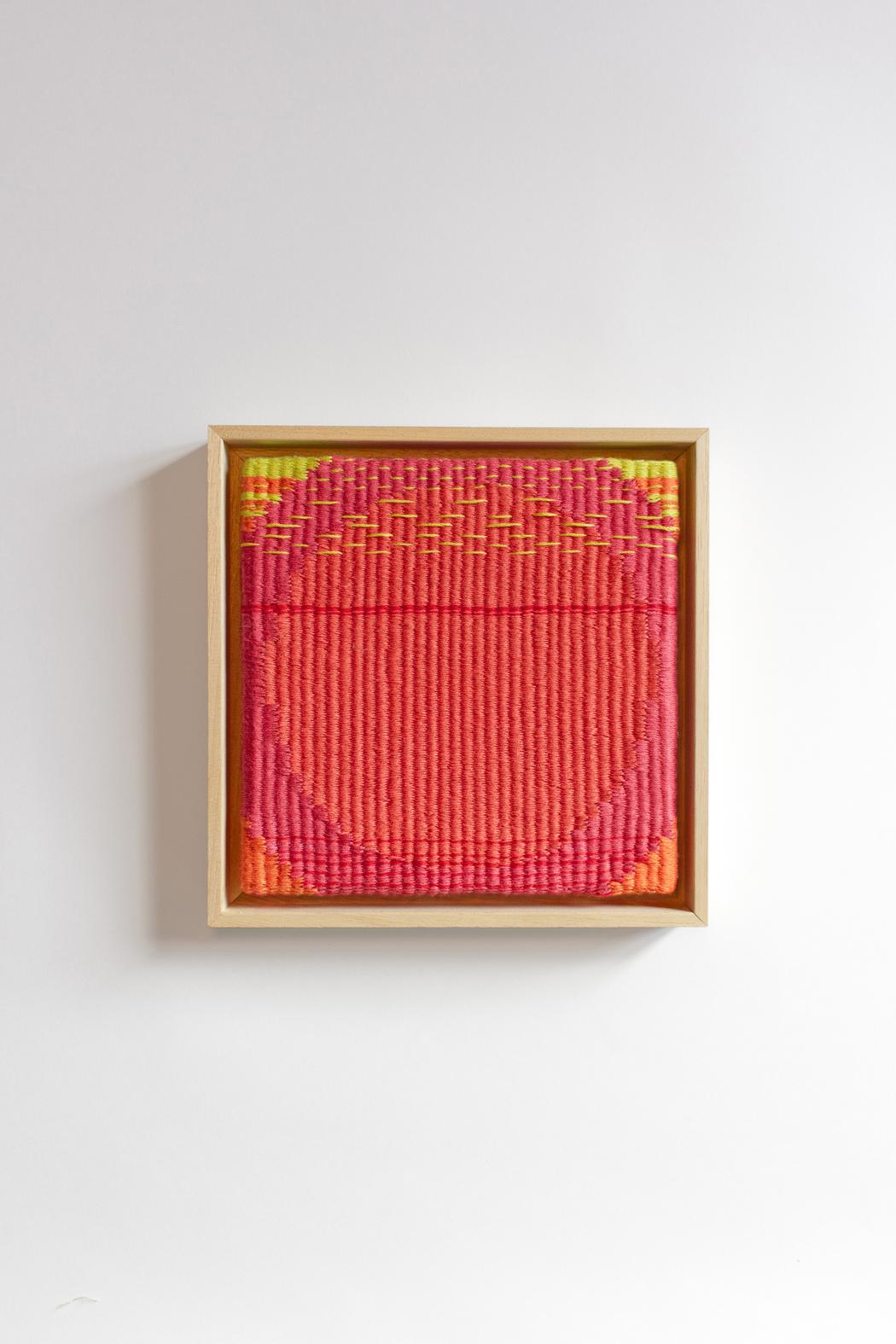 Natalia Semenova | Memories-in-coral | 2025
Weaving is central to your practice, both materially and conceptually. What does the act of weaving give you that other media cannot?
Tactility and manual labour; variability — weaving can be both a flat image and a volumetric object. I look for interactions between weaving and other materials, for example paper and graphics. The sequence of making is also important: whereas painting and drawing are built up in layers and often allow for corrections — erasing, scraping or painting over — in weaving the work proceeds “from the bottom up”: the design is considered in advance and is gradually formed row by row with threads. Corrections are practically impossible. I appreciate this impossibility of “rewinding” as a concept. Sometimes I have to accept an error made long ago and unnoticed, or invest a great deal of time to correct it — there is something very life-like in that.
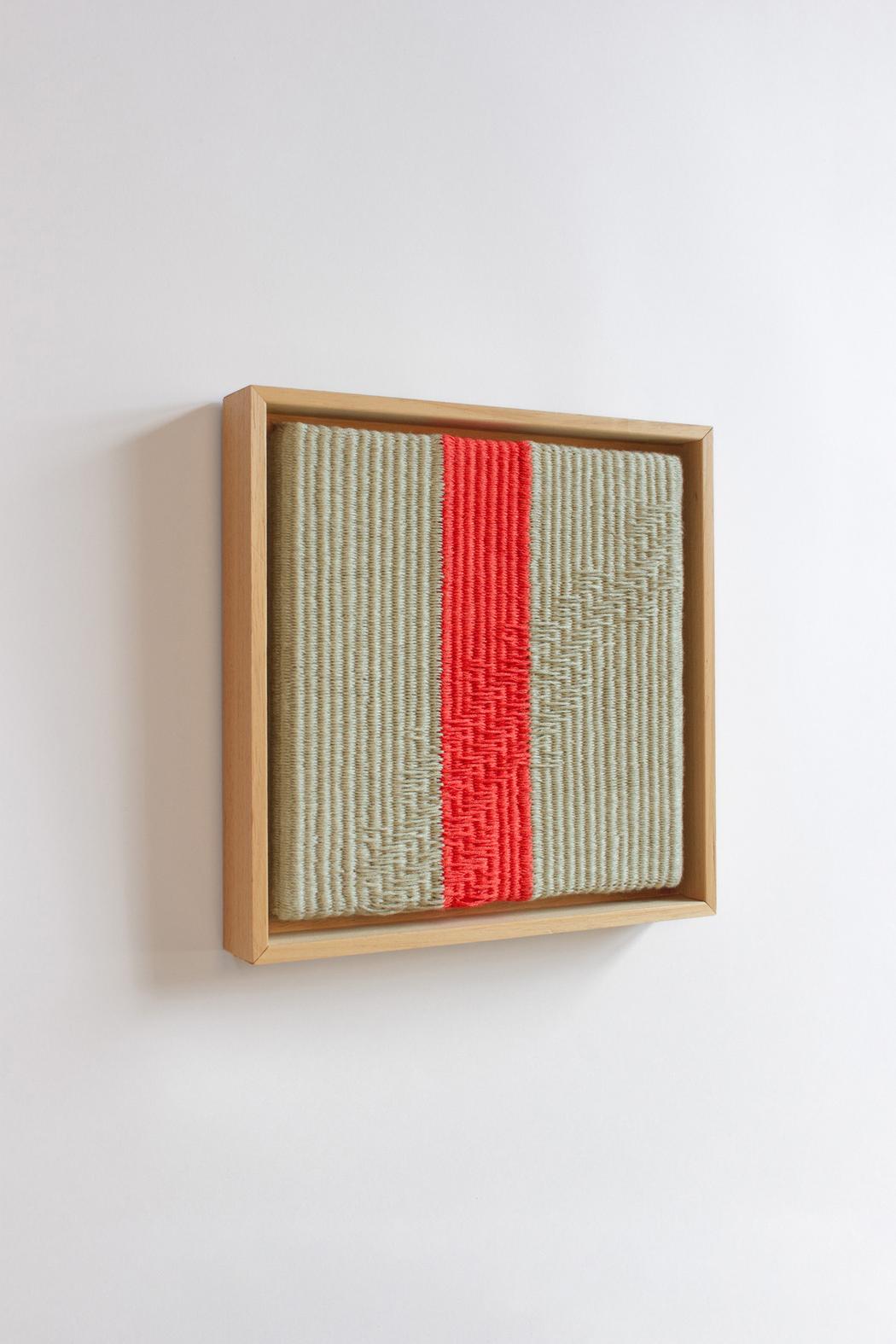 Natalia Semenova | Memories-in-lightgreen | 2025
You often describe weaving as a meditative process. How does repetition and manual labor shape your relationship to time while working?
The sense of duration I experience in weaving is important to me: it grounds and redirects focus to the process itself, emphasising the significance of sequential effort. I would like to convey this sense of duration and its importance to viewers. Physical, moral and temporal investments become visible — and perhaps even measurable — in weaving through the number of threads and stitches.
The theme of waiting appears as a key concept in your work. Is this state rooted more in personal experience or in observing social and urban environments?
These are interconnected. To some extent the theme comes from personal experience, but personal experience is always formed within a social context. I grew up in the 2000s in a small Russian town where there was a constant expectation of change: “any moment something will happen, and then everything will be different.” There was also a personal, childhood expectation to grow up, to change myself and to change the world. Today the culture still focuses on results and “key” moments; with time you realise that what matters often happens in the movement between those points — you learn to slow down and to value the process.
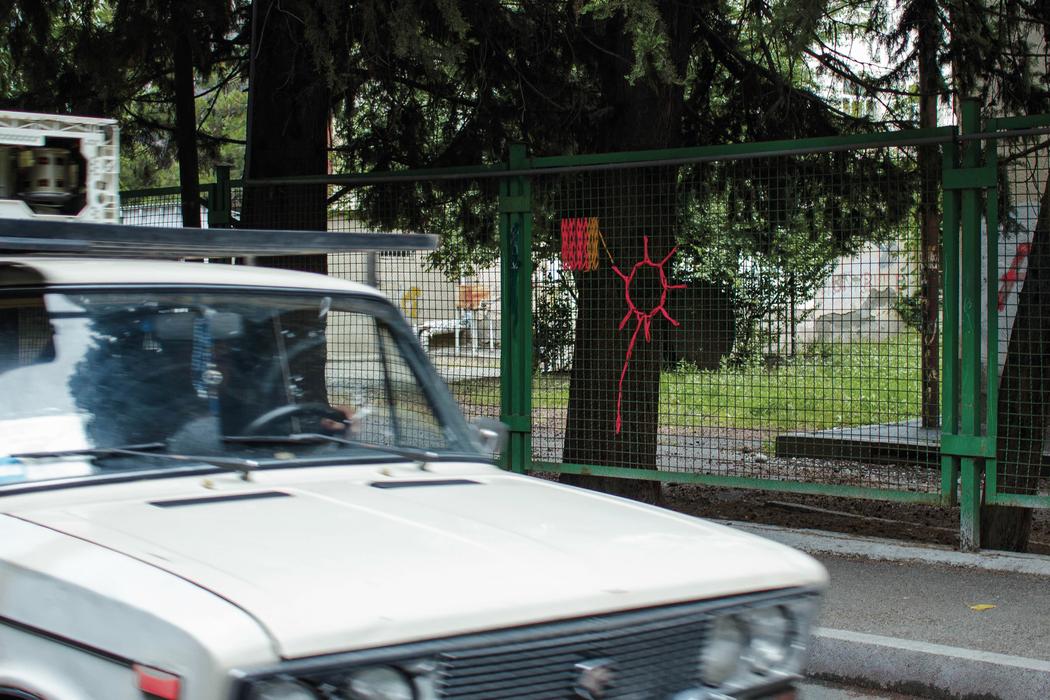 Natalia Semenova | Tracing-thoughts | 2023
Construction netting plays an important role in your installations. What attracted you to this material, and how did it become a symbol of unfinished transformation in your work?
Construction netting is an alien object that sharply contrasts with its surroundings due to its colour, texture and synthetic nature. Although the green colour might have been intended to mimic nature, in practice it works differently. The netting carries a persistent association with repair work: its function is fencing and safety. We cannot see what happens inside; the process of change is hidden from view, yet we are aware of it.
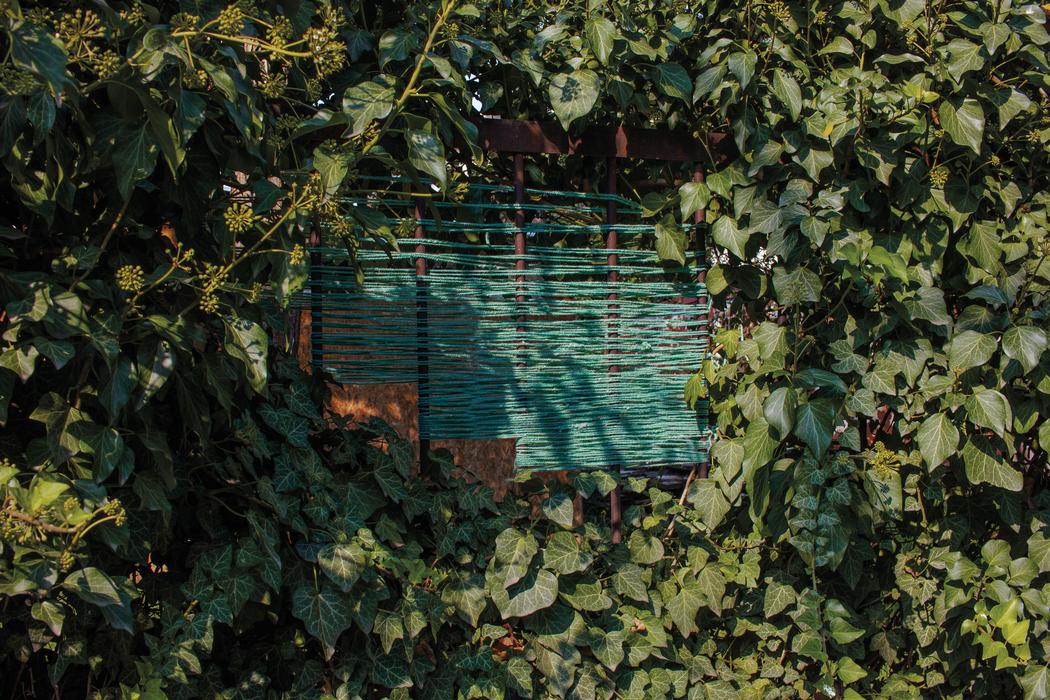 Natalia Semenova | Tracing-thoughts | 2023
Your public interventions often exist outside institutional frameworks. What freedoms or challenges does working in urban space bring compared to gallery or museum contexts?
In fact, I prefer to cooperate with institutions or at least to intrude gently into the urban fabric. For example, the project Wallpaper was carried out under the supervision of the Committee for State Control, Use and Protection of Historical and Cultural Monuments of Saint Petersburg. Working in the city requires complex coordination: the aim is to introduce art without affecting the integrity of the architecture — no drilling or painting of facades. In this respect construction netting and embroidery are convenient: netting is constantly present in the city and allows transformations without touching buildings, while embroidery weaves neatly into fences and textures, is easy to untangle and disappear, and yet alters the site’s image and meanings. This soft intrusion and the contrast between a coarse material and delicate work attract me.
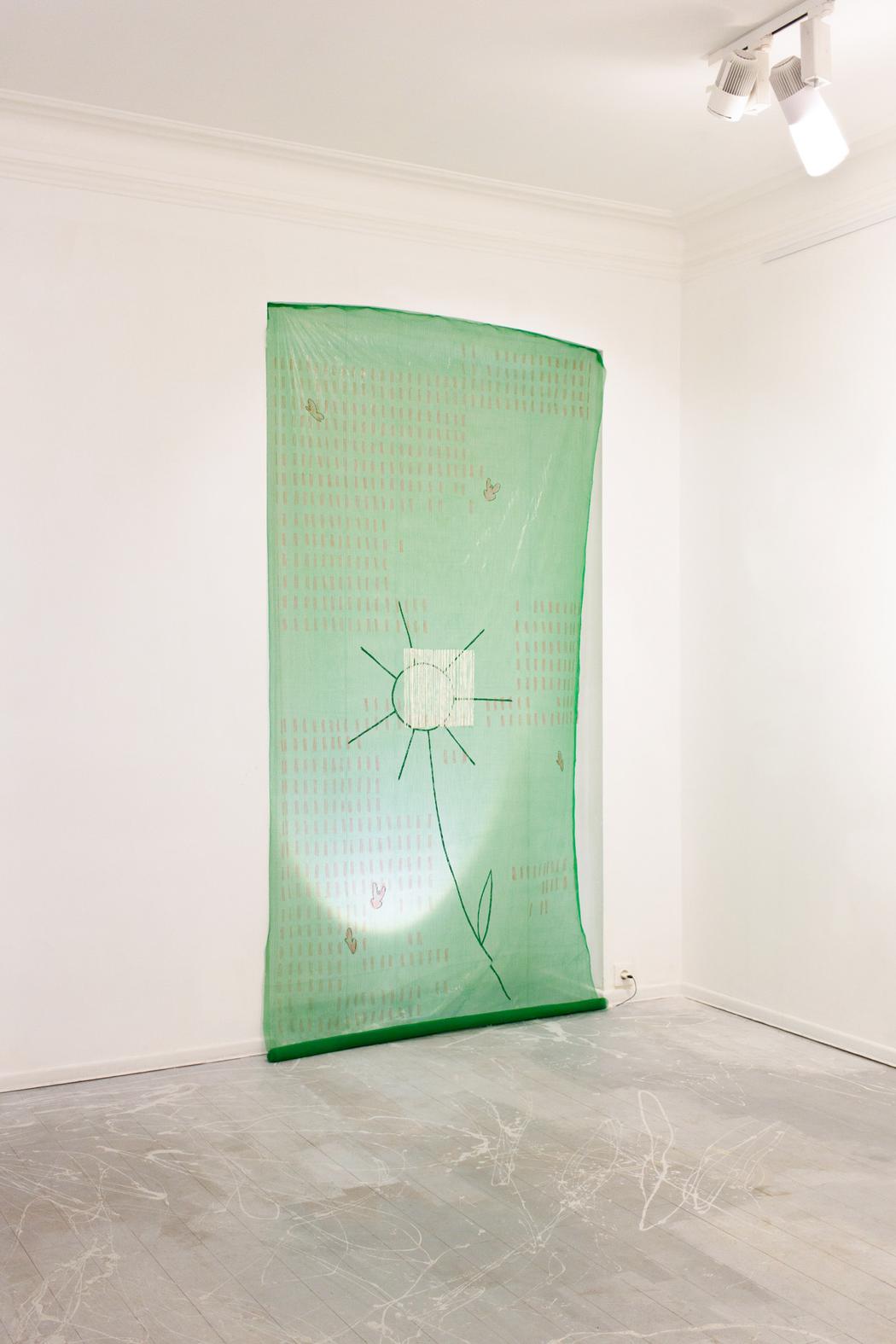 Natalia Semenova | Waiting | 2025
Your work suggests an alternative way of engaging with change, focusing on transition rather than outcome. Do you see this as a form of resistance to contemporary instability?
In a sense — yes. Attention to process and to intermediate states offers an alternative to a culture oriented toward quick results and “highlight” moments. An emphasised focus on transition is a way to build a more resilient attitude to change and to resist fixation on instantaneous successes.
Leave a Reply
You must be logged in to post a comment.