
Svetlana Bakhareva
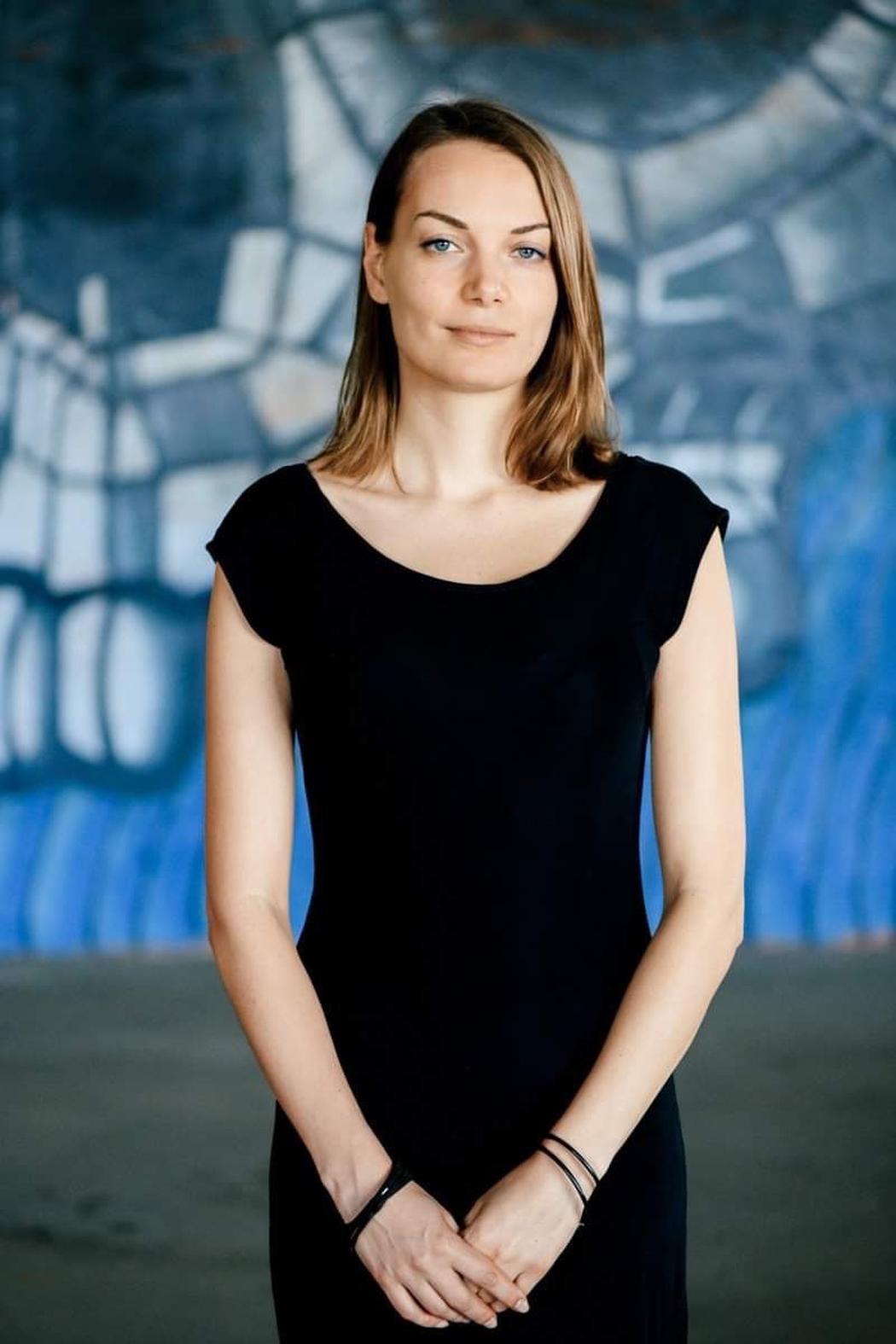
Your projects often take the form of immersive “capsules of experience”. How did this concept emerge in your practice, and what does a “capsule” mean to you today?
My practice initially developed within the idea of painting as an expanded field. However, over time it became clear that painting alone was not sufficient to fully hold complex states or to construct a threshold where an encounter with non-human could take place.
This realization led to the emergence of what I now call “capsules of perception.” A capsule is a container — a spatial, temporal, and perceptual vessel designed to sustain a threshold.
Within this threshold, the viewer encounters something non-human and non-rational: a force, a state, or a presence that cannot be reduced to representation. Today, the capsule functions as a framework for this encounter, allowing complex inner states to be held, experienced, and approached without being interpreting them.
In the series I can make your private lounge like this, you construct highly stylized interiors that feel both seductive and unsettling. What psychological or emotional space are you inviting the viewer into?
The psychological space of this series is deliberately ambivalent and liminal.
It exists between the familiarity of a private lounge — a place associated with comfort, intimacy, and control — and the unsettling intensity of a space capable of provoking deep inner shifts.
Functioning as seductive traps, they borrow the visual language of comfort and domestic luxury, only to gradually destabilize the viewer’s perception. Gradually, the environment turns into a liminal space rather than a place of rest.
The viewer is invited to remain inside this tension — between attraction and unease — where the interior ceases to be a backdrop and begins to act as an active agent of shifting the perception.
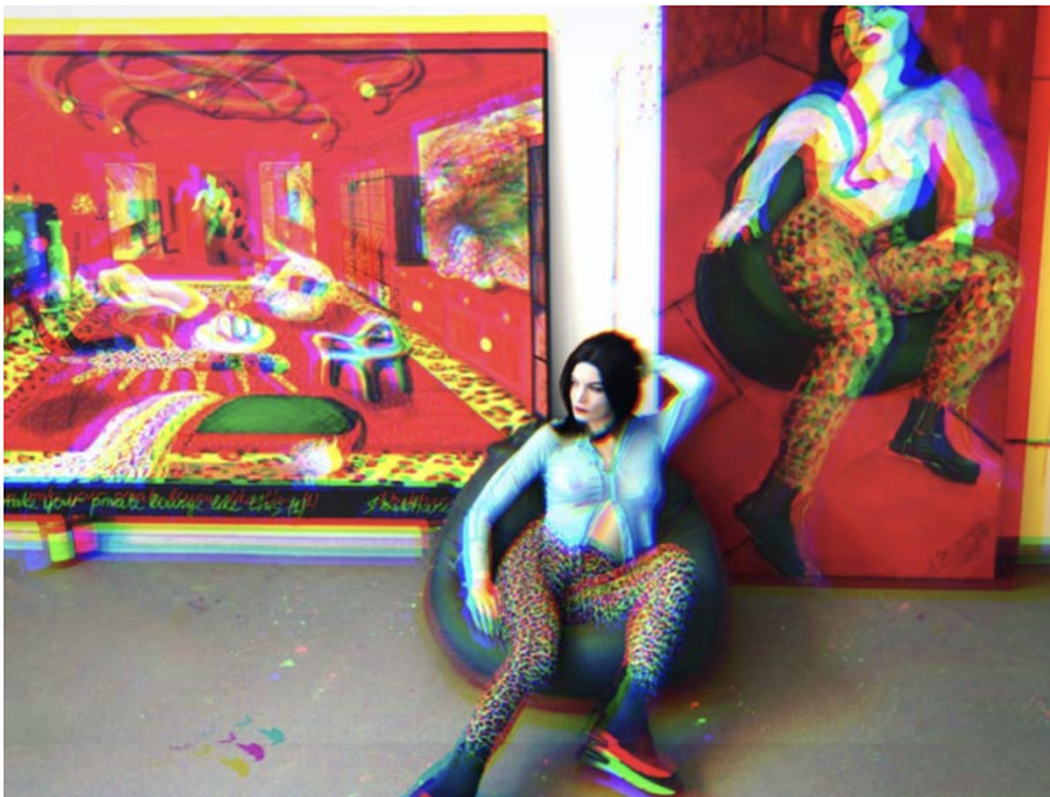 Svetlana Bakhareva | Character
A character seems to emerge in each project – someone you physically and emotionally inhabit. Who are these characters, and how do they transform you as an artist?
They are states that emerge from the unconscious and pass through my body, gradually becoming personified.
My body temporarily becomes a conduit — a site where an archetypal state condenses and begins to unfold as a myth, a world, a parallel reality. Through this embodied process, the state is translated into material form: painting, spatial environments, objects, video, performative gestures and digital traces.
Each of these figures that passes through me alters my perception, my physical awareness, and my artistic language. I do not remain the same after inhabiting these states.
I believe the encounter affects the viewer in a similar way. These works are not meant to be passively observed; they operate as experiential fields that subtly displace perception and continue to resonate beyond the moment of contact.
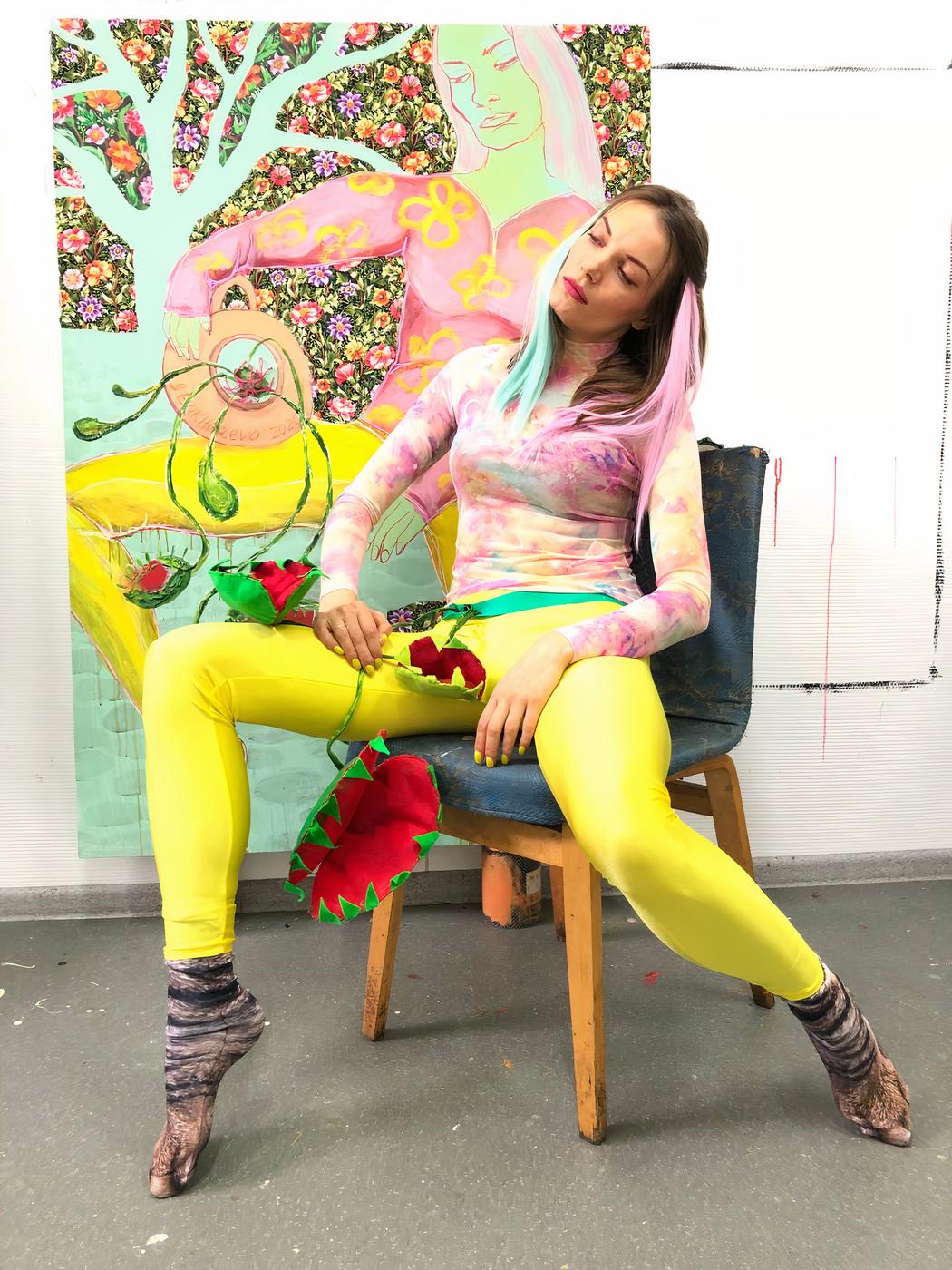 Svetlana Bakhareva | Character
Your work combines painting, objects, performance, and sometimes digital elements. How do you decide which medium becomes central in a particular project?
Each project begins with a specific state or tension that gradually reveals its own logic. The central medium emerges from this process rather than being chosen in advance. Some projects demand the stillness and density of painting, others require spatial construction, bodily presence, or digital extension.
Painting often functions as a trace — a residue of an embodied or spatial experience — rather than its starting point. What matters to me is not the dominance of a medium, but its precision: how accurately it carries the state that initiated the work.
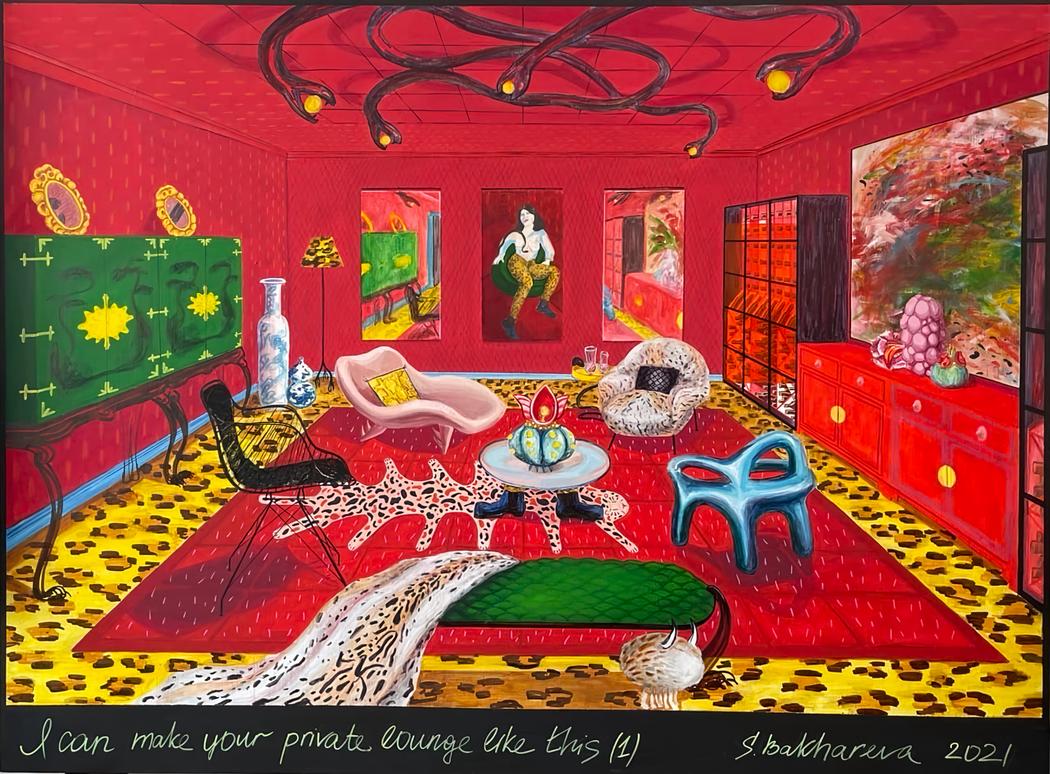 Svetlana Bakhareva | I can make your privite lounge like this | 2021
The interiors in your paintings appear like theatrical stages or parallel realities. Do you see them as utopian spaces, traps, fantasies, or something else entirely?
These interiors resist a single definition. They can be read as utopian spaces, seductive traps, or constructed fantasies — often all at once.
Rather than offering a fixed meaning, they mirror the viewer’s internal landscape. The same space can feel inviting, disorienting, or oppressive, depending on where viewer’s perceptual focus is directed at the moment
In this sense, the interiors function as a specific manifestation of a broader approach in my practice. Across different media, my work operates as a perceptual device — a structure designed to interrupt automatic modes of seeing and to shift the viewer out of habitual perception.
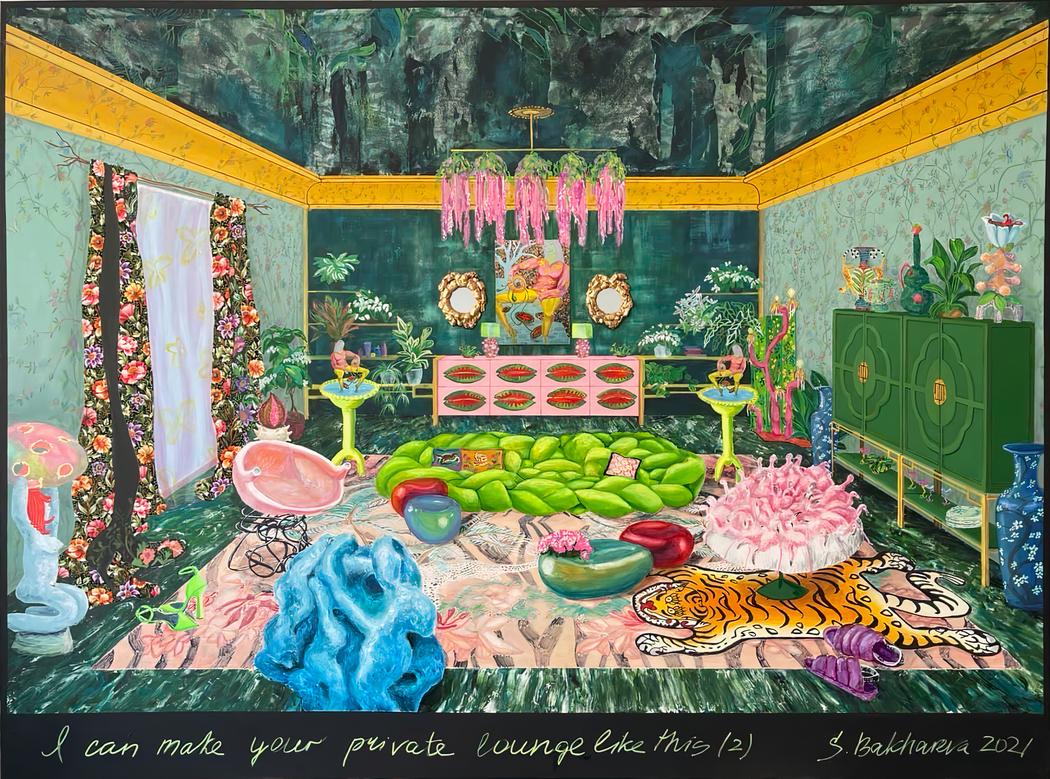 Svetlana Bakhareva | I can make your privite lounge like this | 2021
Having studied in both Russia and internationally, how have different cultural contexts shaped your visual language?
For me, russian cultural context is deeply connected to a sense of roots — to archaic, pre-Christian layers of culture shaped by transformation, darkness, and chthonic forces operating beneath conscious structures.
This gave the density, intensity, and corporeality present in my visual language, while internationally context gave me the opportunity to step outside inherited frameworks, that allowed my visual language to become more self-directed.
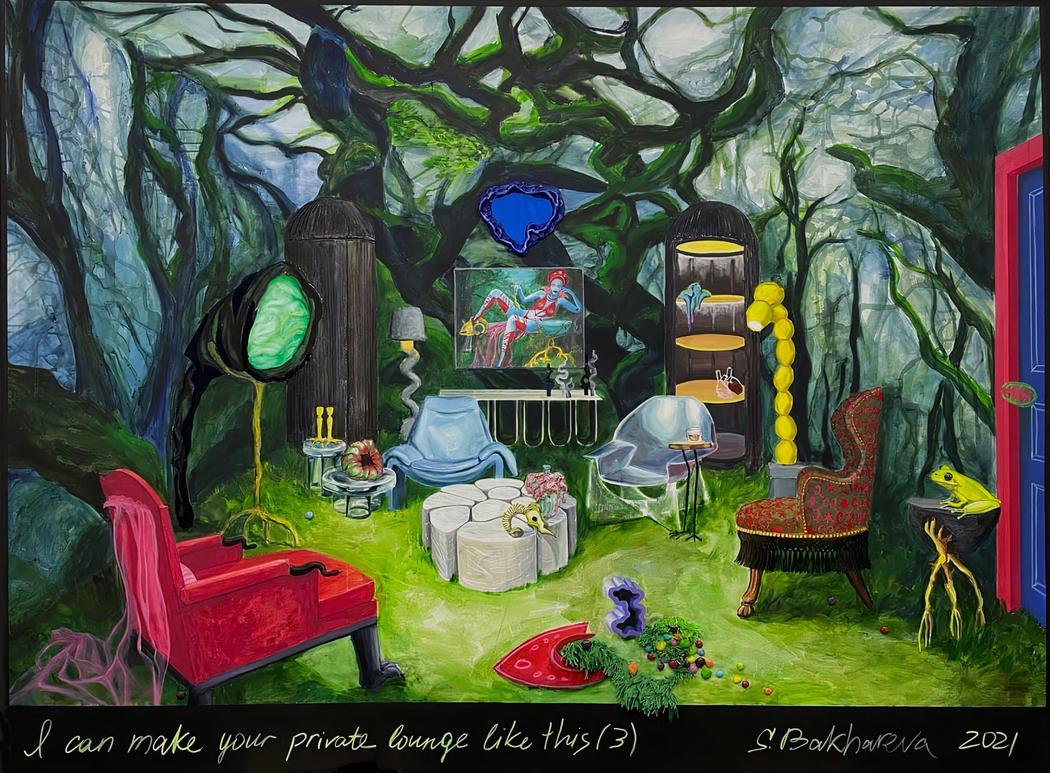 Svetlana Bakhareva | I can make your privite lounge like this | 2021
What kind of transformation do you hope occurs in the viewer after encountering your “capsule” worlds?
I don’t aim to predetermine what kind of transformation will occur. What matters to me is not the outcome, but the condition for possibility.
My role is to construct a site of encounter — a threshold where the viewer comes into contact with something non-human, non-rational, and not fully nameable. This threshold is shaped through art, but it does not demand passage. One can cross it, remain standing at its edge, or turn away.
The work operates precisely in this suspended zone. By creating a perceptual threshold, it disrupts automatic modes of perception and opens a space where change may become possible, without being prescribed or controlled.
Leave a Reply
You must be logged in to post a comment.