
Clara Fortis
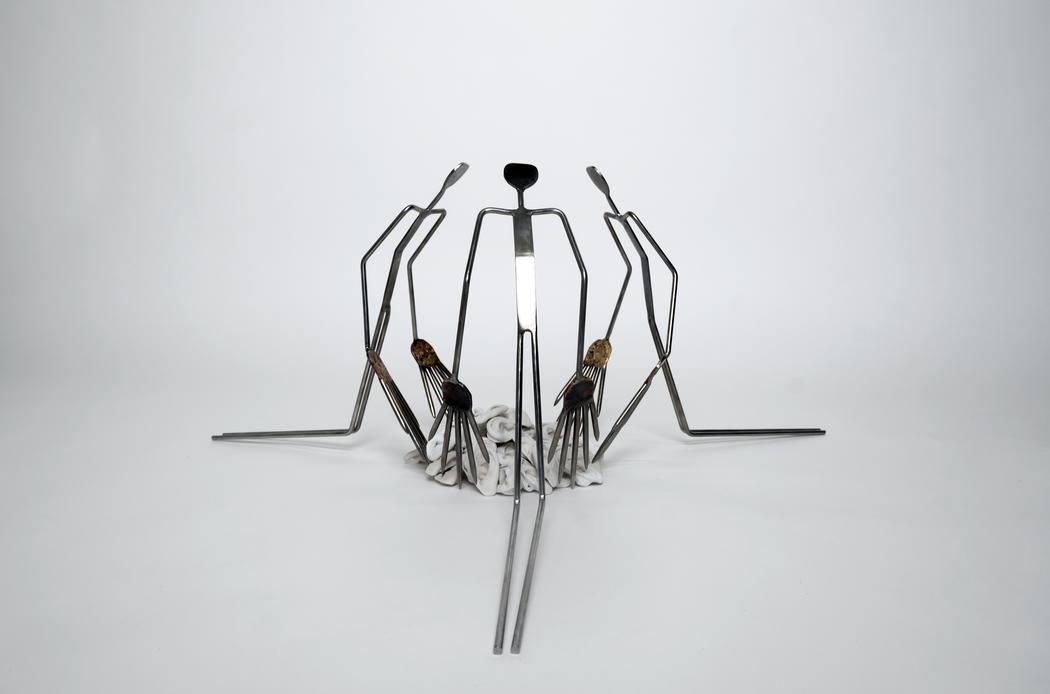 Clara Fortis | Unanswered Prayers | 2024
Your work often revolves around gestures of listening, speaking, and being silenced. When did the idea of hearing become central to your artistic language?
I suffered an injury to my middle ear several years ago that resulted in hearing loss and the development of severe chronic tinnitus. For a long time, I avoided engaging with the theme of hearing because it was too painful to confront an ongoing conflict in my life. When it entered my work, it marked a shift toward accepting the loss of a fully functional body and toward processing something that continues to affect me deeply. What began as an attempt to find comfort through research into medical, historical, and mythological references surrounding the ear gradually became part of my artistic practice. Through this exploration, I began to realise that the need to be heard is a fundamental aspect of being human, opening a wider field of inquiry in which hearing is inseparable from communication and social dynamics. Some of my artworks focus solely on the act of hearing, while others move toward speech and silence. Although the subject matter is deeply personal, my work is rarely autobiographical. I am interested in how my personal experiences can be transformed, buried even, within a work that allows viewers to encounter and reflect on their own relationships to listening, communication, and being unheard.
Steel is a recurring material in your sculptures. What does steel allow you to express emotionally or conceptually that softer materials cannot?
My practice is research based, and I often avoid referencing existing artworks, instead using objects as catalysts. As much of my work draws from medicine and psychology, I became interested in how a metallic appearance recalls the medical devices that inform my art and shape my understanding of the body. Steel also allows me to work with ideas of permanence. Harsher materials like metal insist on remaining and have an inherent relationship to sound. The process of working with steel is loud and resonant. Cutting, welding, and grinding make sound unavoidable during the act of making. Even when the finished work is silent, that sonic history remains embedded in the sculpture, alongside the sounds viewers might imagine when encountering metal. Using a material that evokes sound allows me to address themes of hearing without using sound itself as a medium. It suggests vibration and resonance while refusing to perform them directly, mirroring the complexities of hearing.
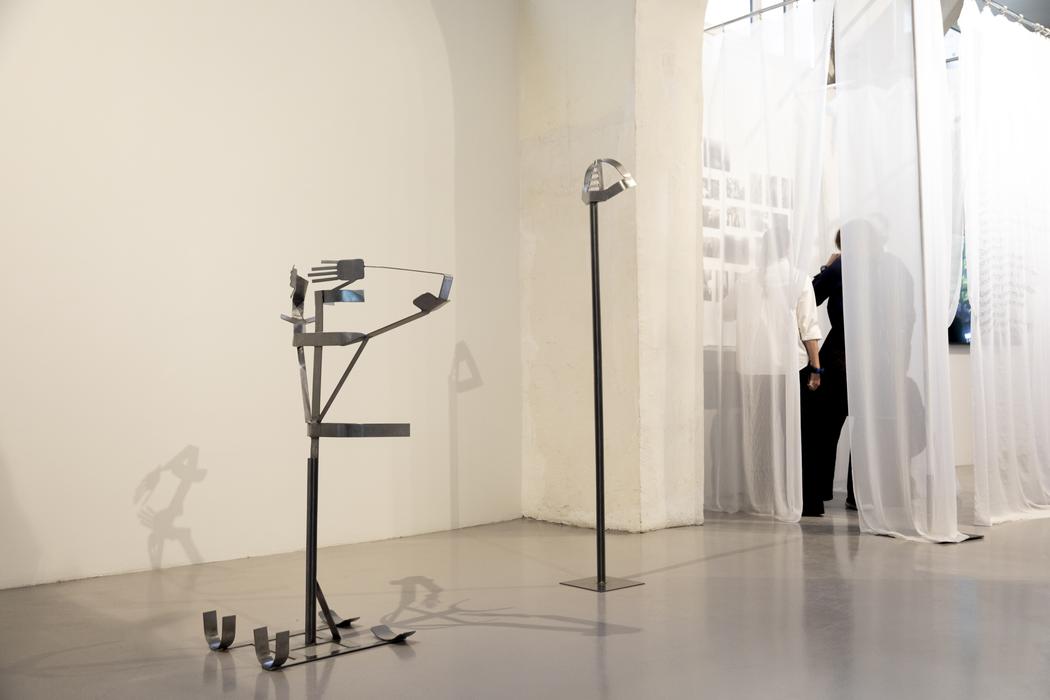 Clara Fortis | The Posture Of Hearing And The Anatomy Of Screaming | 2025
Many of your works reference body fragments—ears, teeth, limbs—rather than complete figures. What draws you to fragmentation as a way of speaking about human behaviour?
I can trace my interest in fragmentation back to a long-standing personal practice of journaling and writing poetry. Much of this writing is abstract and metaphorical, often centered on the body, and it becomes the emotional material I return to when beginning to conceptualise an artwork. I believe that for others to form an emotional connection to my work, the concept must originate from a place of personal vulnerability. My poetry functions as a reference point throughout the making process, and I always arrive at a title and concept statement before a physical work is complete. Although I mainly work in sculpture and installation, my process often feels closer to collaging, combining personal writing with research drawn from psychology, philosophy, and medicine to develop a specific idea.
In this sense, the bodily fragments in my work are mimetic of how I write, research, and conceptualise, through the isolation and recombination of different areas of inquiry. Focusing on a part of the body or a fragment of identity also allows me to draw attention to what is often overlooked in behaviour: gestures and moments of contact that shape how humans perceive one another. Ears, teeth, or limbs become a site of attention rather than a detail, allowing me to focus on parts of the body which are essential but are often taken for granted. Fragmentation creates both intimacy and distance, mirroring experiences of isolation and the difficulty of being fully seen or heard.
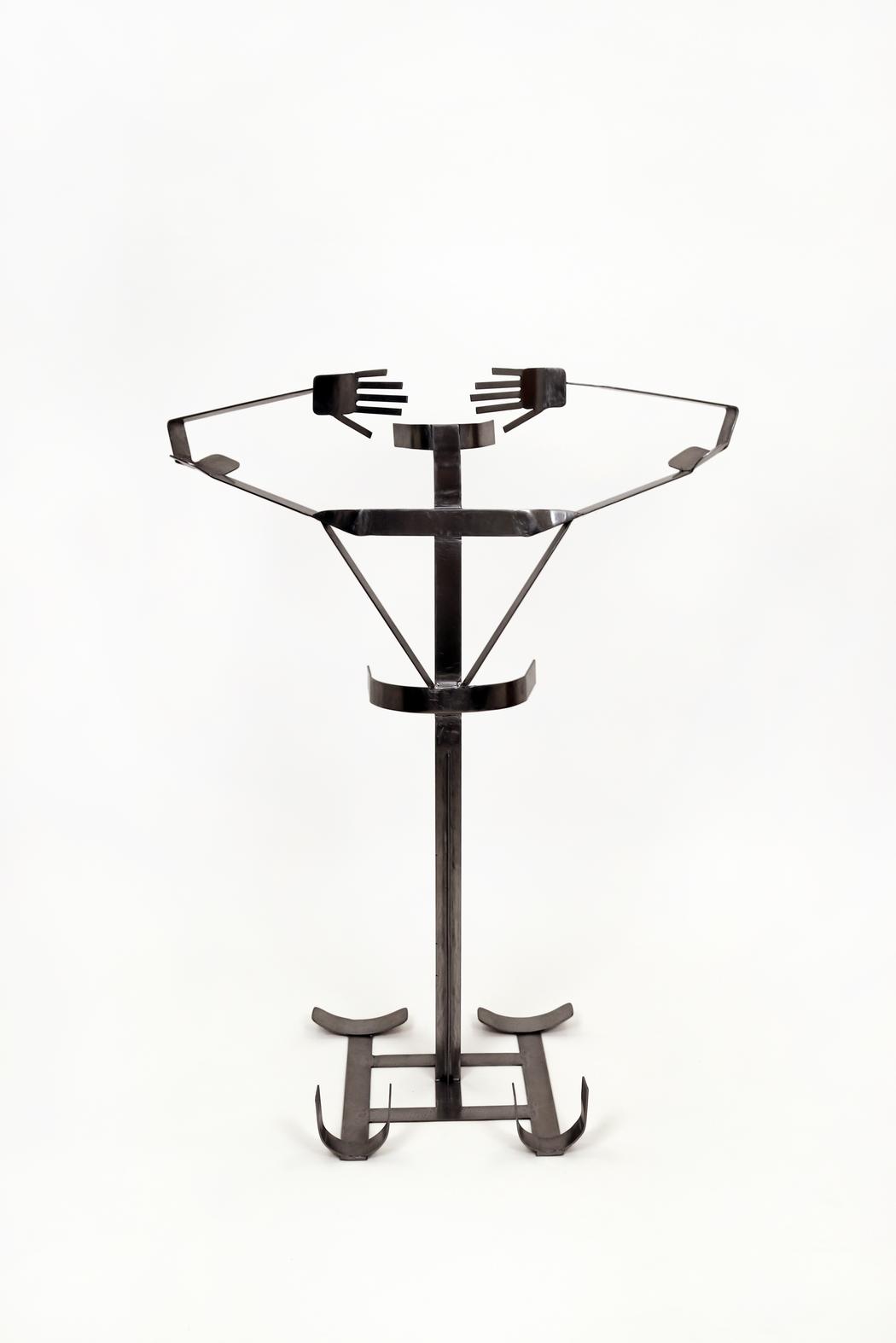 Clara Fortis | The Posture Of Hearing | 2025
How has living between multiple cultures shaped your sensitivity to exclusion, miscommunication, and social hierarchies?
Living between multiple countries has made me aware of how my identity is read differently depending on context. Much of this awareness comes from navigating the world as a woman and continuously reassessing how I present myself across different environments, in which moments of miscommunication become more visible. While my sculptures are intentionally open-ended, I frequently recognise in them, retrospectively, patterns drawn from my own experiences. Beyond my initial engagement with hearing impairment, the recurring theme of feeling unheard in my work often intersects with experiences of gendered communication, particularly in relation to men.
One example is “Muscle Memory”, a steel sculpture that combines the motifs of human teeth and a bear trap, both methods of defence, to convey the exhaustive process of always needing to keep one’s guard up. Although not conceived as an explicit commentary on gender, I later recognised how the work echoed my own experiences of remaining guarded around men
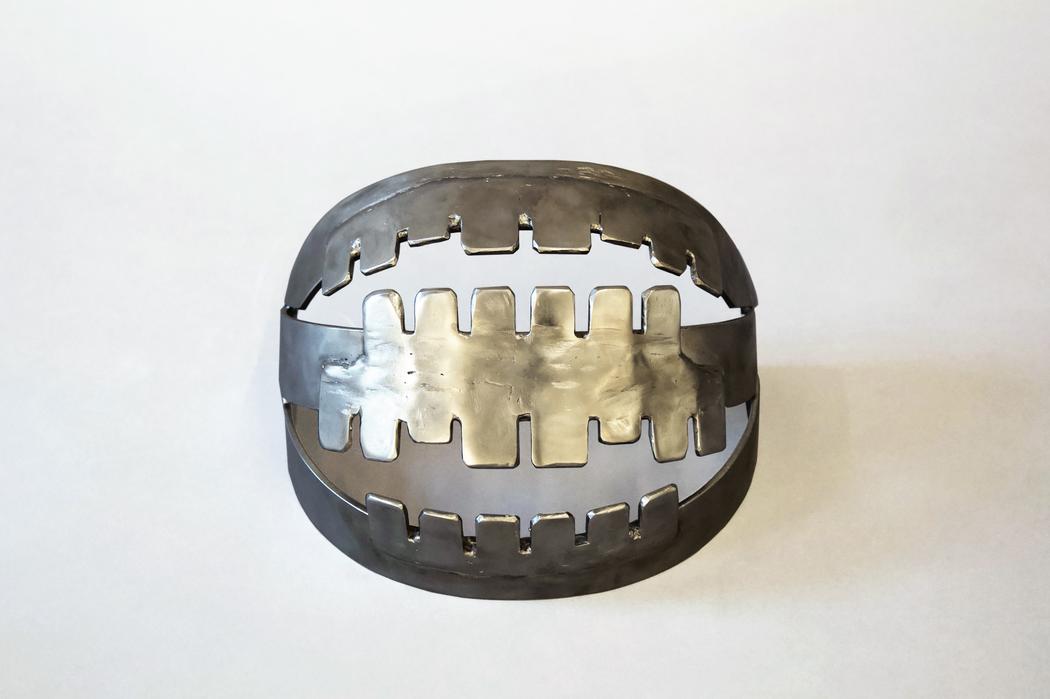 Clara Fortis | Muscle Memory | 2023
You have worked across fashion, photography, and installation. How do these disciplines inform your sculptural thinking today?
Working across several disciplines has influenced how I think about sculpture as something closely tied to the body. Even when my works are not physically activated, they are almost always built with a body in mind. In “The Posture of Hearing”, for example, the sculpture directs the body into a position of hearing by focusing on the act of cupping one’s hands behind the ears, while also confining the body into a kneeling position. Although the artwork could be used, I chose to restrict interaction during its installation and instead invite viewers to move around the work and imagine themselves within it.
Fashion has shaped how I think about constructing for the body, introducing a sense of performance, even when that performance is imagined. Photography comes in as a way of extending the work beyond the exhibition space. Collaborating with photographers allows the art to be reinterpreted with a body present, serving both as documentation and as another layer of interpretation.
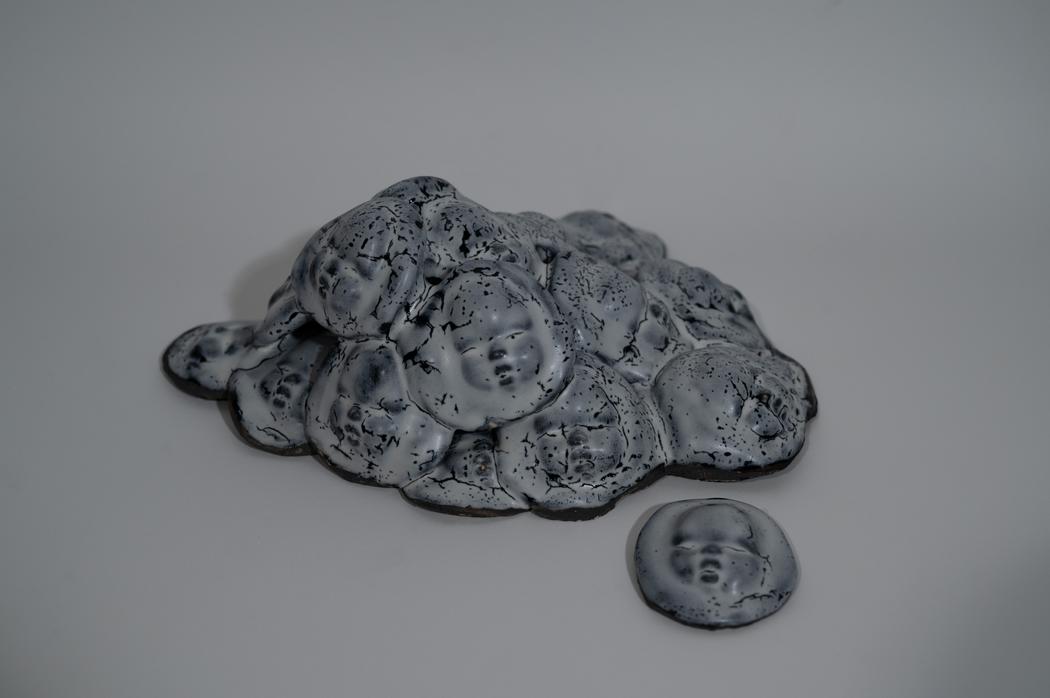 Clara Fortis | Bystander | 2023
Several of your installations create environments rather than isolated objects. What role does space play in shaping the emotional experience of your work?
My relationship to space begins in the studio, where I move between shaping clay and assembling steel. Sculpture as a medium inherently demands a reasoning for its existence, which may be why my process is so research based. Working at a larger scale brings a more vulnerable experience compared to two-dimensional work, as some of my sculptures approach the size of a human body. There needs to be a purpose behind why a sculpture or installation fills a room. The act of occupying space also resonates directly with my conceptual exploration of the desire to be heard. Because of their scale, I often allow my sculptures to interact with their surroundings, sometimes incorporating existing objects such as chairs or architectural elements. In some cases, the viewing position is intentionally altered, with works meant to be encountered from the floor, further shaping how the viewer engages with the artwork.
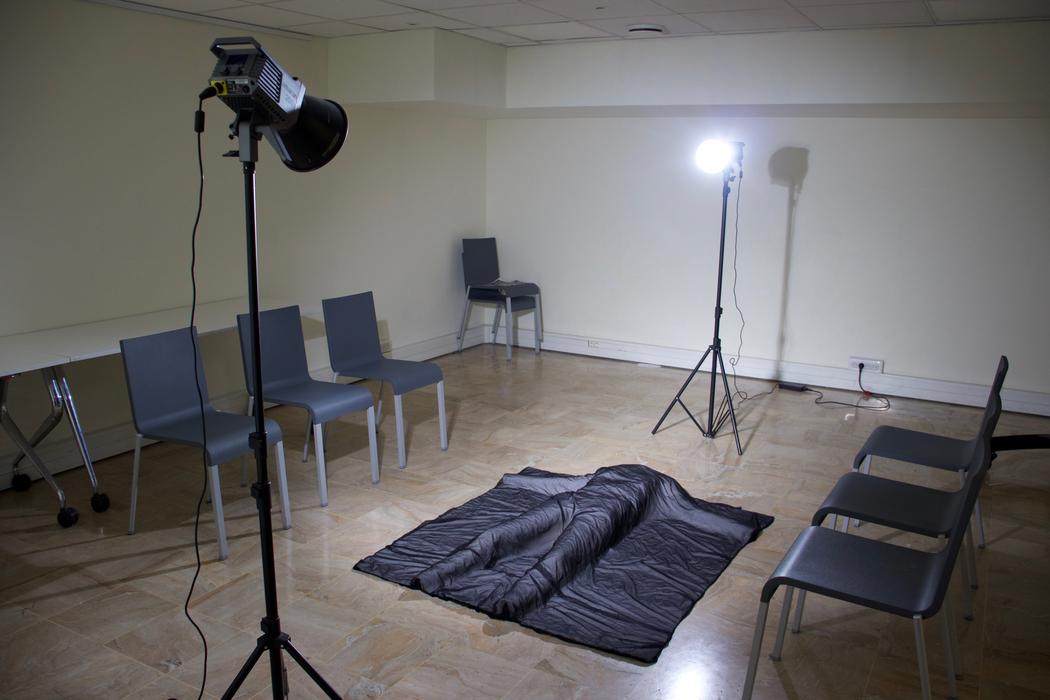 Clara Fortis | Cast A Veil | 2022
What questions or emotional states do you hope viewers carry with them after encountering your work?
I see my work as presenting a very specific problem or concept, often rooted in vulnerability and emotional experience. I hope viewers either find comfort in seeing their own inner thoughts or feelings reflected, or use the encounter as an opportunity to reflect on their own philosophies of hearing, communication, and presence. I want my work to invite contemplation about how we relate to one another and how our actions affect the emotional landscape of those around us, encouraging a moment of empathy and awareness.
Leave a Reply
You must be logged in to post a comment.