
Julia Sorokina
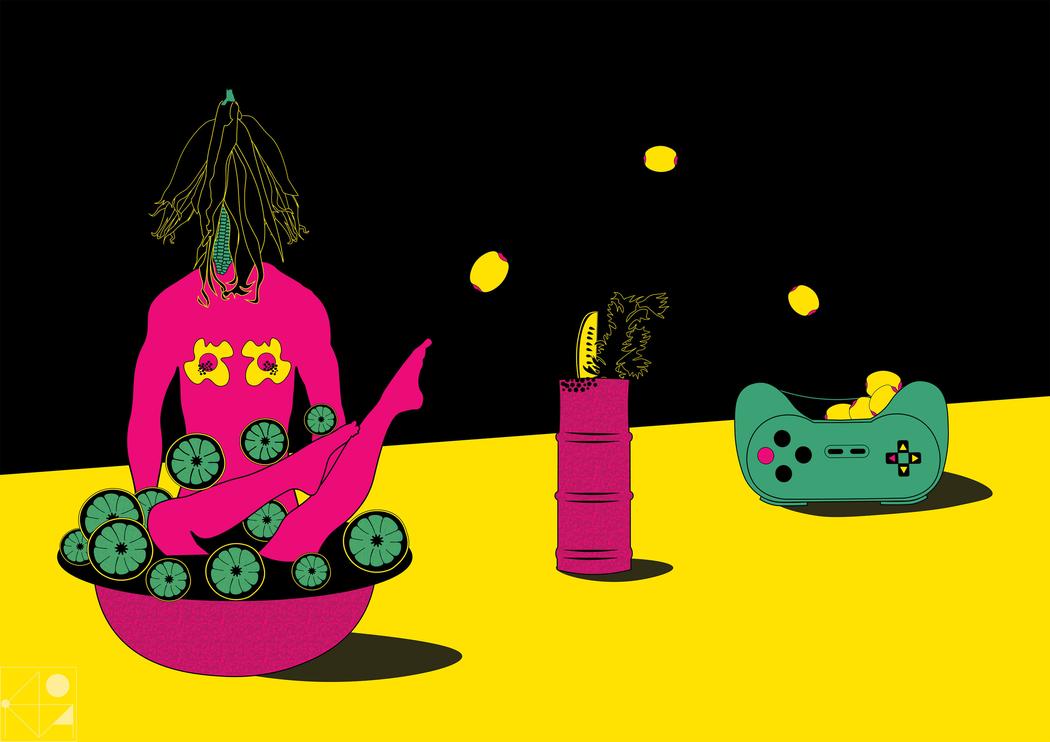 Julia Sorokina | To Play With | 2025
You describe working digitally as “conducting an orchestra in a digital kitchen.” Can you explain this metaphor and how it reflects your creative process?
Well, I have to explain why exactly I chose digital art.
The materials artists use to create the artworks – watercolor, oil, acrylic, gouache paints, markers, pencils, clay – all of them have a very strong influence on the art and personality.
It’s like talking to someone about something personal. Being in dialogue with someone is being under the influence of that person. Dress colors, voice timbre, linguistic features, smell… Someone becomes your environment when you are in dialogue. And if you are actually in this dialogue, you don’t think, ‘Oh, should I talk to someone else right now?’ So also the material that an artist uses.
I used to create artworks with alcohol markers, so I went through a lot of them to find mine. And then I began my paper journey—to find that very paper. And in the process of creating, I’ve never thought, ‘What if I add some charcoal?’ Because I was in the dialogue with markers. It was a very strong impact on my art life. I was in there surrounded by all of these markers with my hands and face stained with markers. It was incredible. And I always started from question ‘What more can I do by with this instrument?’
One day I decided I needed more brightness, and added pencils (I almost ransacked all shops in town to find that ones), and then I thought about watercolors… And my apartment started to look like an art studio with my husband trying to survive in there. Then I began to understand that I don’t have space for myself. Different kinds of stuff were everywhere… I said, ‘It’s samsara; it’s absorbing me. It’s not my way.’ I don’t like attachment to physical objects.
And now I open my Mac and I have everything at once. And here I start only from my creative thoughts – how exactly do I see my idea? As if I had subjugated the instruments. I can’t touch them, or smell them, but I can see them and use them and include them into my visualized musical composition. It’s my freedom.
Also, I’m not tied to a place (just to an outlet), and that has hippie vibes and a bit more of a sense of freedom. I’m obsessed with the idea of freedom. It’s one of the really precious and priceless feelings.
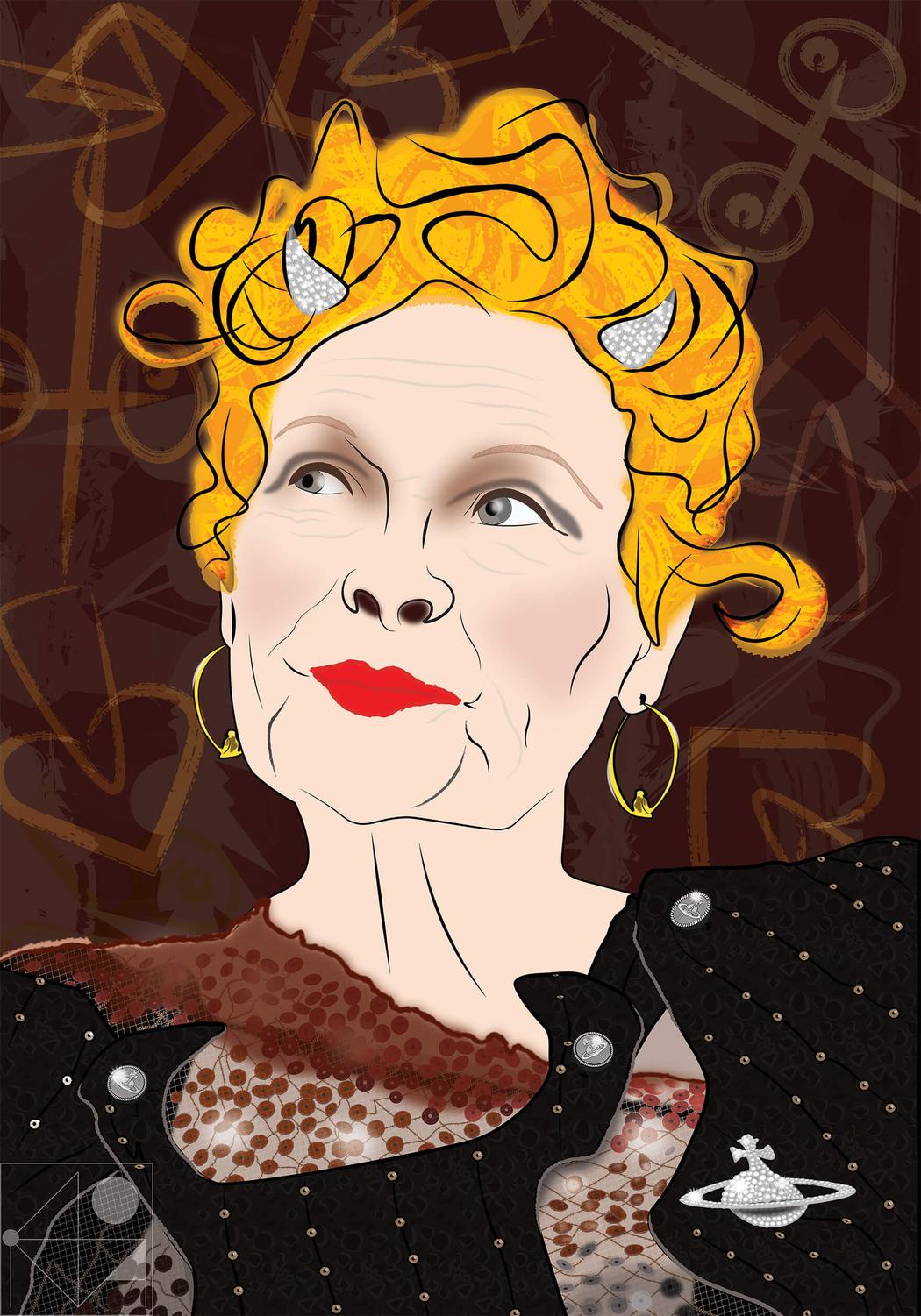 Julia Sorokina | Vivia La Vivienne | 2025
Your works often combine strong graphic elements with narrative tension. Where do your stories usually begin — with an image, a concept, or a person?
Usually, I begin with a person. It can be an existing person (like in ‘My Women’ portrait collection) who inspires me, or an imaginary character who sometimes has his own history or whom I endow with some qualities.
For example, in my ‘Pepper & Salt’ collection, there is a guy in a big champagne coupe glass coated with black caviar. I started with a guy who definitely wears a suit, goes to the office, knows everything about a wide smile to the right people, knows the right doors, and knows where he sees himself in at least 80 years. He has a pretty secretary and maybe a beautiful girl whom he does not take seriously. I can even say I feel a little disgust toward him. And he feels that he owns this world; he is a winner. And… How could I describe this feeling? This kind of guy on top of the world?
So we see him in his hot bath. I believe he is high. Anyway, he feels good. He comes from another crazy party. Imagine: you sink into a hot bath, your butt touches the bottom of it, and you exhale. And it’s so good. And everything else does not exist. But this ‘everything else’ is also good by the way! And it happens! I look at him and think – why does it always happen in somebody’s life?
This guy obviously does things for which he should be hated or even burned in hell. But think about this feeling that I’ve described. How can I hate him in this moment? I sincerely wish to be at his place at this moment! And tension appears! I hate him – I love him, It’s disgust – It’s awesome!
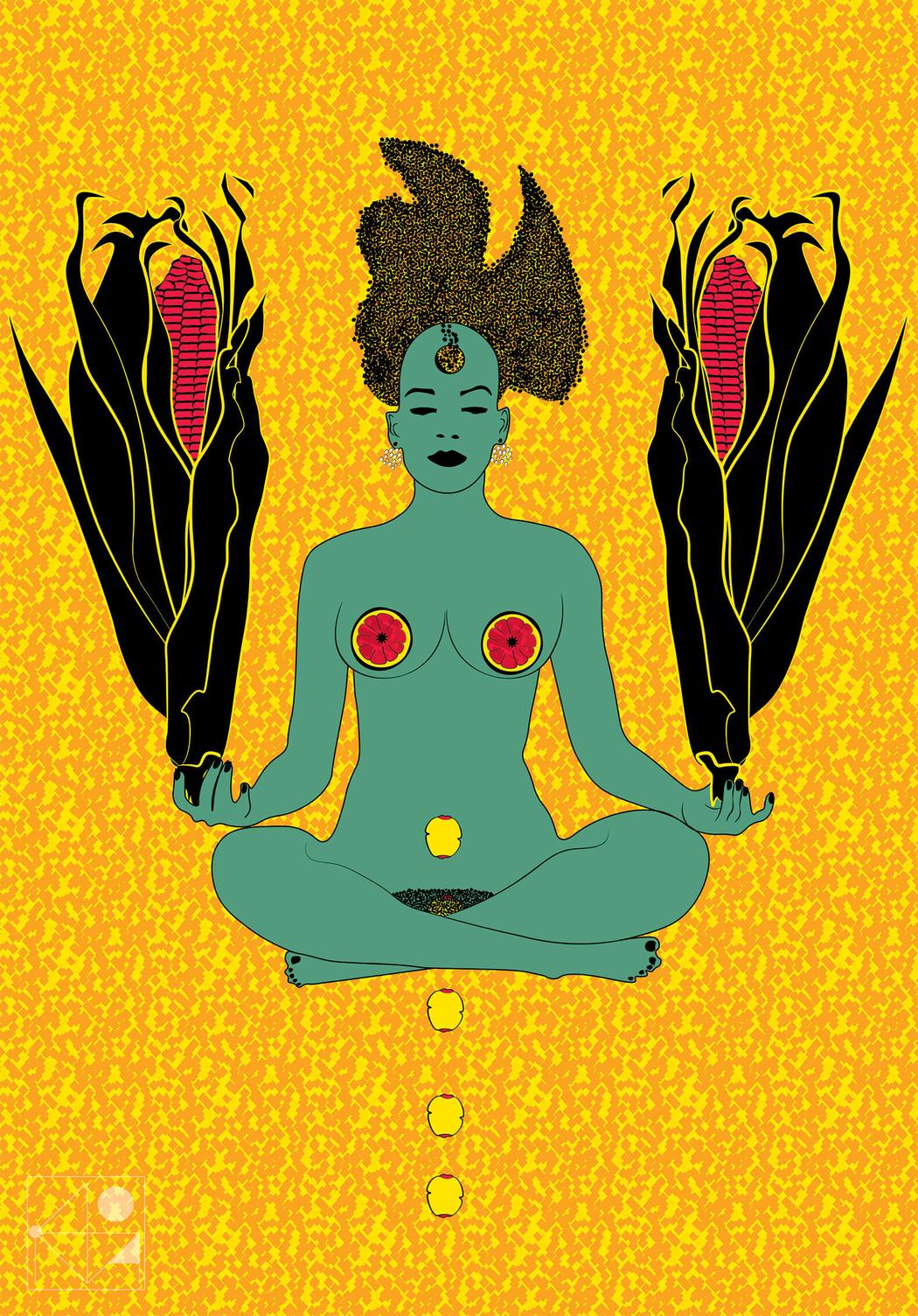 Julia Sorokina | Pepper | 2025
In the “Pepper And Salt” collection, these everyday elements become almost symbolic forces. What do pepper and salt represent to you beyond their culinary meaning?
I depict salt and pepper as crystals, almost with an alchemical meaning. They are elements that are always on the table; they are attributes of our everyday life; they come into our organism with food and become a part of us. They are elements of our life. I see something magical in them.
Black and white crystals represent Yin and Yang, the Beginning and the End, Life and Death, Good and Bad. I always saw magic in pepper and salt shakers. It has different forms, and I imagine them like Buddhist figurines with magical content.
That’s why in ‘Pepper’ artwork I represent the girl who reached nirvana like a pepper shaker. When you are full of pepper or salt, something beyond the ordinary should happen.
You suggest pepper and salt as the 6th and 7th elements after the classical four and pop-culture mythology. Why was it important for you to elevate them to this status?
Well, salt and pepper occupy a very important place in human history.
In many traditions, black pepper symbolized protection, wealth and power. It’s part of rituals to ward off evil spirits. In different stories, it played a role in blessings or sacred ceremonies. In Europe, it was once considered a gift fit for royalty and sealed alliances between nobles.
Salt is used to ward off evil and purify spaces. It’s considered a bridge between the world of the living and that of the ancestors.
Salt takes place in religious teachings. In Judaism, it symbolizes permanence and covenant; in Christianity, it signifies wisdom and soul preservation.
We can find pepper and salt in many superstitions, idioms and proverbs, and they can also tell us about the place of those elements in our culture.
We carry pepper and salt through centuries by our minds, by our bodies.
It’s everywhere! And I decided to emphasize it.
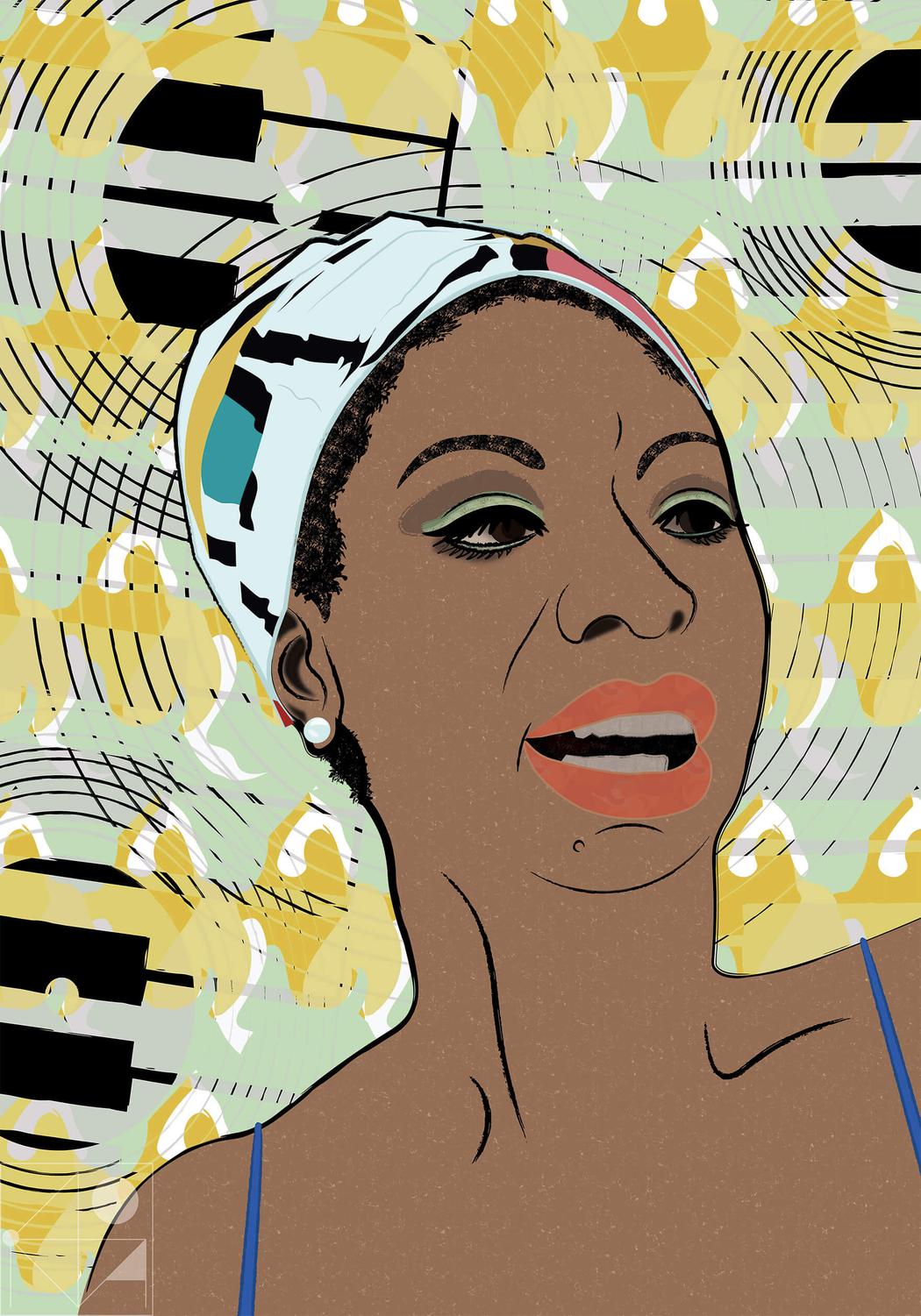 Julia Sorokina | Nina | 2025
The female figures in “My Women” feel both iconic and personal. How do you balance homage, portrait, and interpretation when depicting women who inspire you?
I always try to be delicate because too personal means not enough iconic; too much iconic means insentient. And I think admiration and respect always come to the rescue. Admiration helps you to avoid familiarity; respect – something that comes when you start to compare somebody with you, and so it becomes human to you, not just a symbol.
Anyway, it’s so interesting how much we can feel close to people who do not know us.
On the one hand, these women are only my idea; they highlight strokes in biography novel about me. On the other hand, they are not merely my imagination; they are humans, somebody’s mothers, children, lovers, friends… The world doesn’t stop amazing me.
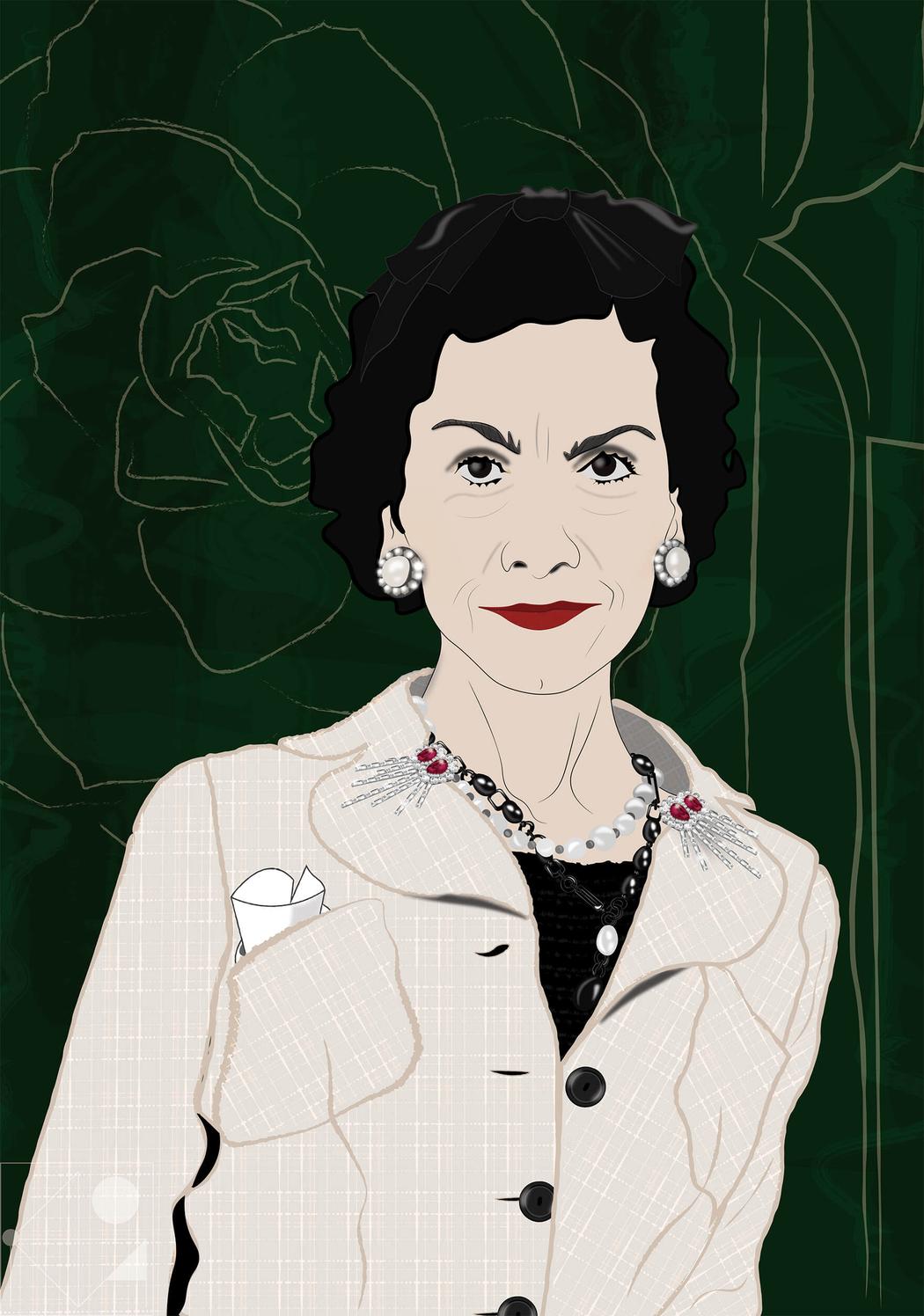 Julia Sorokina | Coco | 2025
Fashion, texture, and surface play a strong role in your illustrations. What attracts you to clothing and ornament as narrative tools?
In every portrait, I always try to tell a visual story. Every detail makes sense. I want to study every portrait with interest during the creative process and afterward. I can then show my work to somebody and suddenly exclaim, ‘Look how her jewelry glitters!’ as if I hadn’t spent five hours creating it just moments before. When I want to touch my Mac’s monitor, I feel that I’m on the right track.
All of these women are famous people; somebody else is more likely to know much more about them than I do. And if I were to create them as is, it would be their story, or a photographer’s story. But I want my story, how I see them. Through the details that I have found. I am a person of those little nothings. This is my material.
In ‘Coco,’ I created her jacket, inspired by Chanel’s famously woven-fabric jacket. But I created it in beige colors because, as I know, she gave preference to natural colors. In ‘Viva la Vivienne,’ there are many sequins; they are shiny and mischievous like Vivienne in my mind. In ‘Nina,’ there was something wonderful in the color of her skin and how her headscarf complemented it. I tried to choose the right shade of color, but it’s so varied and complicated that I decided to take a base tone, create a special pattern, and put this pattern layer by layer until I felt satisfied, until I heard her skin begin to sing. Her face is very textured and plays with forms. To complement this beauty, I add pearl earrings. And now when I look at my Nina, I always feel admiration for her strong spirit and beauty. It’s become visual for me.
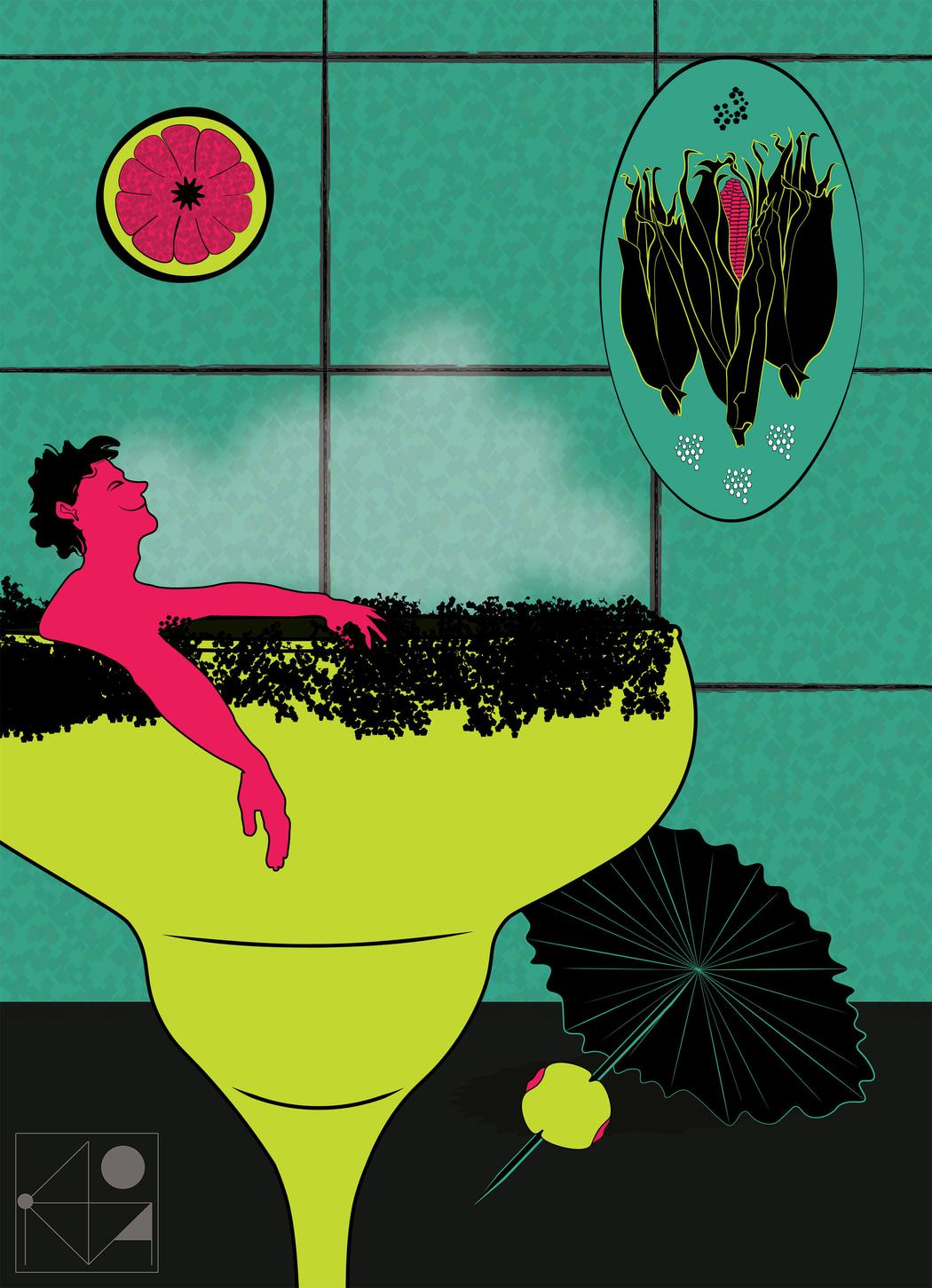 Julia Sorokina | Afterparty | 2025
Your color palettes are bold and sometimes deliberately unnatural. How do you choose color, and what role does it play emotionally in your work?
Color is something that I feel. My visual stories always begin with color. I usually know what the main color will be, but sometimes I just wander through the palette looking for it. Something should catch my eye. One color. It will unfold my color narrative.
I always knew that ‘Coco’ would be emerald green and beige; I love this color so much. It’s very deep and noble. When I created Vivienne, I knew it would be something rich and warm to complement her hair. In the ‘Pepper and Salt’ series, I just knew that those stories must be on the verge of madness cause it’s about magic, something psychedelic.
There is too much gray color in my real world, and I mostly create bright and sunny pictures unless narrative dictates otherwise.
Leave a Reply
You must be logged in to post a comment.