
Ivana Babic
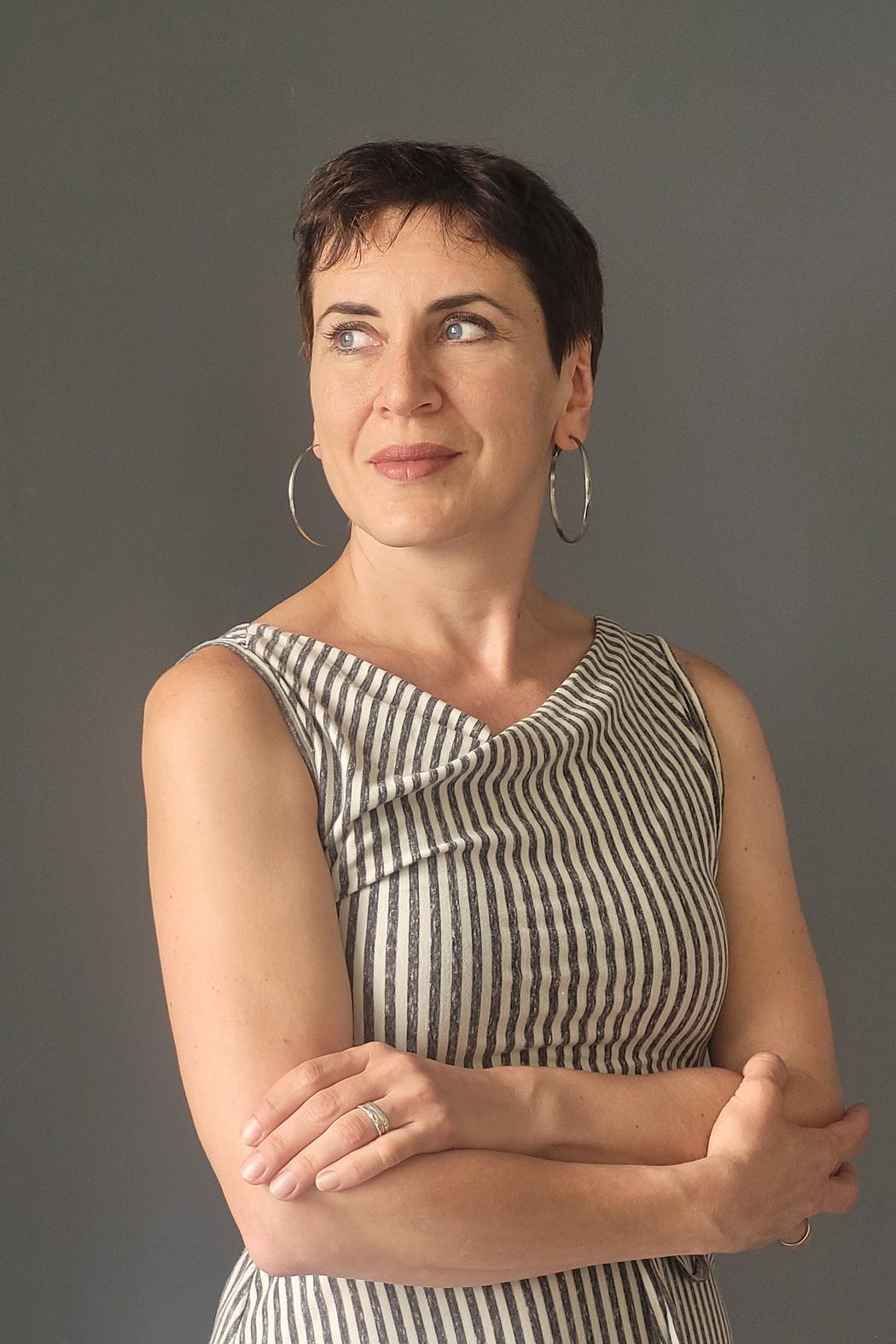
Your works seem to emerge from a space between myth and memory. How do you navigate that boundary when beginning a new illustration?
The boundary between myth and memory functions almost like a resonance field. Ancient images surface together with intimate sensations, merging into a single visual layer. The drawing grows where the two overlap: myth offers the clarity of archetype, memory brings its emotional pulse.
That tension creates a space where something both familiar and unknown can appear — a space where the old stories become contemporary again, shedding their historical weight and becoming part of a living inner landscape. In that threshold, myth is not treated as heritage but as a material that can still transform, just as memory does.
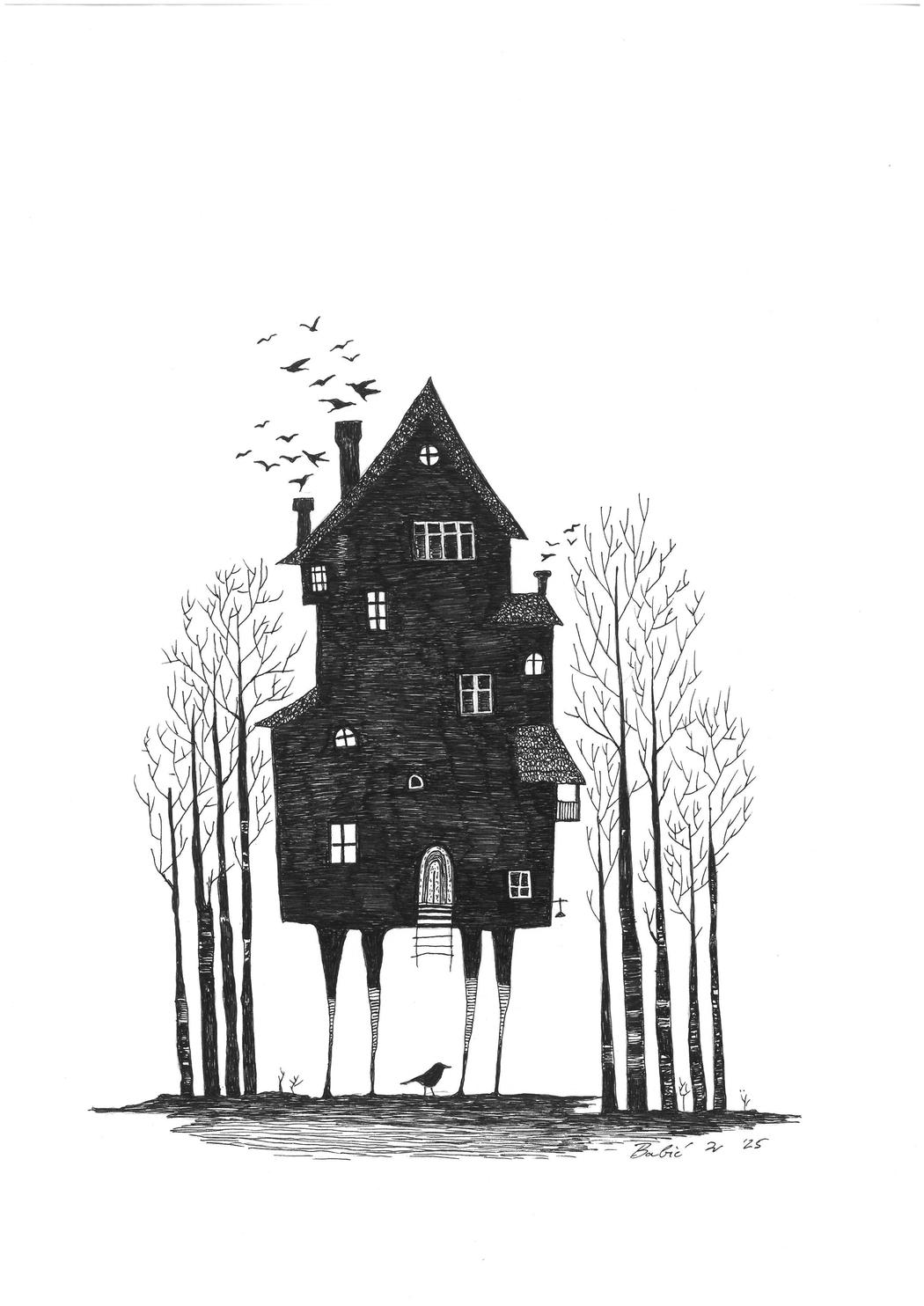 Ivana Babic | Baba Jaga House | 2025
Slavic folklore is central to your imagery. Are there specific stories or archetypes that have shaped you most deeply, either artistically or personally?
Slavic mythology carries a living presence in Serbia, where I come from — it echoes in songs, folktales, seasonal rituals, and even in the way people relate to nature. It is not distant or museum-like; it breathes through culture itself.
Certain archetypes have become especially formative:
Veles as the spirit of transformation and the underworld;
Perun as a force of creative tension;
and the wandering house, inspired by Baba Yaga’s hut with bird legs.
This house, constantly shifting through the forest, becomes a metaphor for impermanence — for the soul’s movement through the physical world, never entirely rooted, always in transition.
Another strong influence comes from the feminine spirits of Slavic lore —“Vila”, the forest maiden, the water nymph. These beings embody nature not as scenery but as a living, conscious presence. They carry both gentleness and wild unpredictability, reminding us that nature in Slavic imagination is not passive but deeply animate, protective and threatening, nurturing and untamed at once. Their duality adds an emotional and symbolic complexity that resonates strongly in my work.
What resonates most is the cosmology behind these stories: the sacredness of nature, the belief that rivers, trees, winds, and animals are inhabited by spirits, and the deep dualism between sky and earth, order and chaos. These themes carry an ancient depth, yet they speak directly to contemporary questions about belonging, instability, and our relationship with the natural world.
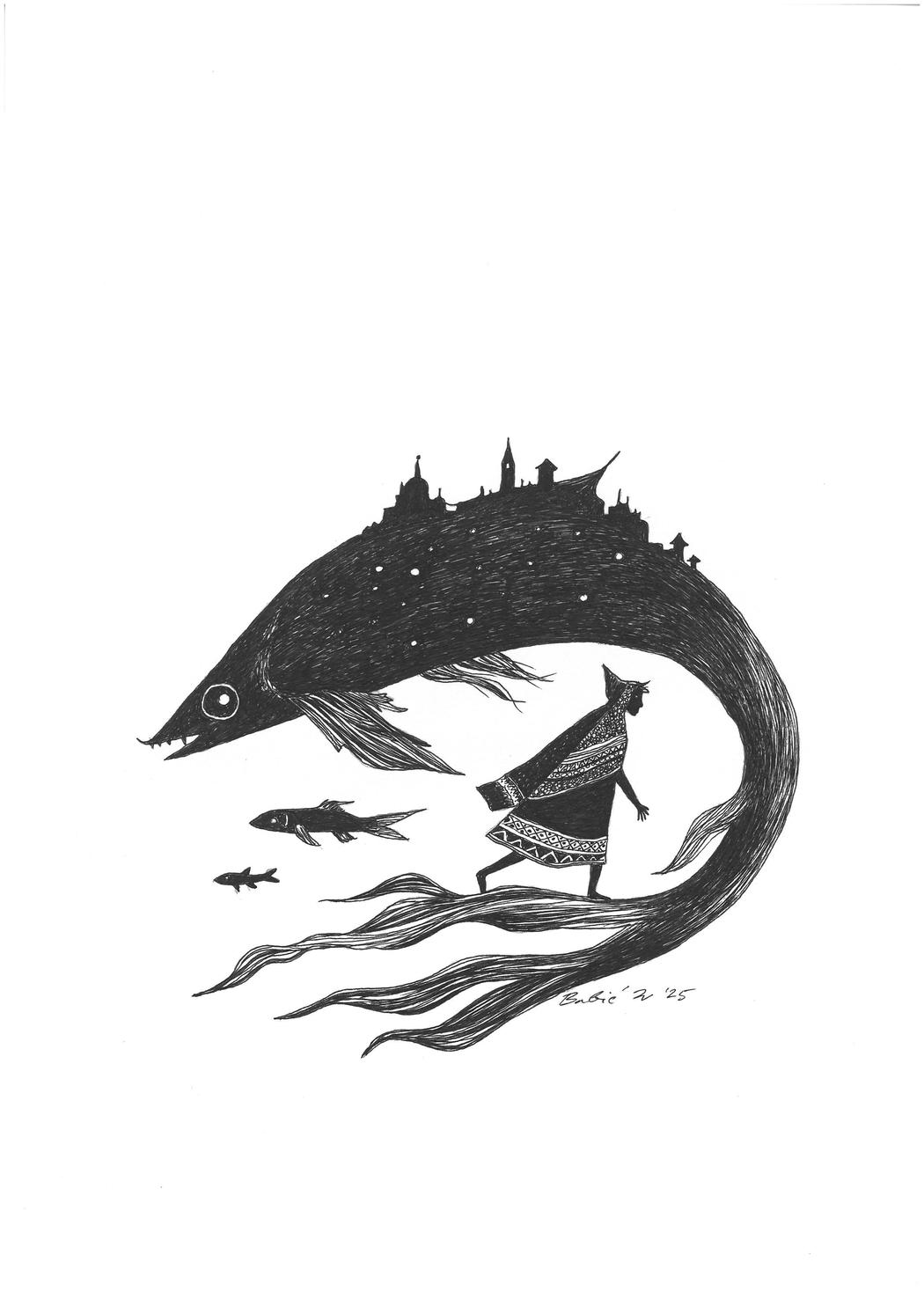 Ivana Babic | Danube | 2025
Many of your characters — like Veles, Perun, or the wandering houses — appear both symbolic and emotional. How do you balance folklore accuracy with your own contemporary interpretations?
Folklore accuracy serves as a root rather than a restriction. The essential roles and energies of each figure are honored, but their visual language evolves into something more introspective and contemporary. Myth provides the bone structure; the emotional present shapes the flesh.
This approach mirrors how myths themselves have traveled through time — constantly retold, reinterpreted, and kept alive. Bringing them into the present means allowing their symbolic core to meet contemporary sensibilities: questions of identity, movement, instability, and inner dualities.
The aim is not to reproduce Slavic mythology, but to reactivate it — to let its archetypes speak anew within a modern psychological and cultural context.
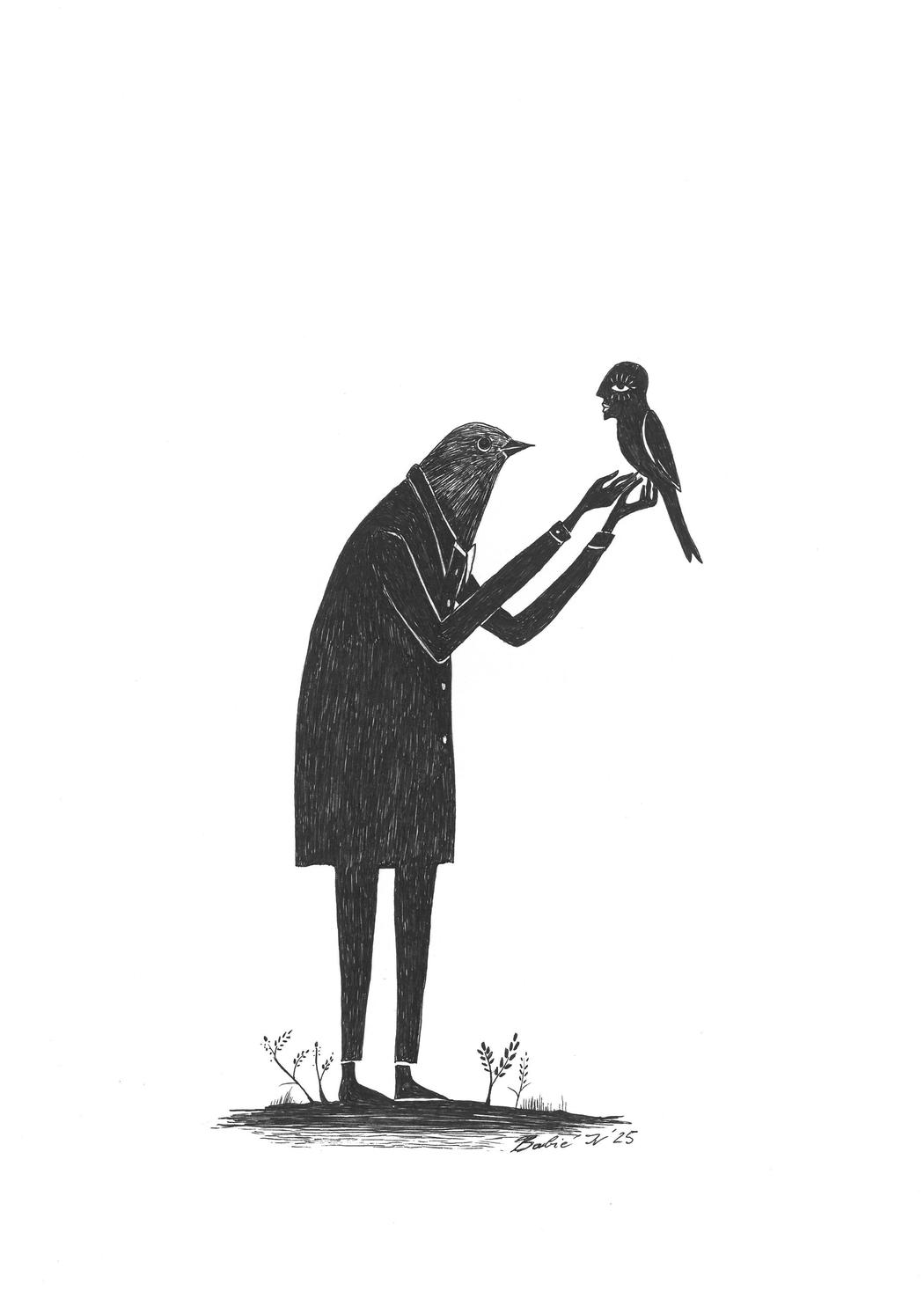 Ivana Babic | Dialogue | 2025
Your drawings are rich in texture and detail, yet they feel quiet and spacious. How do you approach composition to achieve this sense of calm intensity?
Calmness emerges through the relationship between density and emptiness. Detailed textures gather around symbolic cores, while surrounding space remains open — not empty, but charged with stillness. This balance creates a slow, deliberate rhythm: intensity concentrated where the image breathes, and silence holding everything together.
This spaciousness is also a way of giving the mythological elements room to exist without overwhelming the viewer. It allows the eye to rest and wander, making the image feel both intricate and meditative, anchored yet weightless.
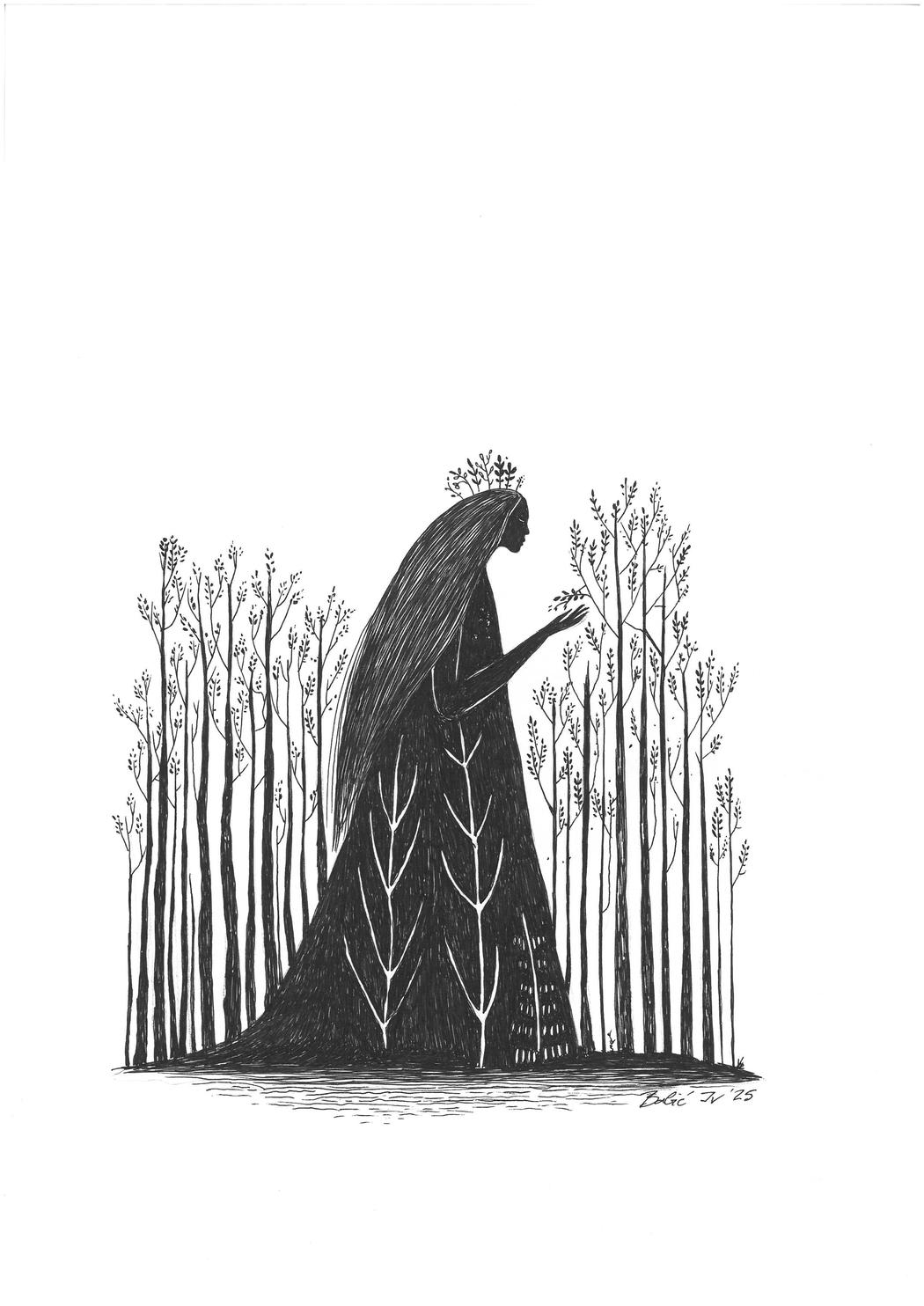 Ivana Babic | The Guardian | 2025
Your illustrations often depict beings that are not meant to be read literally. How do you choose which inner states or emotional archetypes to translate into visual form?
Certain inner states already carry a symbolic weight, appearing more as shapes than as emotions. When a feeling suggests the presence of a creature, a threshold, or a shifting form, it naturally becomes visual. These beings are emotional archetypes — metaphors of fragmentation, resilience, longing, or transformation.
They emerge when an inner condition becomes so precise that it almost demands a form of its own. Rather than illustrating an emotion, the drawing reveals the creature that emotion would become if it could inhabit a body, allowing psychological experience to expand into the realm of myth.
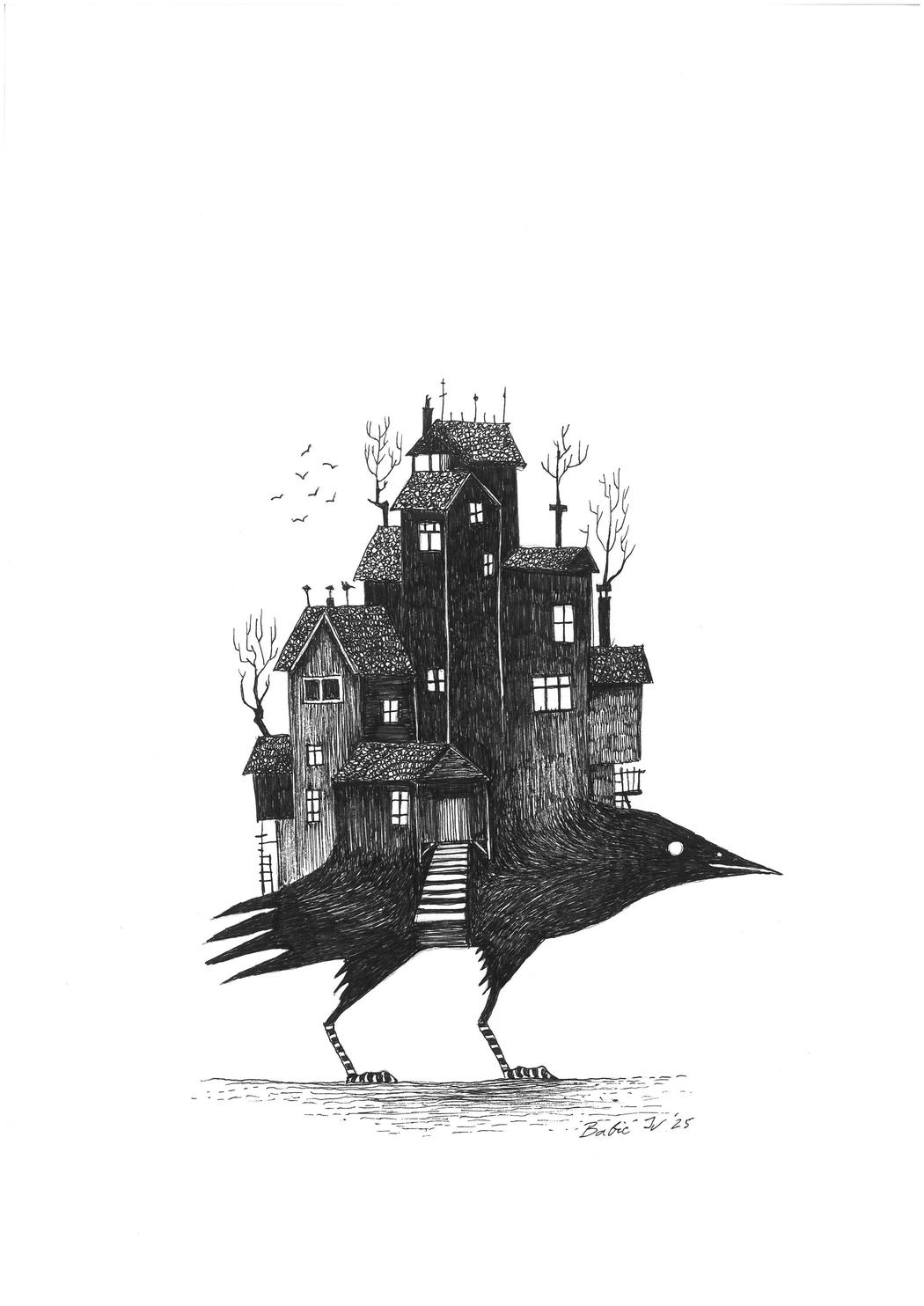 Ivana Babic | The Wandering House | 2025
Black ink is your primary medium here. What draws you to this material, and how does it shape the atmosphere of your mythological world?
Black ink creates an atmosphere of clarity and mystery at the same time. Its monochrome language removes distractions and brings the focus to gesture, rhythm, and breath. Dense blacks feel ancient, like carved marks; lighter strokes evoke impermanence.
This starkness suits mythological themes, allowing the beings and symbols to appear as if they were emerging from a timeless realm — part memory, part incantation. Ink’s simplicity also supports a contemporary reading: stripped of color, the mythology becomes more universal, reduced to essence rather than ornament.
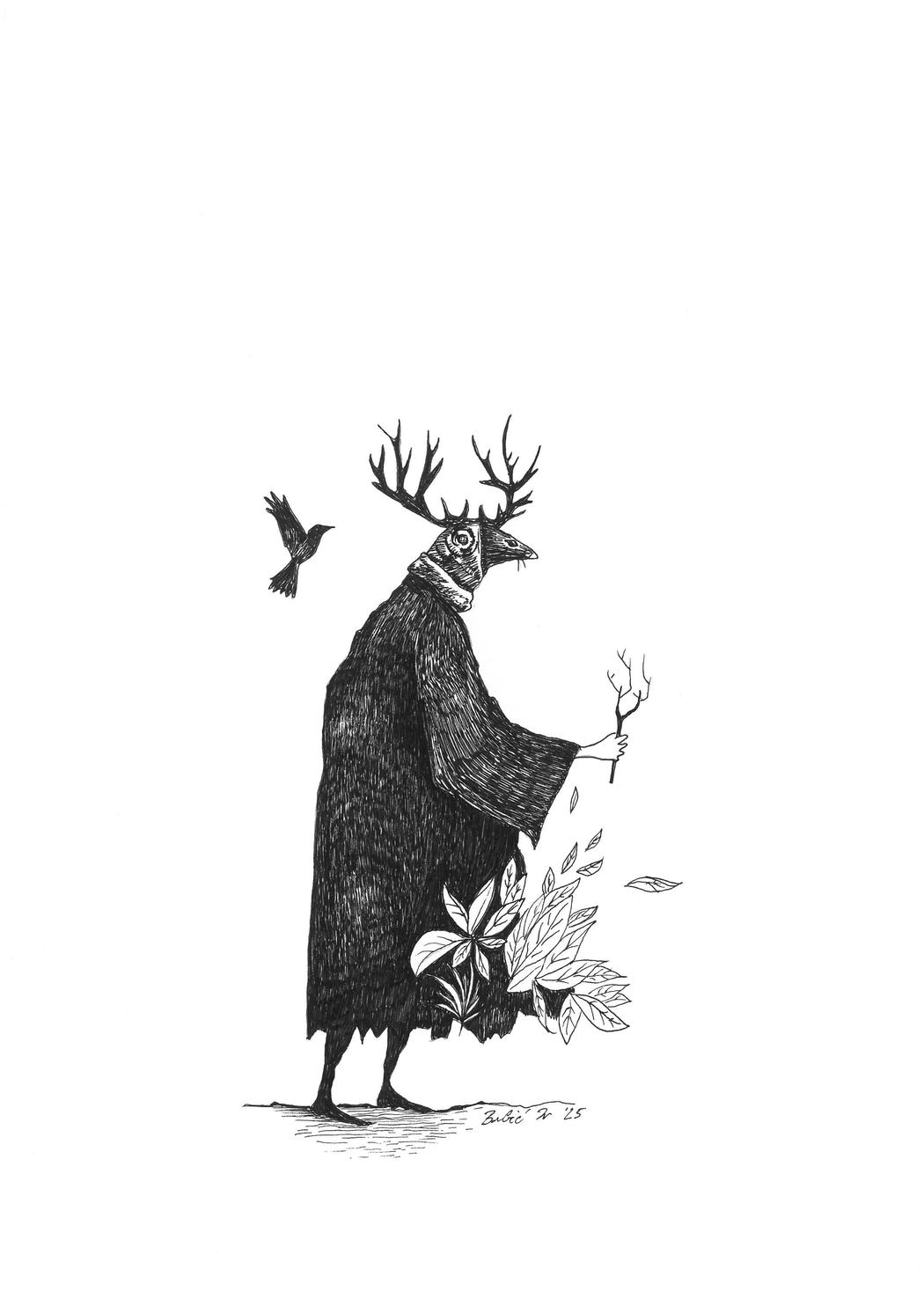 Ivana Babic | Veles | 2025
Do you see these mythological beings as guardians, mirrors, or guides for the viewer — or perhaps something else entirely?
They function as shifting presences. At times they feel like guardians; at others, mirrors or silent companions. Rather than delivering answers, they open a passage — a place where the viewer may encounter something already known but not yet named.
They are less characters than thresholds, holding space for a dialogue between myth, personal memory, and the viewer’s own inner landscape. In that sense, they act not as authorities but as invitations — guides only in the way that a doorway guides one into another room.
Leave a Reply
You must be logged in to post a comment.