
Natalia Ivanova
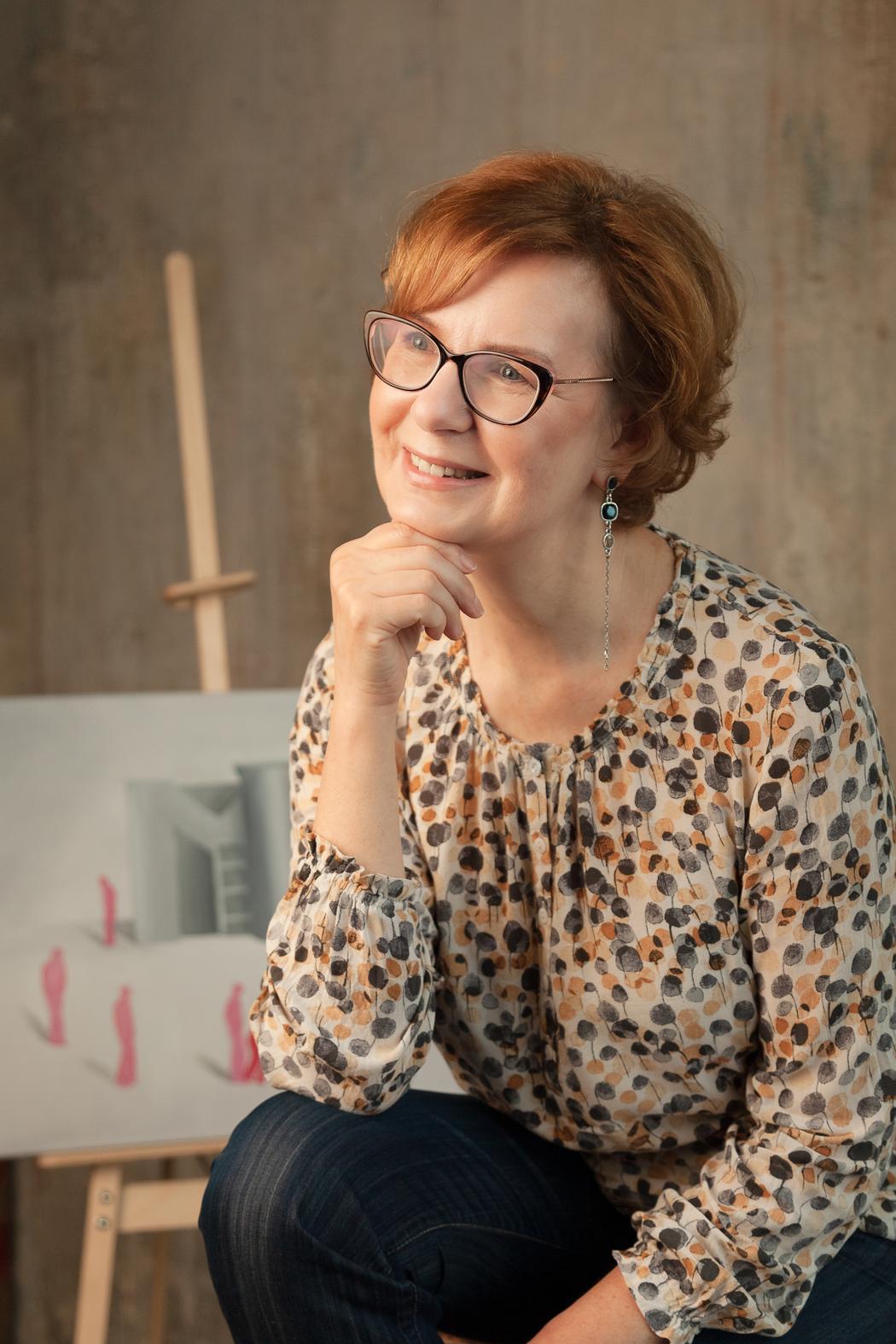
You mention that you began painting suddenly and unconsciously during the pandemic, as if your family’s artistic genes awoke. Can you describe that first moment of discovery?
Yes, unconsciously in the sense that I had no plans to become part of a professional community. During the pandemic, I had to switch to remote work (my main job is not connected to art), but the workload dropped significantly. A friend was sharing her paintings, so I decided to watch some online lessons and try painting myself. As a child, I attended a young art historians’ club at the Pushkin State Museum of Fine Arts, where the theoretical foundation was quite serious. I also loved copying drawings of sculptures. This time, I tried landscapes. The process fascinated me so much that I wanted to paint more, better, and experiment with different styles and techniques. So, after starting to paint in 2021, by 2022 I already held my first solo exhibition “Hydrotherapy” at the studio where I practiced after restrictions were lifted. Visitors included my friends and acquaintances of acquaintances, and all the paintings were sold. That inspired me greatly.
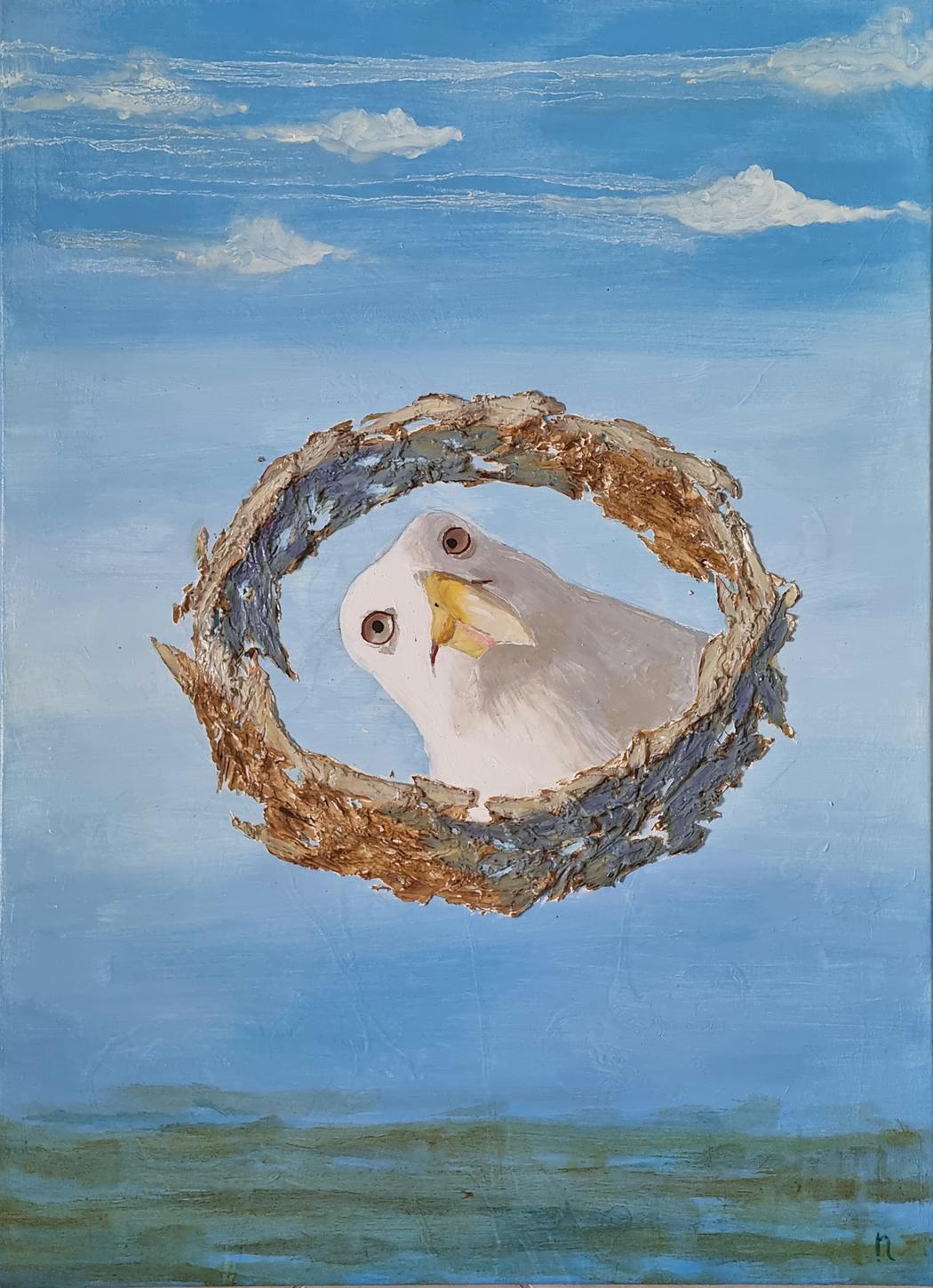 Natalia Ivanova | Greetings, Summer | 2025
Your grandfather and great-grandfather were artists and woodcarvers, and your great-grandfather also painted icons. How do these family traditions influence your own creative process today?
Unfortunately, only stories remain from my great-grandfather, and as a child I was once taken to a church to see the dome he had painted. That church no longer exists, and none of the icons survived. But my grandfather’s example still inspires me. He studied at the Moscow School of Painting, Sculpture and Architecture (MUZhVZ). Just one course before graduation (in 1918), the school was closed and transformed into the Second State Free Art Workshops, which were later reorganized into the Surikov Moscow Art Institute and the Moscow Architectural Institute. At that moment of reorganization and uncertainty, my grandfather decided to become an electrical engineer, since the country needed industrial specialists. That became his main profession, while painting remained his hobby—he also ran drawing clubs. In a way, I am repeating his path, except that instead of formal academic training I have taken various courses.
Much of your work explores the possibilities and choices of modern life. What personal experiences or observations inspire these reflections?
I am the kind of person who, the harder things get, the more I focus on what remains positive—I find it out of almost nothing, and that’s what I live by. It’s my choice. But I see that not everyone can, or even wants to, live this way. Many prefer appearances without substance, or embrace a sense of doom. That is exactly what my paintings “Moloch” and “Feed Fake” are about.
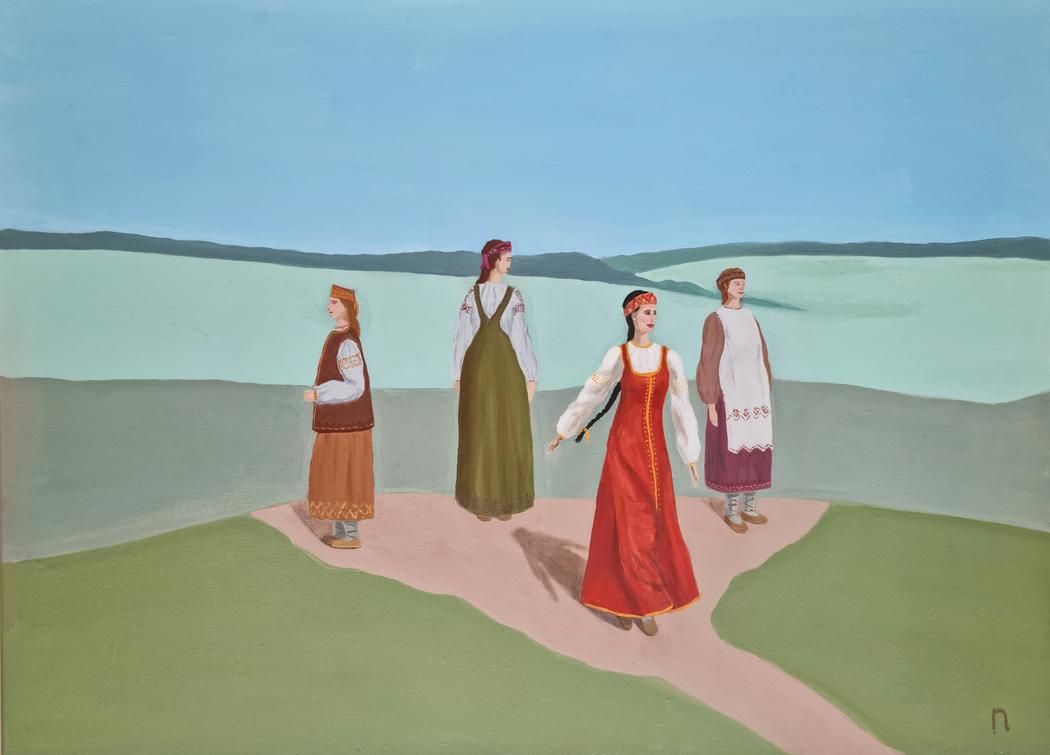 Natalia Ivanova | Don’t Wait | 2024
How do you decide which visual language—postmodern, symbolism, naïve art, or realism—best conveys a particular idea?
Usually, a painting comes to me almost fully formed in a prevailing style. For example, the entire “Liminality” series appeared to me in the direction of symbolism—the absence of visual noise allows the viewer to focus on the symbol and its message. At the same time, the first work of the triptych—Moloch—appeared with elements of Constructivism: simplified figures and corresponding architecture. The painting “Six Spirits of the Arctic” is also steeped in symbolism, but executed more realistically and vividly. Shamans, the upper and lower worlds, animal spirits in the form of reflections on the water—all this belongs to the beliefs of northern peoples. Even the number six represents the sides of the world and cosmic realms. The painting “Happiness Is Not Beyond the Seas” is based on an original photograph, where realism of the situation was essential. And “Tender Longings” was painted to the music of Baroque composer François Couperin, which is why it is stylized like porcelain figurines.
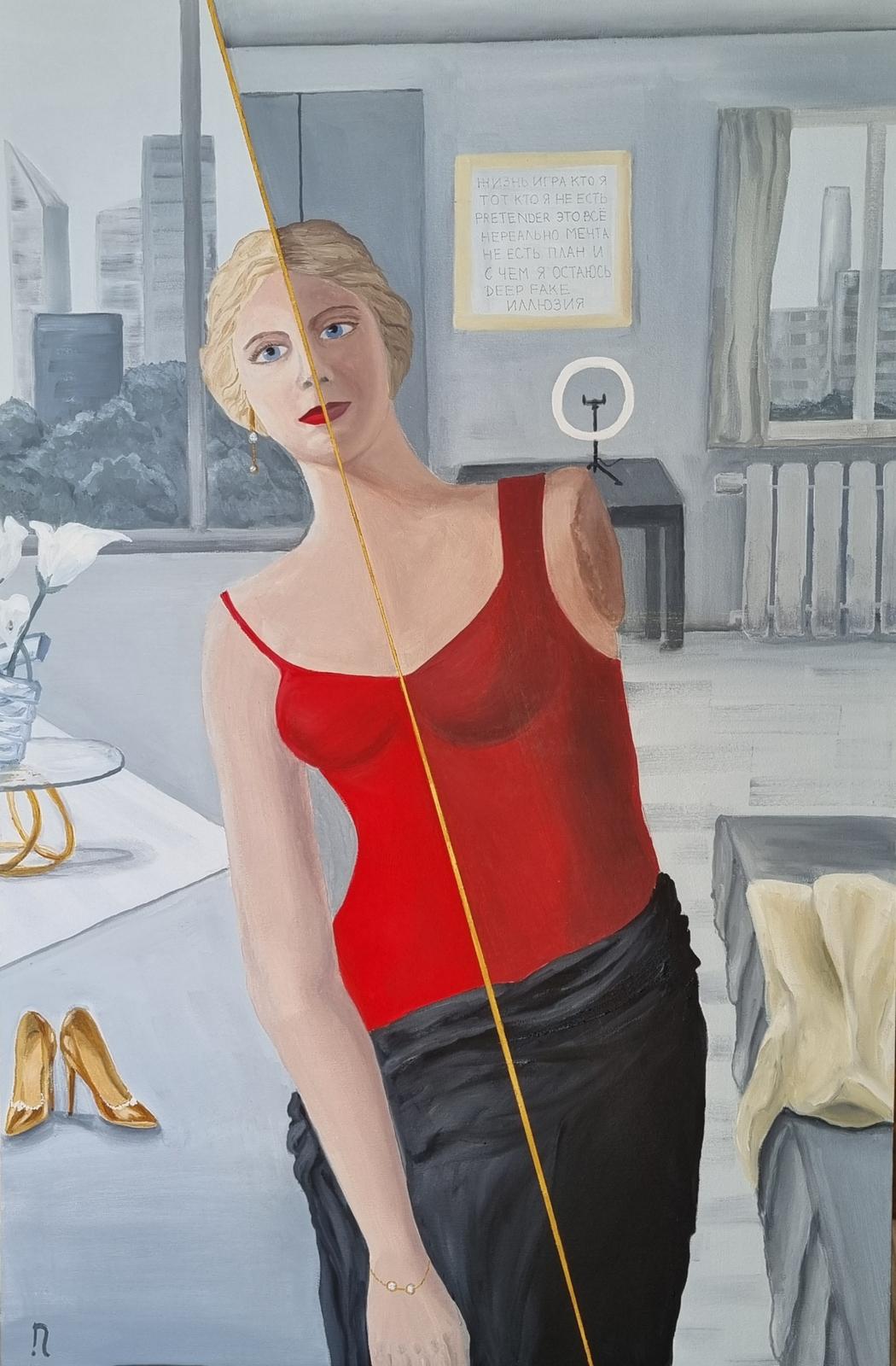 Natalia Ivanova | Deep Fake | 2025
Many of your paintings contain hidden stories or open questions. Could you share an example where viewers’ interpretations surprised you?
Yes, but that’s wonderful—it means the viewer is trying to make sense of the work. Probably the most “multi-interpreted” painting is Deep Fake, though I thought its meaning was obvious. There is a clear reference to blogging through the blogger’s lamp, and a double life is shown by splitting the figure into two halves—poor and rich. But I’ve heard interpretations such as that the girl became a blogger and achieved success, rather than hiding her bleak life behind a glamorous image.
Your landscapes often carry a touch of mysticism. What techniques help you create this special atmosphere?
Simply depicting nature can be boring—you can take a beautiful photo for that. A painting should not repeat a photo, but add something—story, mysticism, or an unusual focus. This is usually achieved through color, technique, or subtle nuances. For example, in the painting “Mysterious Mashuk Forest” the silhouettes of trees resemble human figures, with barely visible “faces.” In “Night on Lake Lugano Island” it is the moonlight falling on the clouds—moonlight often gives a sense of mysticism.
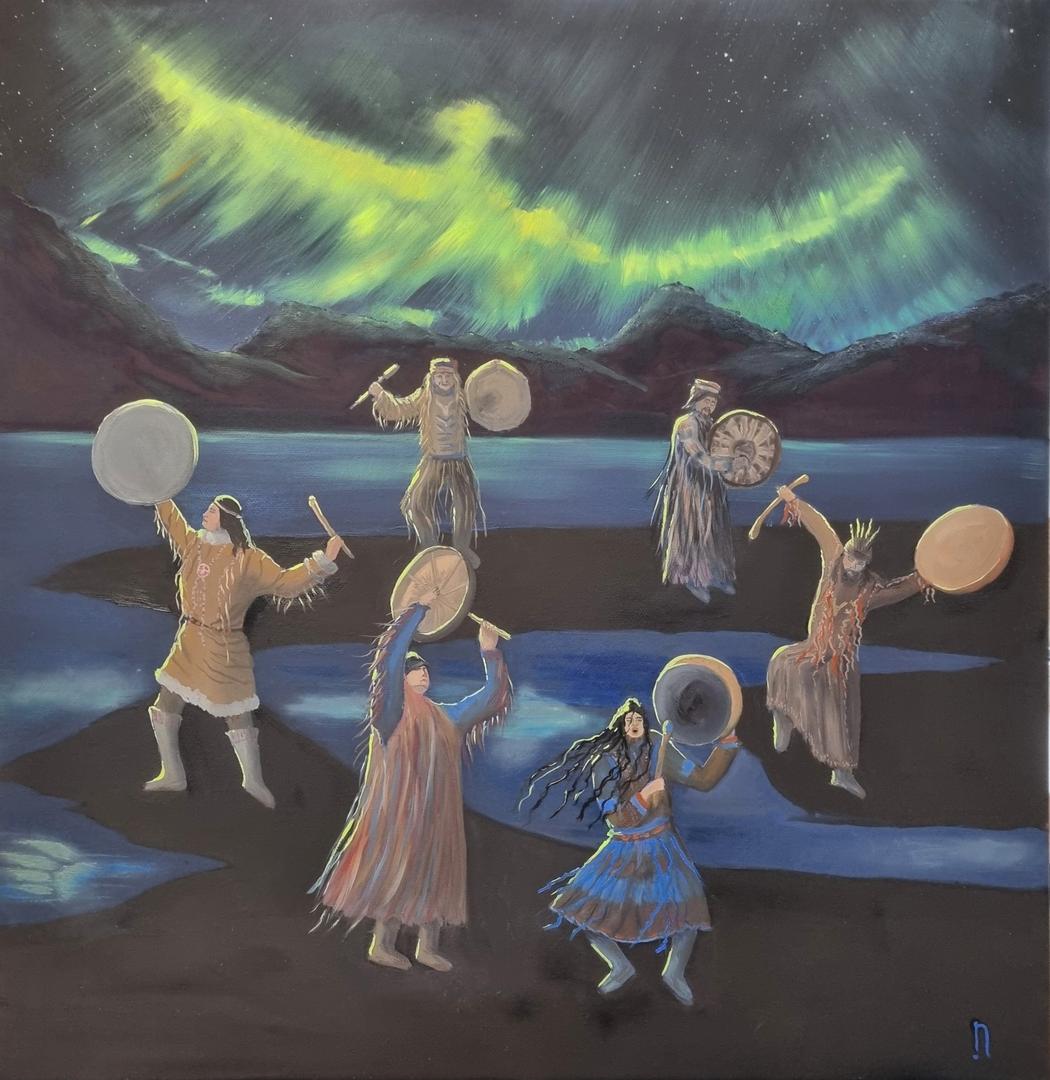 Natalia Ivanova | 6 Spirits Of Arctica | 2025
You experiment with oil, acrylic, and gouache. How do you choose the medium for each piece?
I worked with gouache only at the very beginning. I think it’s an excellent material to get accustomed to paints. I tried watercolor but realized it was not for me. Now I work with oil and acrylic. The choice depends on the technique of the painting—many visual effects require oil (for example, haze, gradients, smooth transitions of skin tones, glazing). Deadlines also matter—I work in layers, and one oil layer dries for at least a week, while the whole painting can take about a month. With acrylic, I can finish a work in a couple of weeks. Acrylic also allows for gold leaf and many other materials; mixed media can be very interesting. I also sometimes work with fluid acrylic when I just want beautiful spots.
Leave a Reply
You must be logged in to post a comment.