
Martin Málek
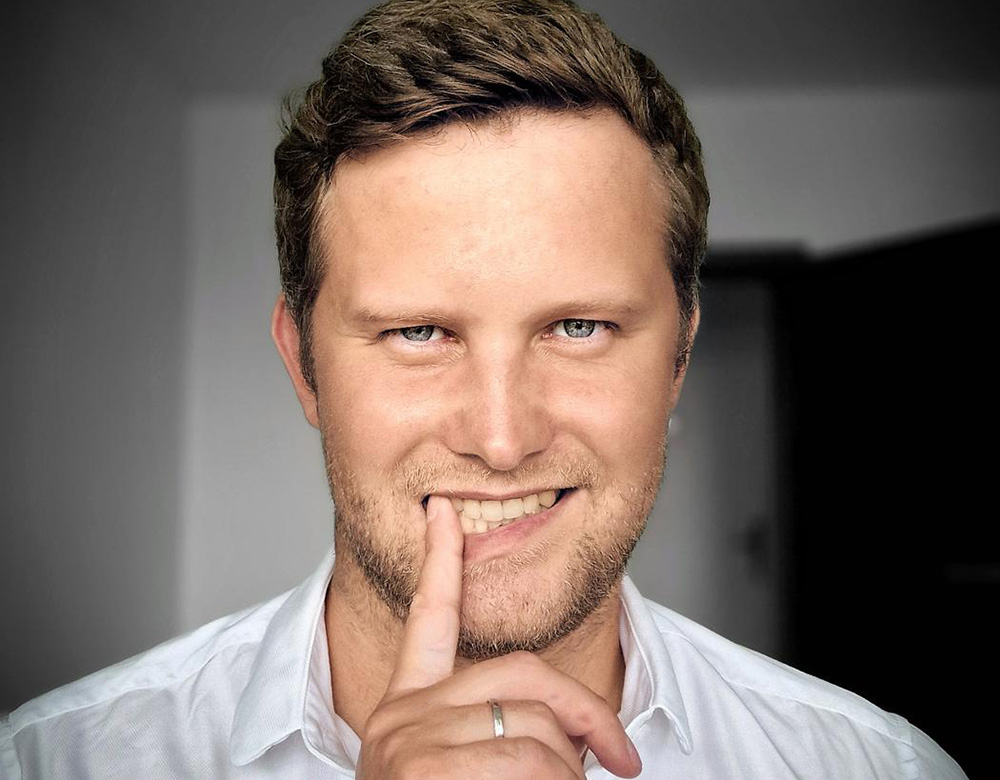
Your work demonstrates exceptional technical precision. How has your glassmaking background influenced your approach to painting?
The study of the properties and processing of glass represented for me one of the ways to gradually build discipline and a relationship with material. I focused mainly on the final finishing of glass, where precision and control played a key role – principles that I carry with me to this day.
After school, I devoted myself to drawing for a long time, especially portraiture. It taught me to perceive detail, work with shadow, and develop patience. I approached painting with respect, which was also connected to my perfectionist nature.
Painting returned to me after years through experimentation. I began to explore acrylic as a material – its structure, layering, and behavior over time. Gradually, I found in it a medium in which I seek depth and quality, often associated more with oil painting. That is why my work sometimes appears as if it were created in a different medium.
A natural outcome of this process is also my visual signature – a structured framing that is a fixed part of the canvas itself.
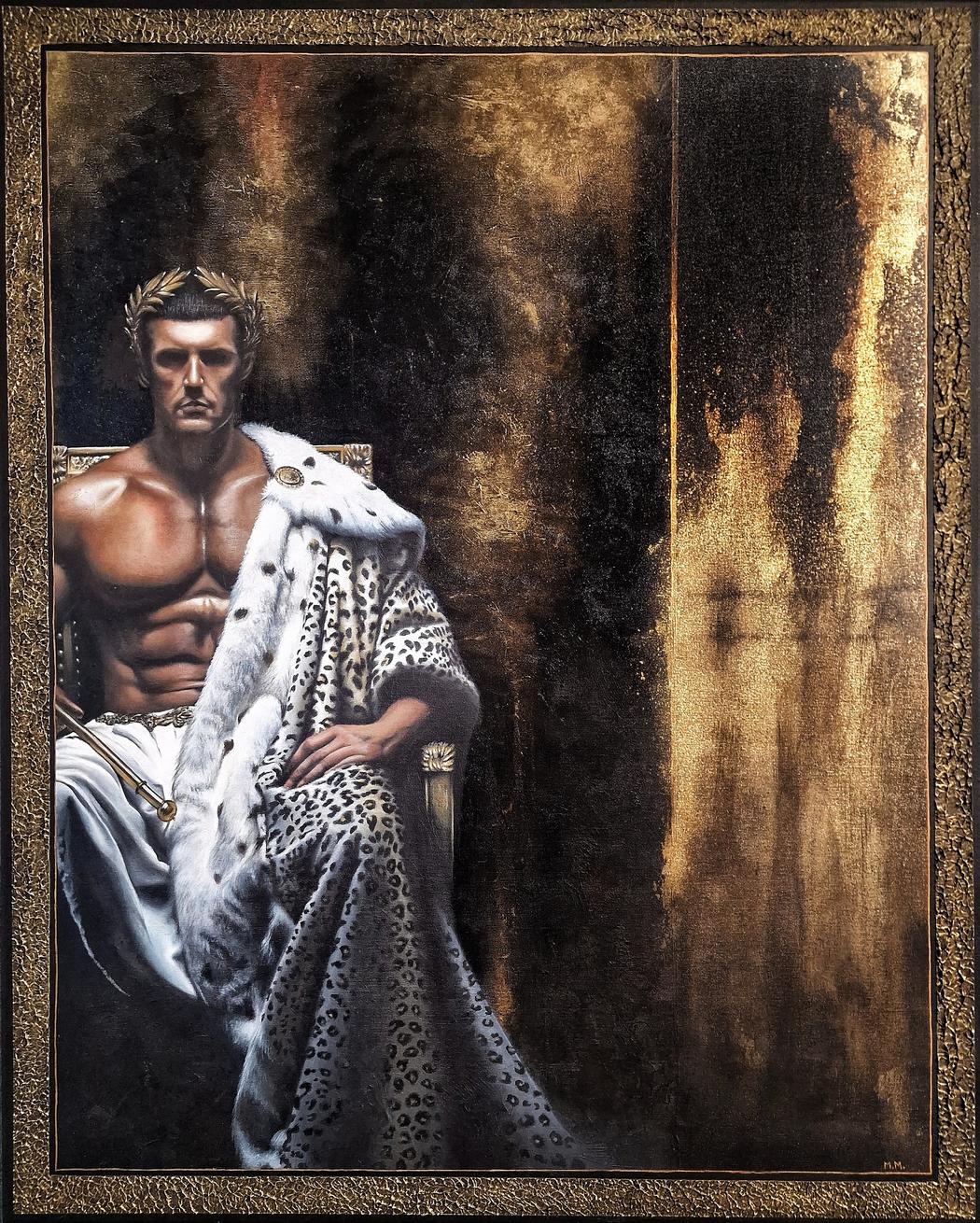 Martin Málek | Caesar
You describe your style as rooted in the atmosphere of “Dark Baroque.” What draws you to this aesthetic, and how do you interpret it in a contemporary context?
The aesthetics of Baroque, especially the work with light emerging from shadow, attracted me already during my studies. I was fascinated by the precision of the old masters and their ability to create tension, through which the image feels almost alive.
At the time when I was devoted to drawing, I did not fully realize this connection. With the transition to painting, this principle returned to me as something that had been present from the beginning.
For me, Baroque represents a natural way of thinking about light, space, and the presence of the image, which appears in my work in a contemporary, personal form.
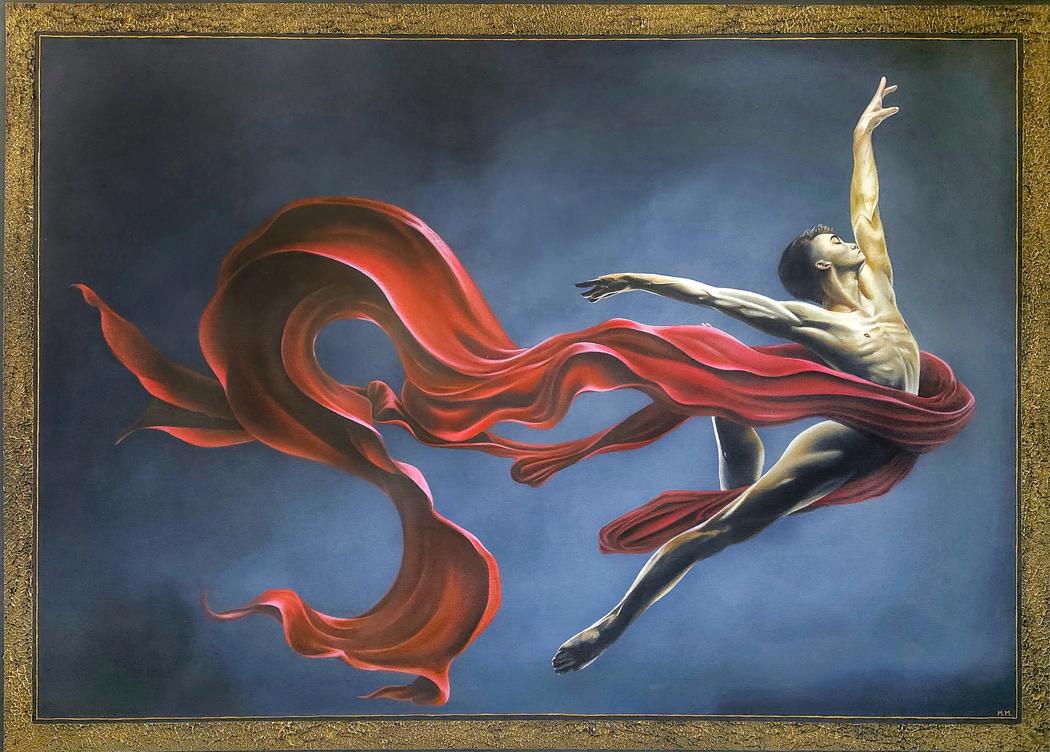 Martin Málek | Freedom
The male figure appears as a central motif in your paintings. What symbolic role does it play in your work?
The male figure represents a conscious choice for me. In the contemporary visual environment, I perceive that the male element is receding into the background, while in the past – from antiquity to classical painting – it held a firm position.
In my work, I naturally return to this line. The male figure represents for me a way of presence within the image and a motif to which I feel personally close.
Many of your compositions appear monumental, almost sculptural. Do you think of your paintings as objects as well as images?
I perceive my paintings as images that also have a strong physical presence. Each work represents for me a defined space with its own boundary.
In the process of creation, I also work with where the image begins and where it ends. This boundary determines how the work exists in space and how it affects the viewer.
The framing, which is directly part of the canvas, is therefore an essential element. I perceive it as my signature, which closes the image and gives it a clear structure.
The image thus gains its own presence, close to an object.
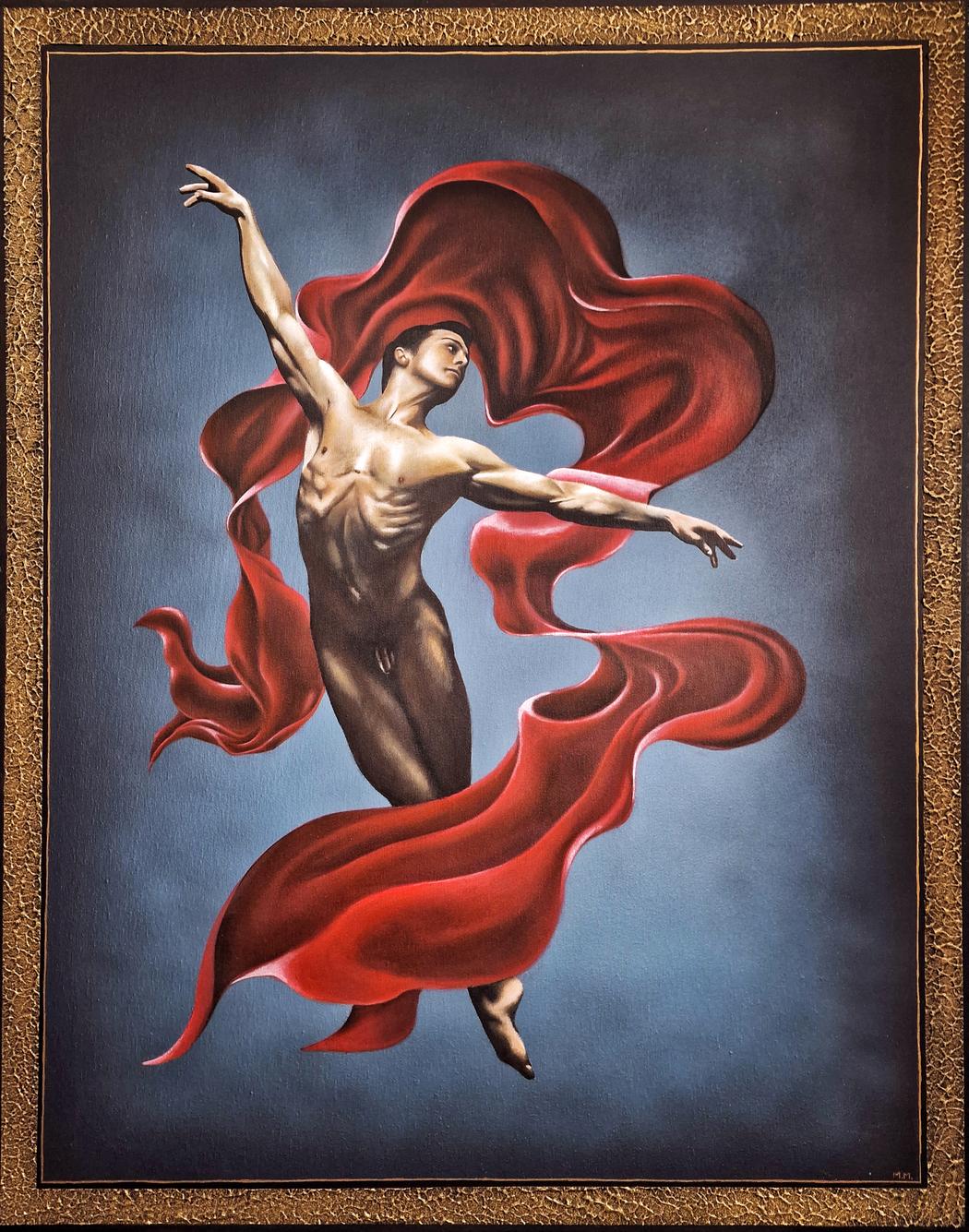 Martin Málek | Heart
Your works often balance beauty with tension or unease. How important is contrast in your visual language?
I perceive contrast as a reflection of my own way of thinking. I am naturally drawn to movement between different positions rather than remaining in a single direction.
The images can therefore feel calm and unsettled at the same time. This creates space for individual perception.
Someone once told me that if they went to the right, I would go to the left. Rather than a contradiction, it is an effort to understand both directions and find my own position.
The space between them is essential for me.
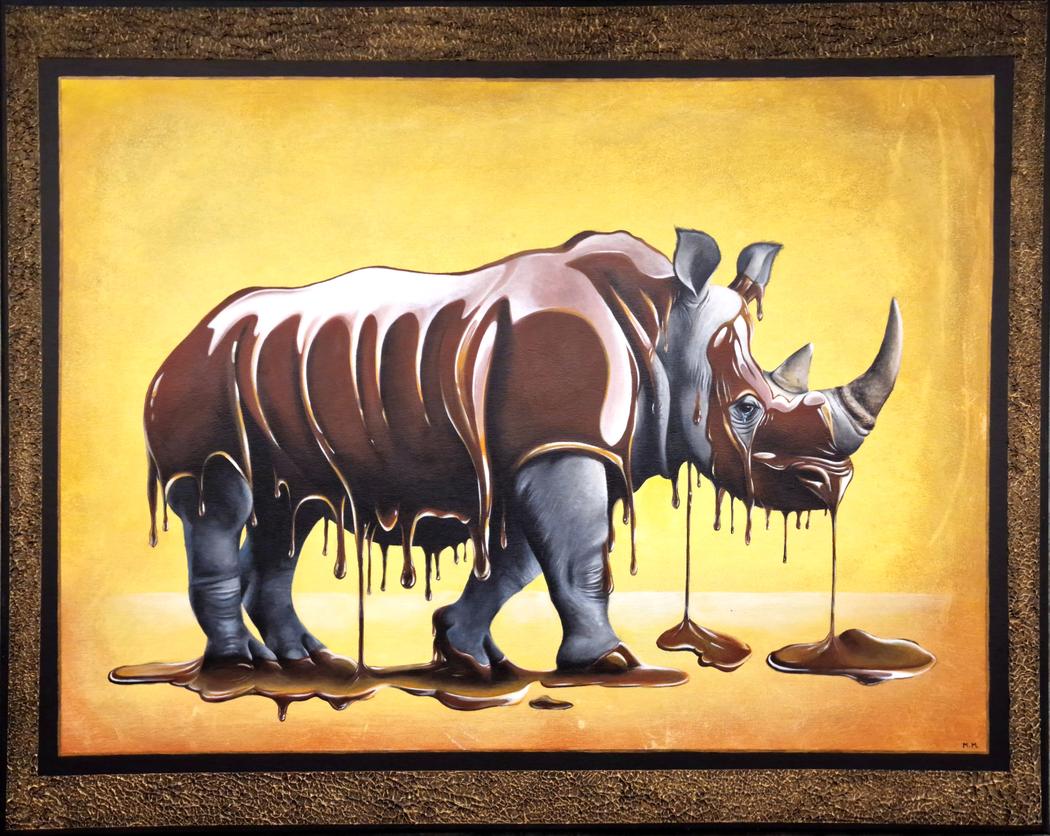 Martin Málek | Rhinoceros
Do you begin with a narrative, or does meaning emerge during the process?
Each painting originates from an initial idea, for which I gradually search for a concrete form. During the process itself, which often lasts several weeks, I return to it and continue to develop it.
The meaning thus becomes more precise and transforms throughout the work. During the process, I also write down short notes that help me later articulate more precisely what the image carries.
After completing the work, I sometimes encounter a layer that I was not consciously looking for at the beginning.
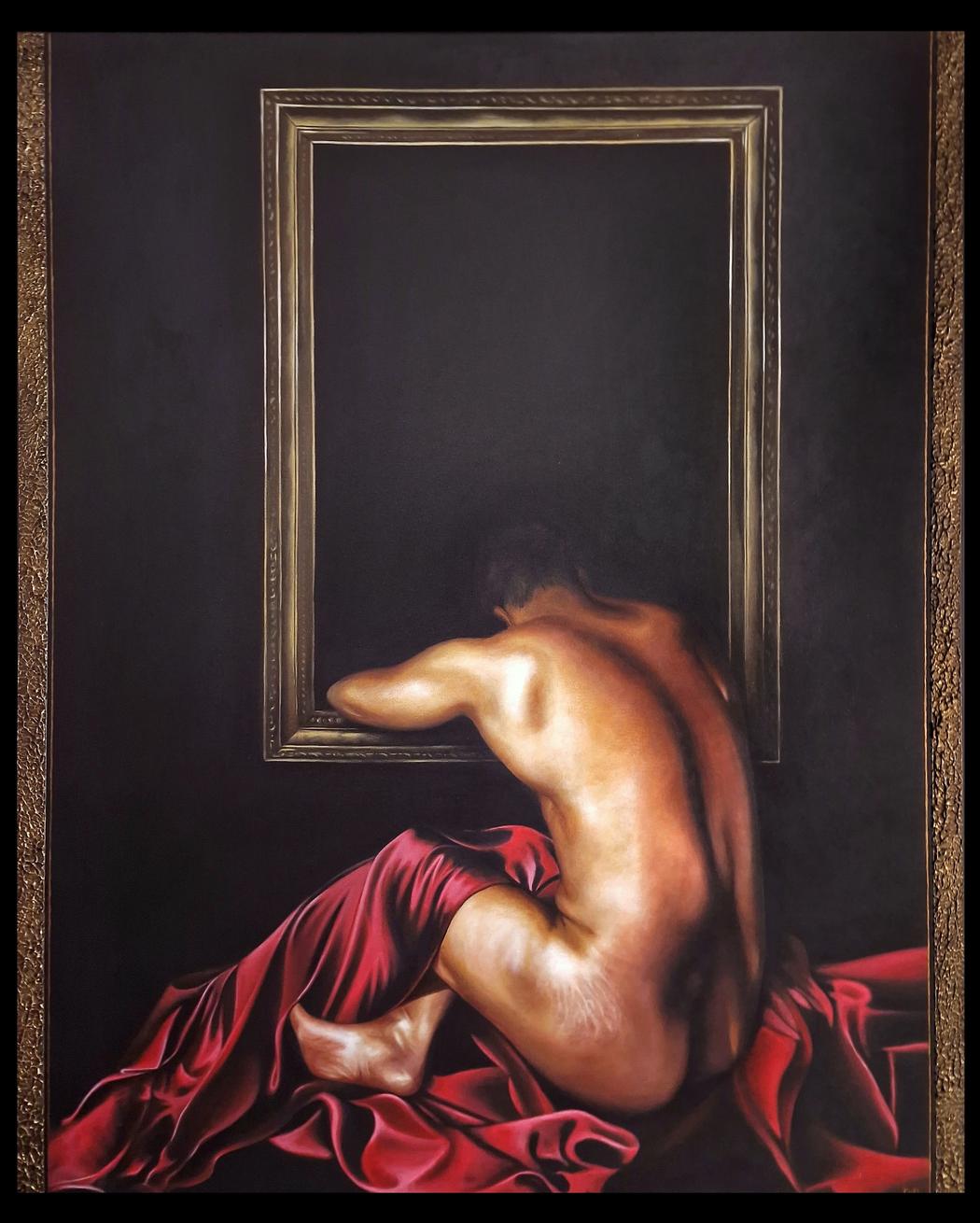 Martin Málek | Searching For The Muse
The painting Rhinoceros presents a strong symbolic image. What ideas or commentary are contained in this work?
The painting Rhinoceros originated from a reflection on human greed and the value we assign to things around us. I covered an animal that has its natural space with a material associated with immediate pleasure.
This contrast opens a question of how easily we intervene in the environment we share for the sake of our own comfort. A situation that repeats itself in various forms.
For me, it is an impulse to reflect on the value of the decisions we make.
Leave a Reply
You must be logged in to post a comment.