
Charlotte Gausseran
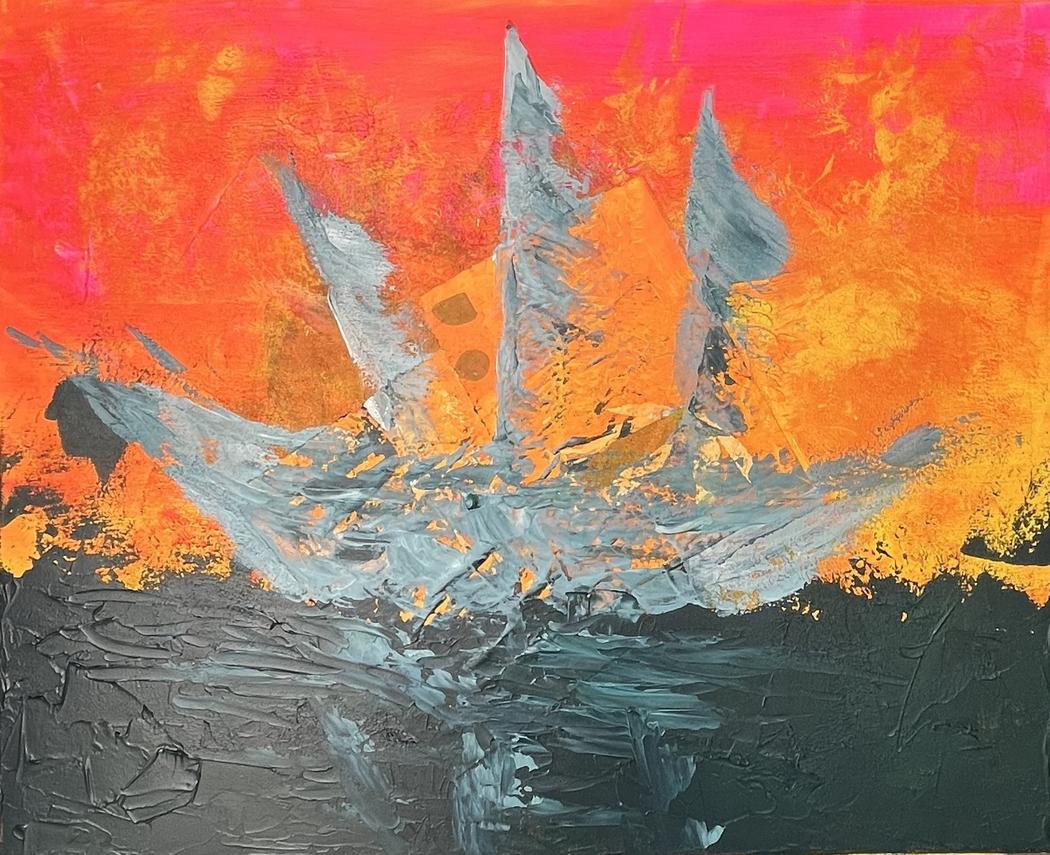 Charlotte Gausseran | Le bateau fantôme
Your works feel very intuitive and organic. How does your creative process usually begin when you start a new piece?
My process often begins with an emotion or an atmosphere that I feel rather than with a precise image. Sometimes it is simply a color that I feel like using. I can be inspired by the color of the sky at sunset, a conversation, or simply the desire to create something joyful in response to the surrounding gloom or after a day that was a little less good than usual.
I usually start by drawing without a specific plan, letting the acrylic pen “move” across the paper as it wishes. The shapes then emerge naturally — a line becomes a plant, a scribble transforms into an imaginary building. I enjoy this spontaneity because it leaves room for surprise. It feels like a conversation between me and the paper or the canvas.
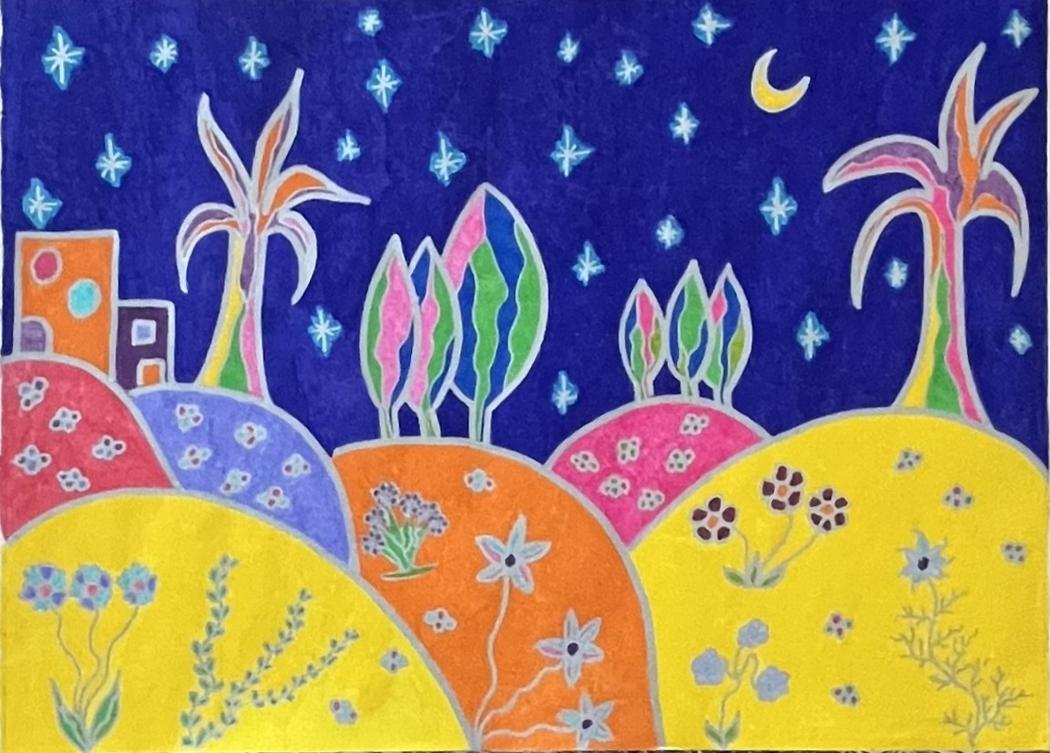 Charlotte Gausseran | Balade magique
You mention influences from Fauvism and Cubism. In what ways do these movements shape your visual language today?
Fauvism inspires me in the use of color, with the idea that color does not need to be realistic in order to be true and make the artwork beautiful.
I do not use colors to reproduce nature or what actually exists, but to express an emotion that I feel.
Cubism, in turn, showed me that forms can be reorganized to create a new reality. In my work, I combine these two ideas; it is my way of saying that reality is never linear — it is colorful, complex, and multifaceted.
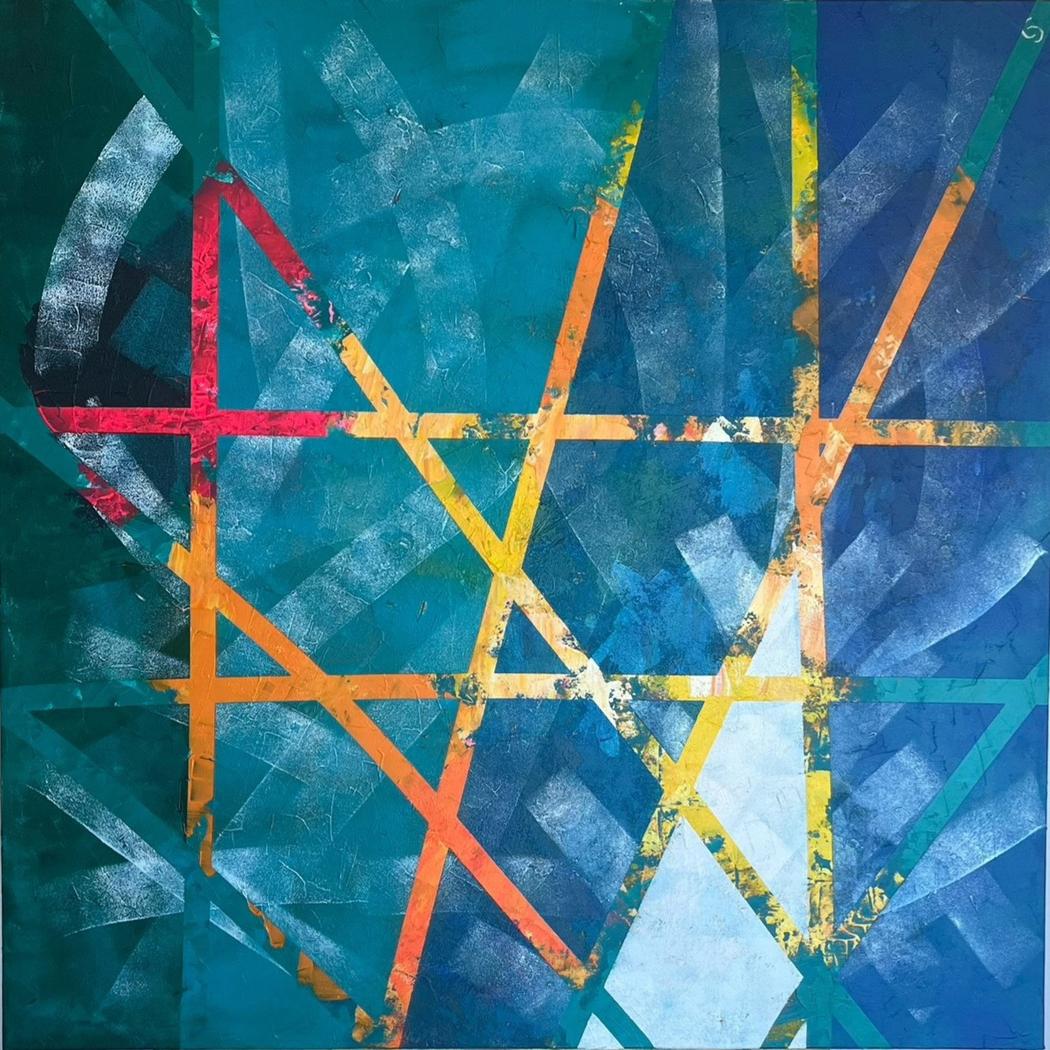 Charlotte Gausseran | Alchimie
You began sharing your art publicly only recently. What gave you the confidence to start showing your work in 2023?
In reality, I have more or less always been drawing. But only in private, because I was afraid of judgment, afraid that it wouldn’t be “good enough” in the eyes of others.
But in 2023, I realized that authenticity is what truly matters, not perfection. I began timidly sharing my work with people around me and then on social media, and the reaction surprised me. People found my work interesting, even beautiful — not because it was perfect, but because it was sincere and colorful, and because it brought them joy.
That gave me confidence. I understood that my art had value, not because it would please everyone, but because it could touch those who needed it. That was the moment everything changed for me, and I started sharing more and more of what I was creating. It wasn’t easy at the beginning, but now I truly enjoy it.
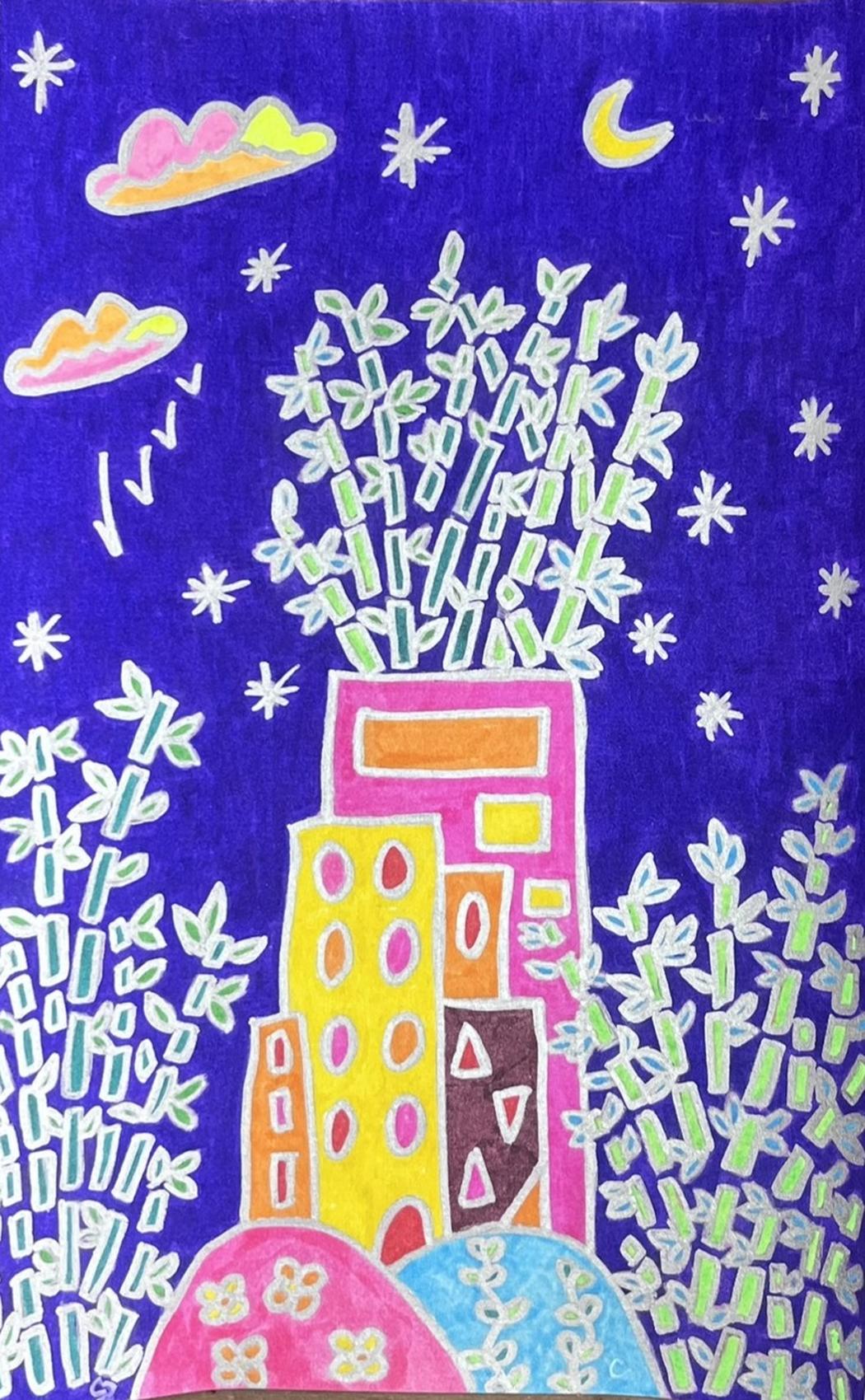 Charlotte Gausseran | Bambous urbains
Your compositions often include flowing lines, plants, stars, and imaginary landscapes. What attracts you to these natural and dreamlike motifs?
These elements fascinate me because they represent the balance between what is real and what is imagined. Plants symbolize growth, life, transformation, and development—themes that resonate deeply with me.
Stars and dreamlike landscapes are my way of saying, “there are other possible worlds,” worlds that are more joyful, more colorful, more magical. I believe that today, in real life, in our adult lives, we often forget how to dream. My art is an invitation to dream, to imagine, to believe in magic, and in a way to reconnect with one’s deeper nature and childhood dreams. It is my language for expressing joy and hope.
Color plays an important role in your paintings. How do you choose your color palettes when creating a new artwork?
It’s very instinctive. I start with a color—often one that calls to me that day—then add another. There are periods when I love turquoise green, and others when I’m more drawn to fuchsia pink or orange (maybe I’m lacking vitamins at that moment—who knows!  ).
).
For me, colors represent life. Just look at what we eat: vegetables, fruits, spices—everything is extremely colorful and brings nutrients and things essential to our health.
One thing is certain: I try not to use the real color of what I’m drawing. For example, I very rarely make green plants or brown tree trunks.
I like unexpected combinations, and I enjoy being surprised by the final result myself. A fuchsia pink building with electric blue—that’s what makes my work recognizable. Color is my signature.
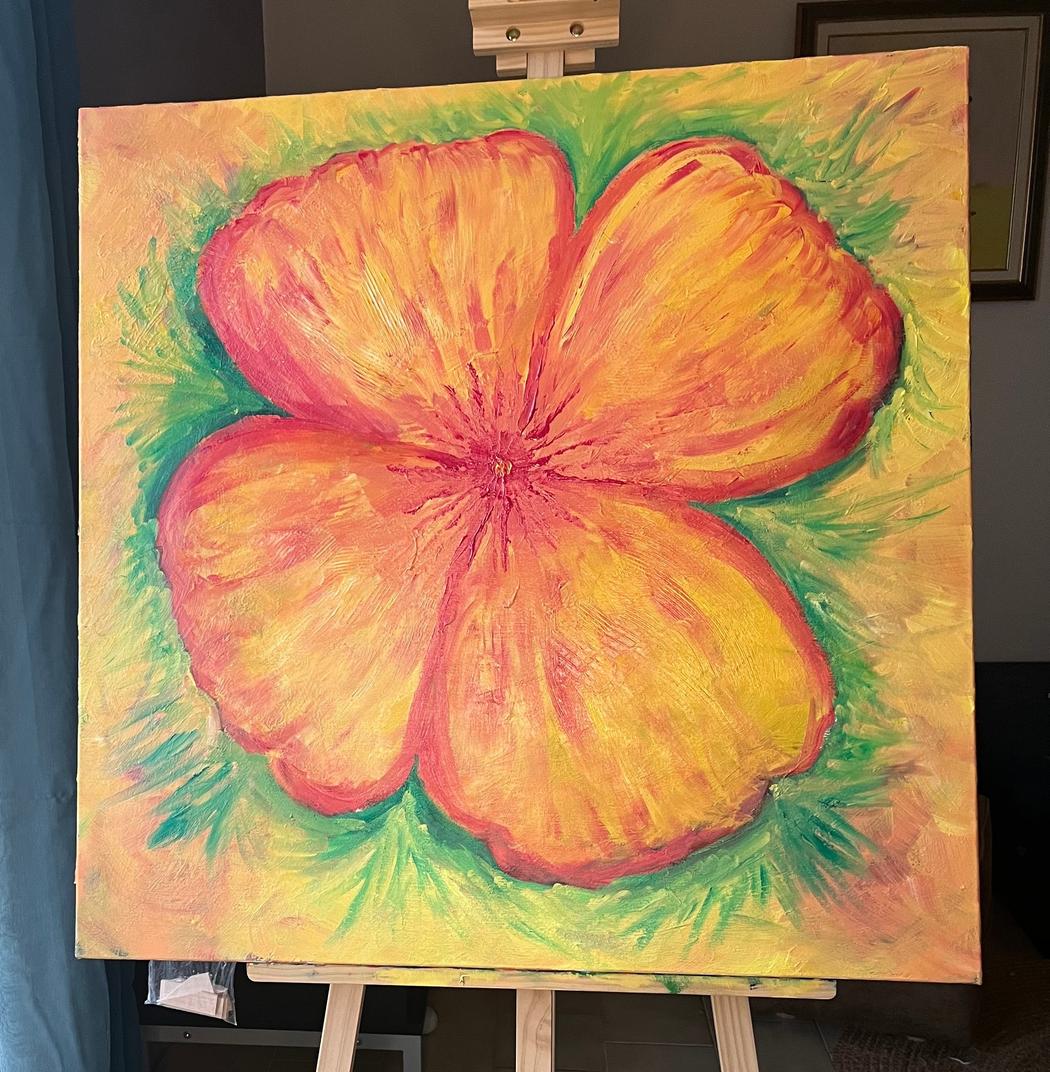 Charlotte Gausseran | Eclosion
Many elements in your paintings seem to blur the line between abstraction and landscape. How do you see this balance in your work?
I’m not trying to choose; in fact, I usually take a long time when I have to choose between several options (in a restaurant it’s a nightmare!! ). This ambiguity is intentional. It allows each person to see what they need or want to see. And that’s the magic of art. Everyone sees what speaks to them at the moment they look at the work.
I remember that one of the paintings I exhibited last summer in the Pyrenees was perceived very differently by the people who looked at it: some saw a whale, others an island, others a galaxy, and someone even told me it looked like a submarine.
That’s what I love about abstract art — all interpretations are possible and true for the person who is looking at it. And it always opens up discussion; it creates a connection between people. That is also the beauty of art: creating connections between human beings.
When working on larger formats, does your approach or mindset change compared to drawing on smaller surfaces?
Yes and no. It is rather my way of working that changes. Small formats do not require me to move around constantly from one end of the canvas to the other. I also do not need to step back in order to see the painting or drawing as a whole. But each drawing, each painting—regardless of its size—gives me the same feeling: I enter a kind of timeless pause, a parenthesis outside of time, from which I only emerge once what I needed to paint or draw that day has come out of me and settled onto the paper or the canvas. It is a very meditative process.
And in the meantime, it could have been one hour—or three—that have passed.
Leave a Reply
You must be logged in to post a comment.