
Ludwig Fernando Acero Pinzon
You describe your work as an exploration of the “fourth dimension”. When did time become a central subject in your artistic research?
I started experimenting with movement, fire, and trails on the photographic negative while visiting Villa de Leyva, a colonial town in Colombia founded in 1572. That day, I took some pictures of a procession where people were holding candles. I used an analog camera. When printed, I saw people had disappeared and traces from the flames remained among the buildings. The images and the context of colonial architecture suggested that there were different realities all at once. In that moment, it felt like discovering an outer world not visible to the human eye. What I was seeing felt almost out of place. This sparked my interest and I began my exploratory journey to unveil the hidden fourth dimension and replicate it in my work.
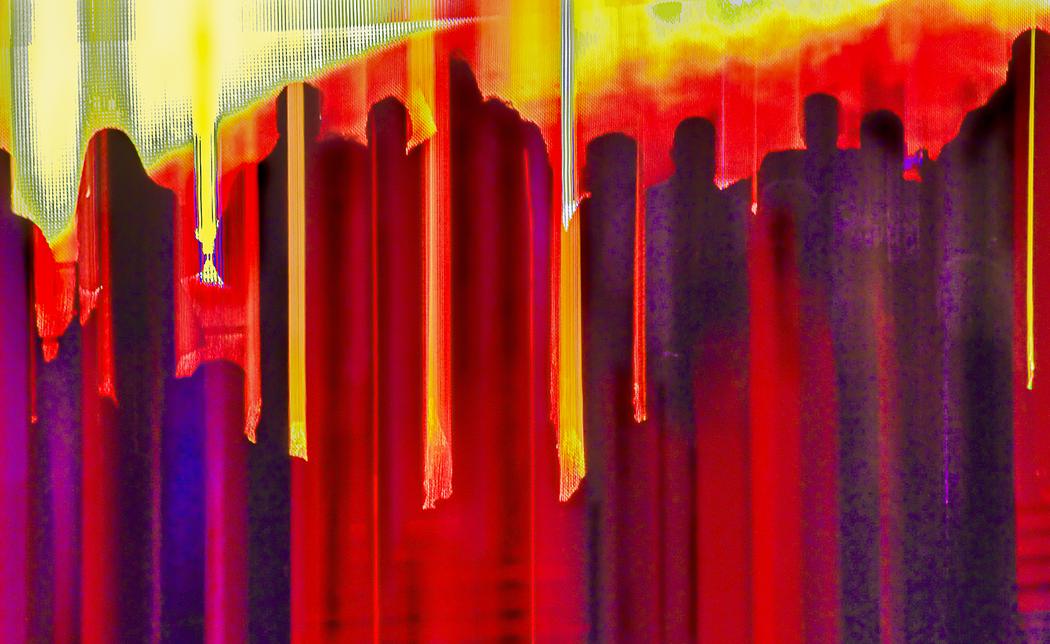 Ludwig Fernando Acero Pinzon | Distortion | 2010
Photography is traditionally associated with freezing a moment. How do you challenge this idea and turn photography into a medium of movement and duration?
It was necessary for me to avoid attempting to freeze time. I challenge the idea of freezing a moment by using intentional camera movement, moving the camera across the scene. This brings out the contrast between stillness and movement.
I began working with an analog camera and introduced camera movement with a digital camera, which allowed me to immediately see the result. I use lenses of different focal lengths. I allow the same subject to appear many times in the same picture with a fixed background. The captured moment gives the notion that there is something happening not only now, but also before and after. It is an extended moment. Movement gives the scene the aura of a temporary event.
Light plays a crucial role in your work. How do natural and artificial light differently affect the way you perceive and construct space?
I stop down to increase the length of exposure and move the camera during the exposure. This allows the traces of light to stand as testimony of the passage of time. I accomplish this by shooting in spaces flooded with light. I prefer to shoot backlit. Light then becomes an object itself, it’s not a tool to illuminate the subject. Light floods the space and stops being incidental. Objects in the resulting scenes stand out with more depth, even beyond the three dimensions.
Both natural and artificial light allow me to achieve desired results. In this collection of photos, I used artificial, colored light. Colors with artificial light are shinier, and the transition from color to color is sharper like in the case of “Flashback.” However, the opposite can also be achieved. For example, in the case of “Distortion”, the human bodies transform into colored light objects and almost blend into translucid layers.
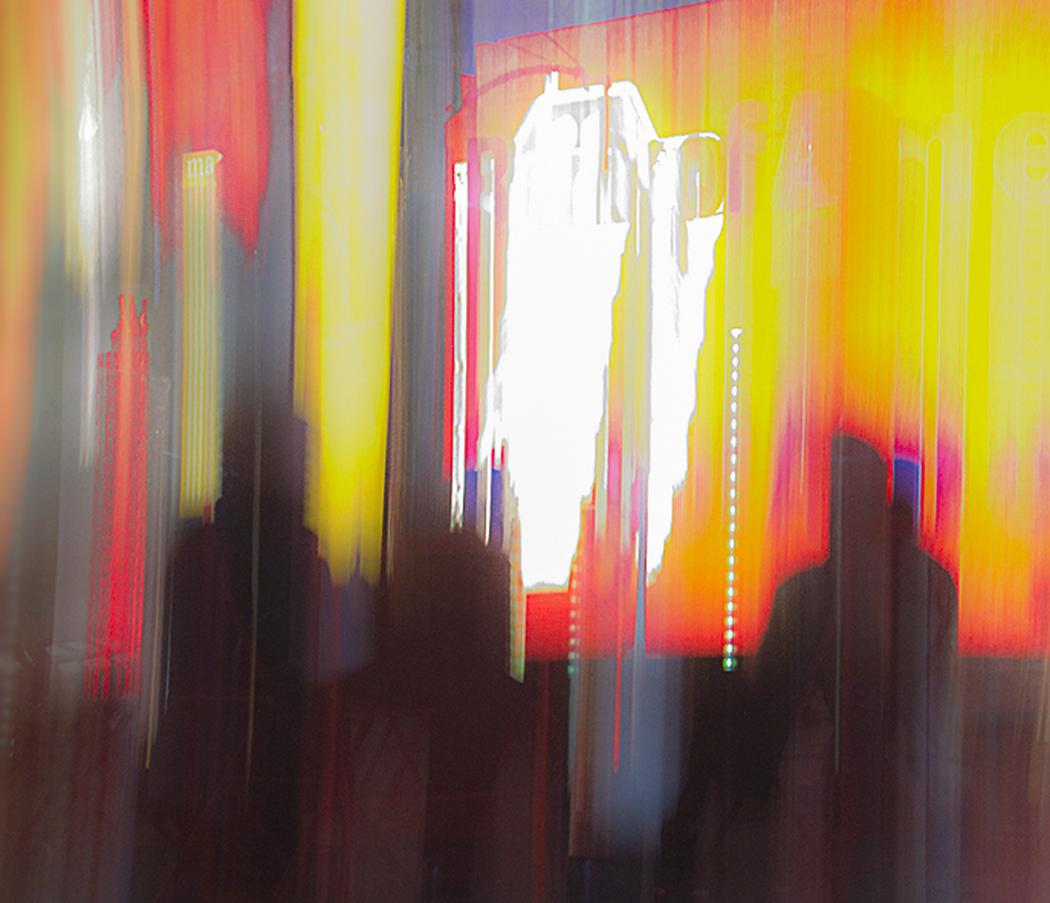 Ludwig Fernando Acero Pinzon | Flashback | 2010
Many of your images blur the boundaries between architecture, landscape, and human presence. What attracts you to these intersections?
Despite the human presence happening within the confines of a space, this also implies an opening for transformation in time. What attracts me to these intersections is the reality of my own existence being limited but also changing.
The boundaries of space are not permanent. They can be reconfigured by camera movement. As the camera moves, the composition changes, tracing a new architecture where surreal objects reveal themselves. In these new spaces the objects start to float, sometimes it seems that they are ethereal.
Architecture is a durable part of the landscape. The presence of the human body is a temporary part of the landscape. Body and architecture exist within the confines of the landscape. The landscape holds them in, imposing limits with the rules of the three dimensions. Light, color, and movement add the element of time, which is the 4th, freeing body and architecture as they intersect. For example, in “Flashback,” the light in this case does not set boundaries but widens the space The objects seem to dissolve and mix. They blend with the surroundings taking an airy nature.
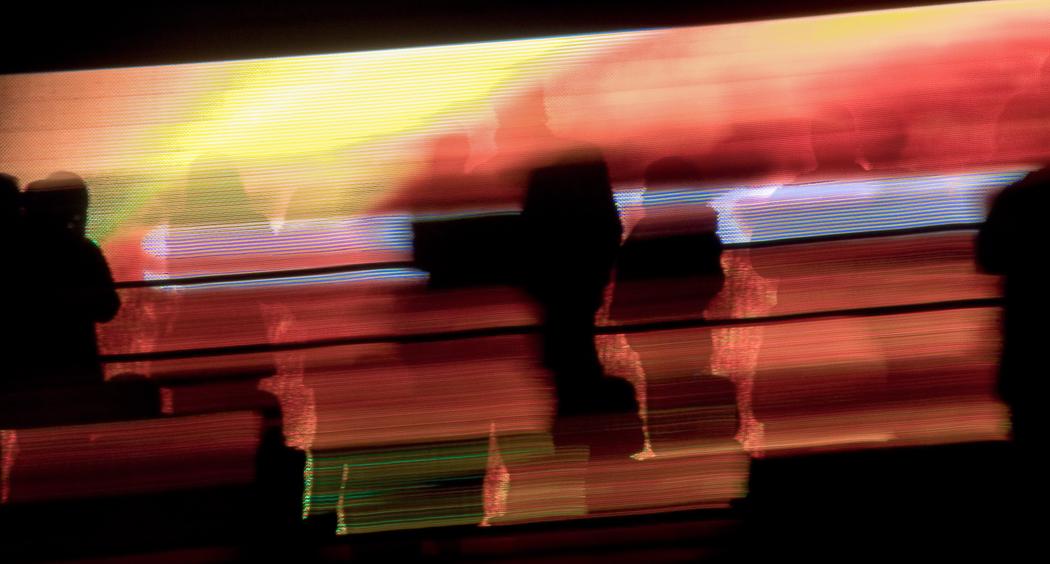 Ludwig Fernando Acero Pinzon | I remember my life as a motionpicture | 2010
The human figure appears in your work as a fleeting presence rather than a central subject. What role does the human body play in your exploration of time?
We can experience time and we can have the experience of a three-dimensional object. However, we cannot experience time in the same way. We cannot touch it, for example. The experience of the human body is the evidence of time, that there is a past, present and future, and that the physical body will end. The human figure is the central subject in my work, although this subject appears to be fleeting. So, I pose the question, how can we experience something that is not matter in a body that is matter? Could the body even move in dimensions beyond the 4th? The human body is the medium to explore the idea that we experience dimensions beyond the three dimensions.
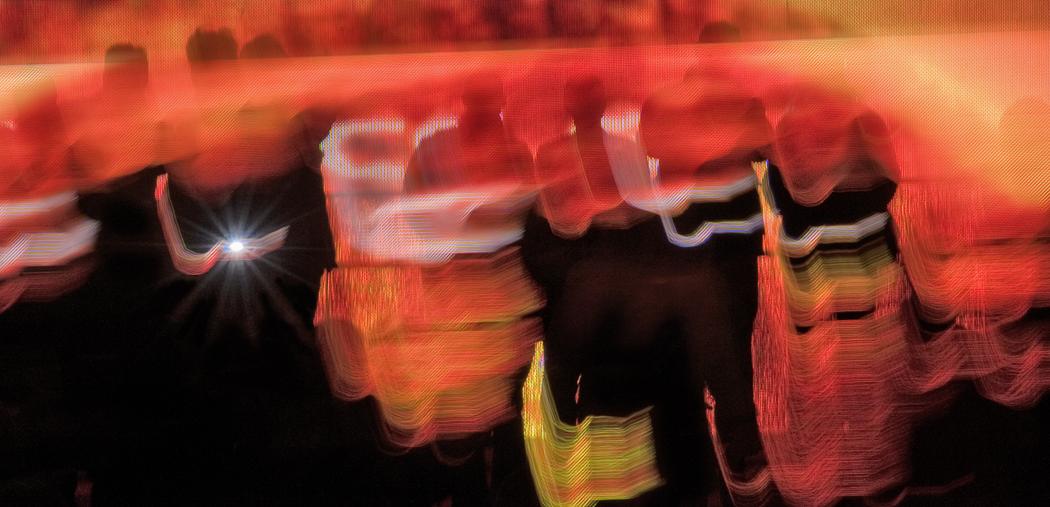 Ludwig Fernando Acero Pinzon | Printing my life through time | 2010
How have your experiences as a muralist in Colombia and Peru influenced your photographic and installation practice?
They influence one another. I try to use movement and textures, breaking the boundaries of the body. What I am currently working on in photography has been influenced by the “Mochica” culture in Peru. They used to build monumental palaces like stepped pyramids made with sun-dried mud bricks made from clay, sand, and organic materials. I take from their design elements like patterns and abstract representations of nature.
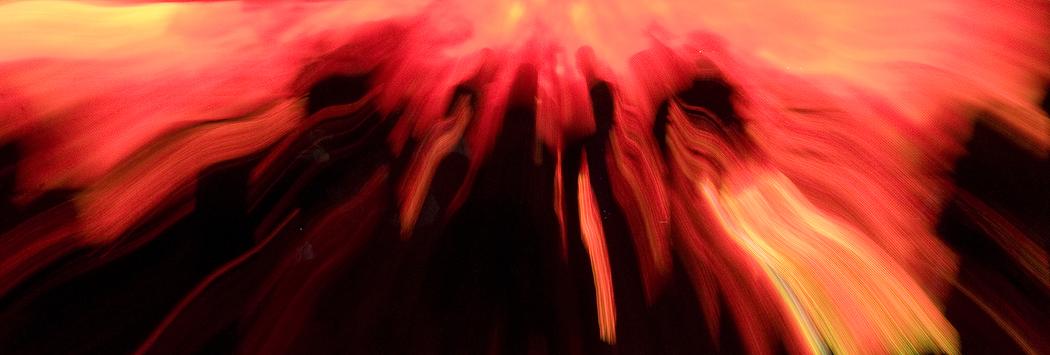 Ludwig Fernando Acero Pinzon | Wave or particle | 2010
Teaching has been an important part of your career. How has teaching art shaped your own way of thinking and working as an artist?
Teaching helps my views to evolve as I am exposed to opinions and points of view from students of all ages. It is sometimes like reading a non-written book with different new messages and new faces of the same topic. I enjoy the way kids, teenagers, and adults receive new knowledge and shape their understanding. This opens new pathways to explore, to be curious, allowing questions that call to create new things.
Leave a Reply
You must be logged in to post a comment.