Walther Adriaensen
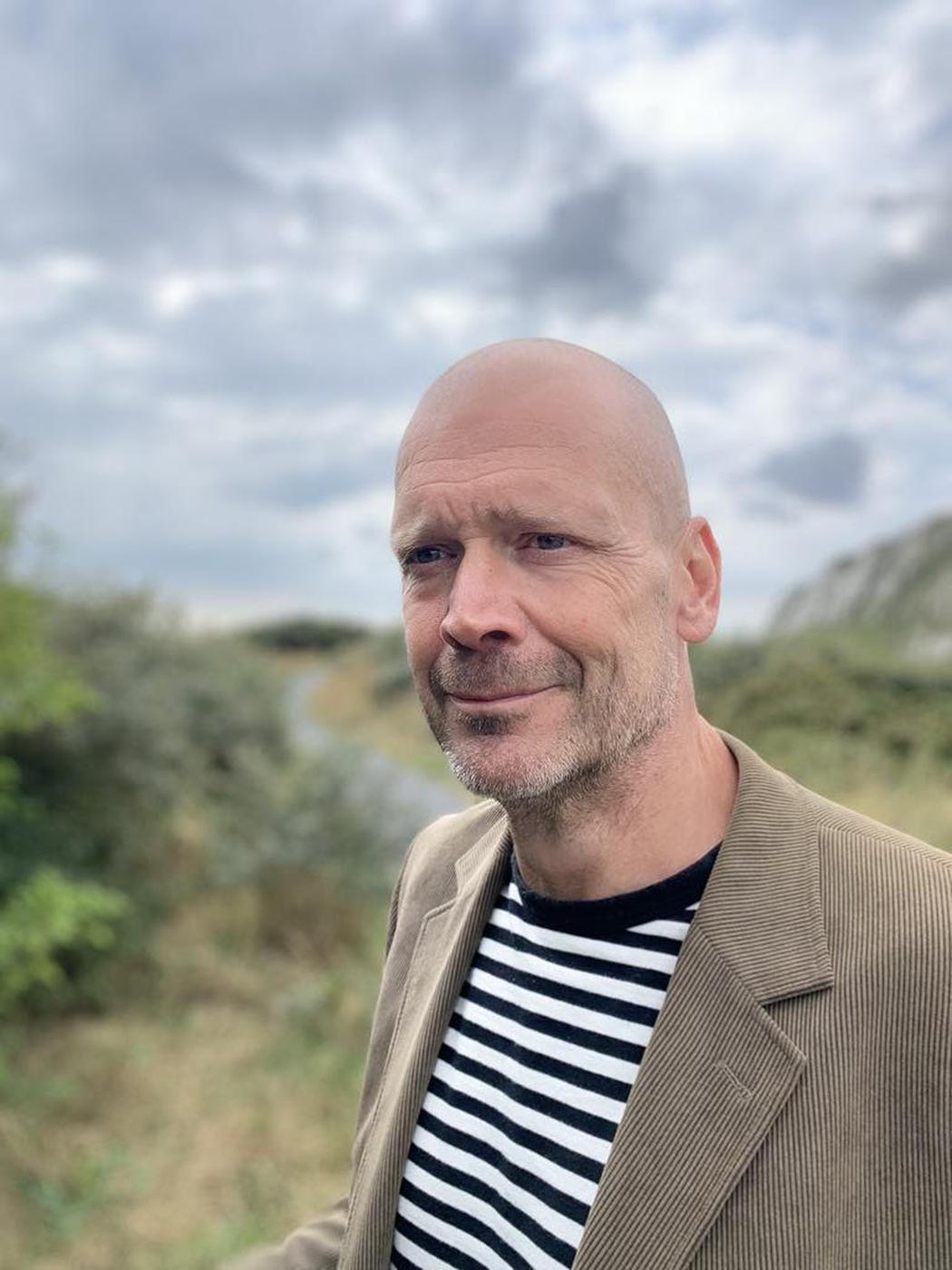
Your artistic journey began with early studies in drawing and later evolved toward a constructivist and abstract approach. What motivated your departure from figurative art?
I left the figurative for the abstract, drawn by a new sense of freedom in which the gesture becomes the true driving force of the work.
You spent many years researching line, movement, and form. How did this long exploration shape the way you work today?
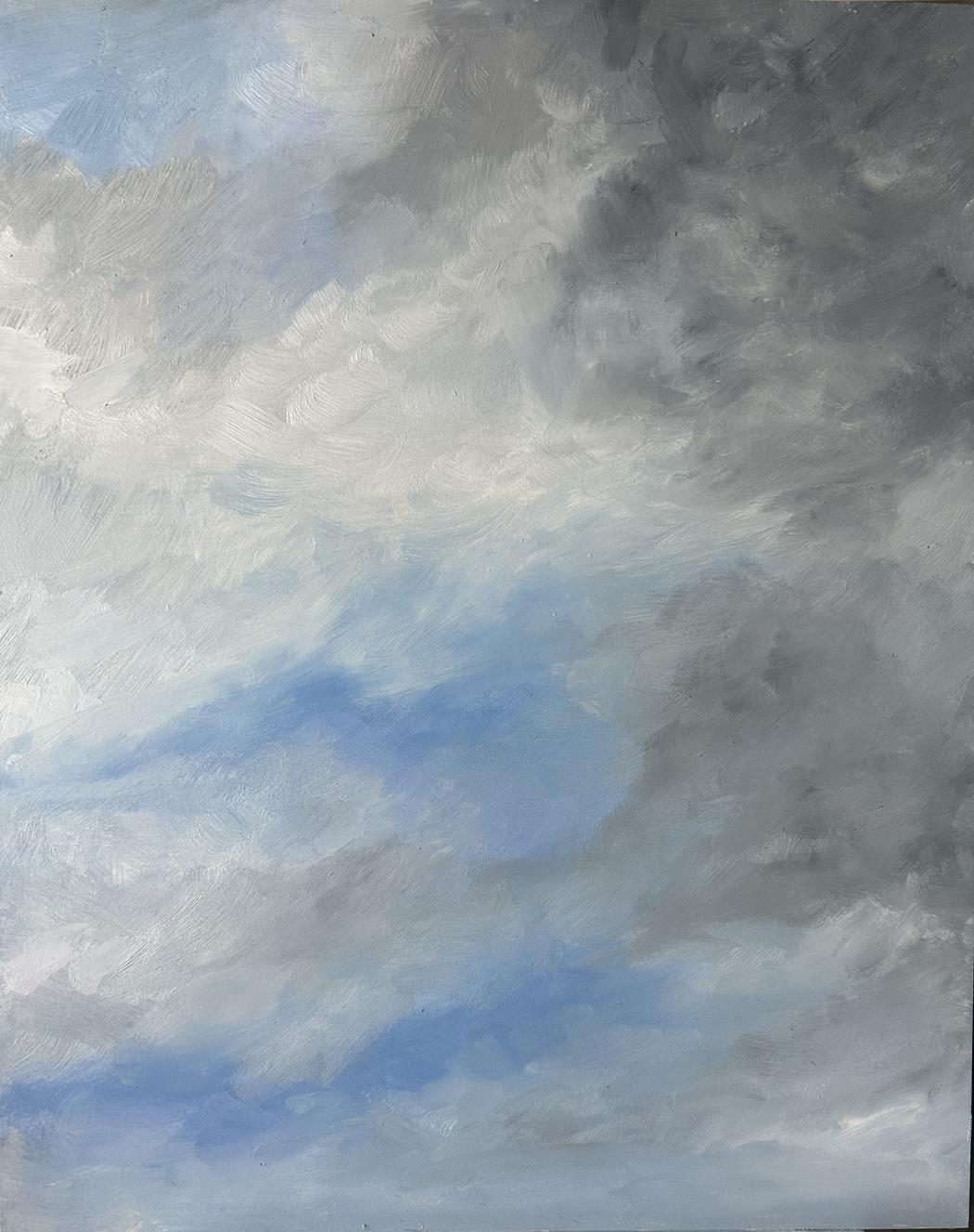
These years have taught me that movement is the key — at least for me, it is the key to expression. Without gesture, there is no movement; without movement, no clouds, no transparency, no chiaroscuro.
For the past two years you have focused on clouds as a central theme. What drew you to this subject, and what do clouds allow you to express that previous themes did not?
The clouds became my playground, a place where movement breathes, evolves, and dissolves without end. No world is more mercurial, more alive with change, than the sky.
Clouds in your work appear both abstract and tangible. How do you navigate the balance between representation and abstraction?
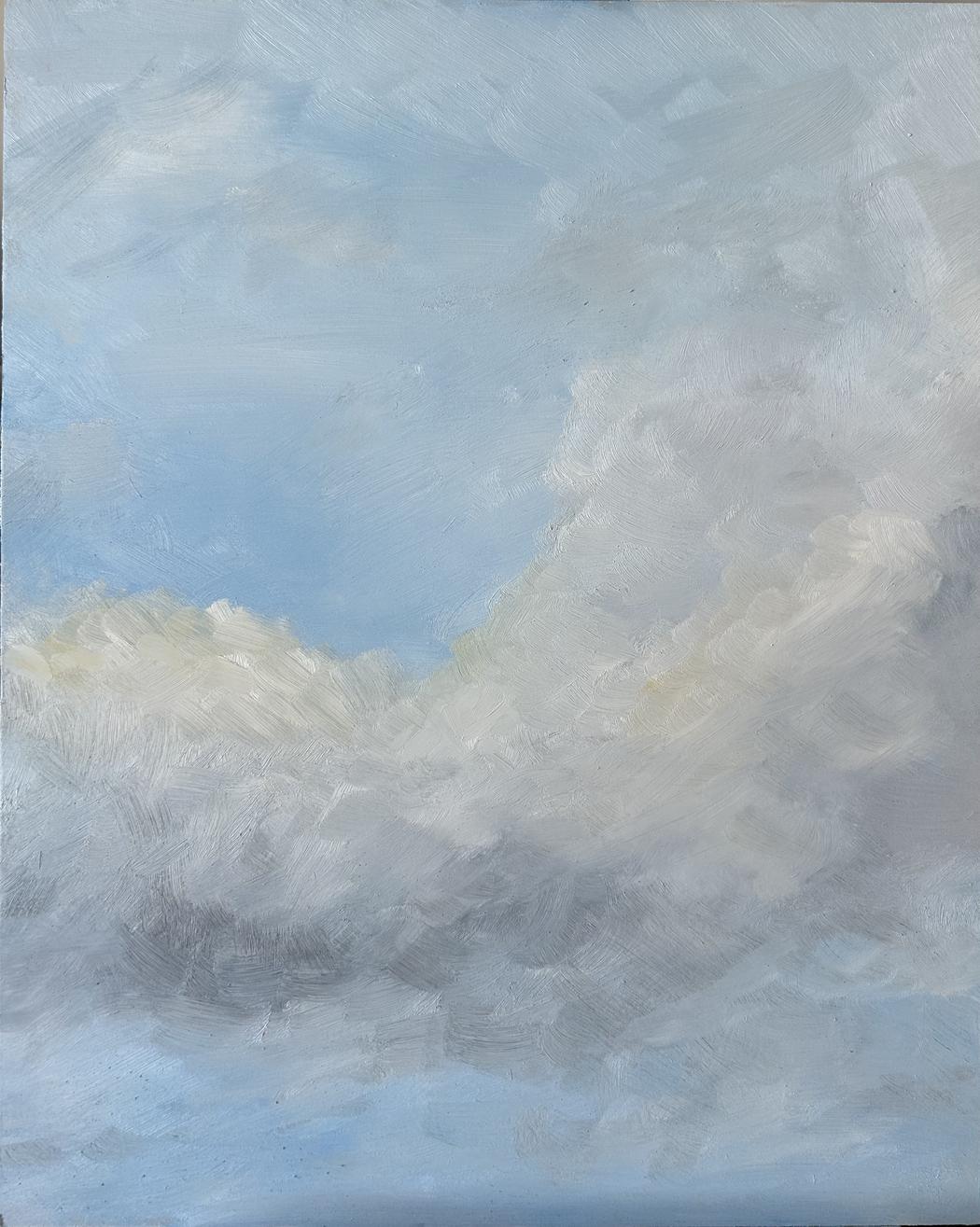
In my cloud paintings, I aim less to depict than to suggest. The cloud becomes a pretext — an anchoring point that allows me to stay connected to the real while moving beyond it. I navigate the balance between representation and abstraction through gesture: it determines how readable, dense, or dissolved the image becomes. A cloud is both form and movement, matter and disappearance — an ideal subject for exploring that shifting territory where the image remains recognizable yet already drifts into something else.
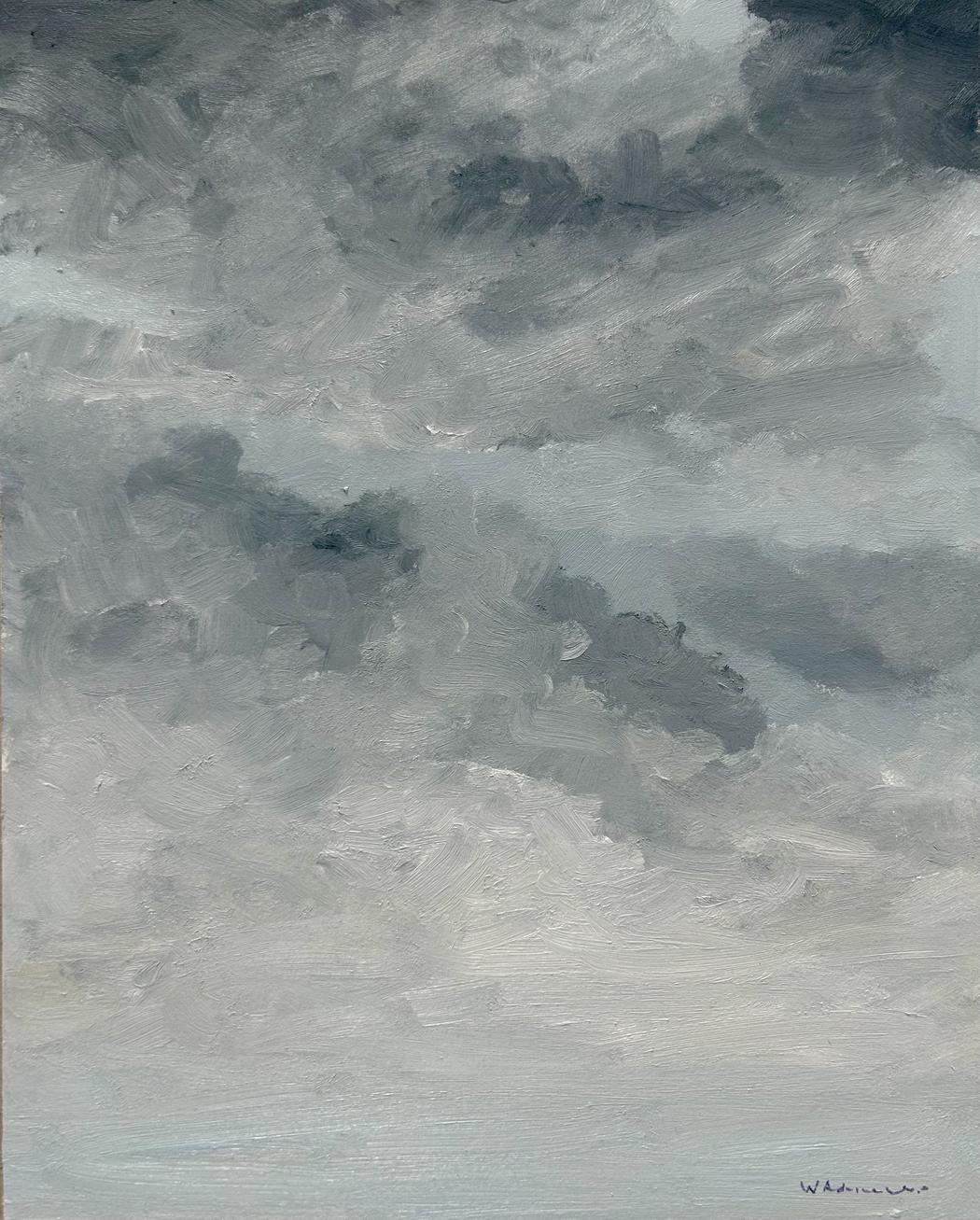
Your choice to eliminate the horizon and use vertical formats breaks traditional landscape conventions. What effect do you hope this creates for the viewer?
By removing the horizon and working in vertical formats, I invite the viewer to step out of the traditional landscape and into a more immersive, less anchored experience. Without a fixed horizon line, there is no ‘up’ or ‘down,’ no stable viewpoint — only the movement of the clouds and the gesture that carries them. This shift creates a sense of suspension, as if the viewer were inside the atmosphere itself rather than observing it from a distance. The vertical format amplifies this feeling, stretching the space and allowing the eye to travel through layers of movement, opacity, and transparency. My aim is for the viewer to feel enveloped, drawn into a space that is both vast and intimate, familiar and ungraspable.
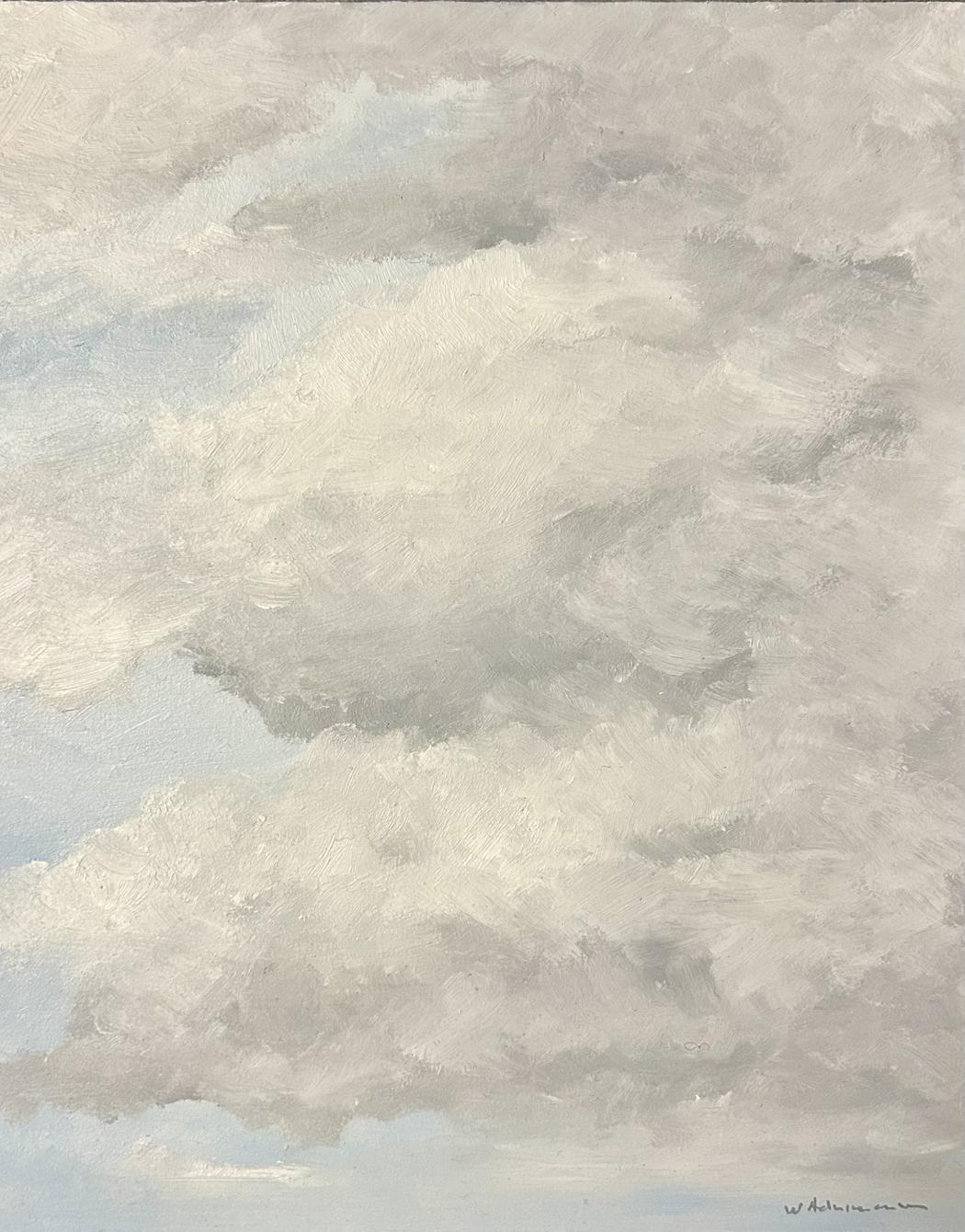
Wooden panels are essential to your technique. What does this material offer that canvas does not?
I work on wood because it responds better to my gesture: its surface offers the right resistance and responsiveness to translate the movement of my hand. Additionally, since I aim to capture movement as it occurs in nature, wooden panels are more practical than canvas, allowing me to work quickly and spontaneously, almost as if I were painting the air and light in motion.
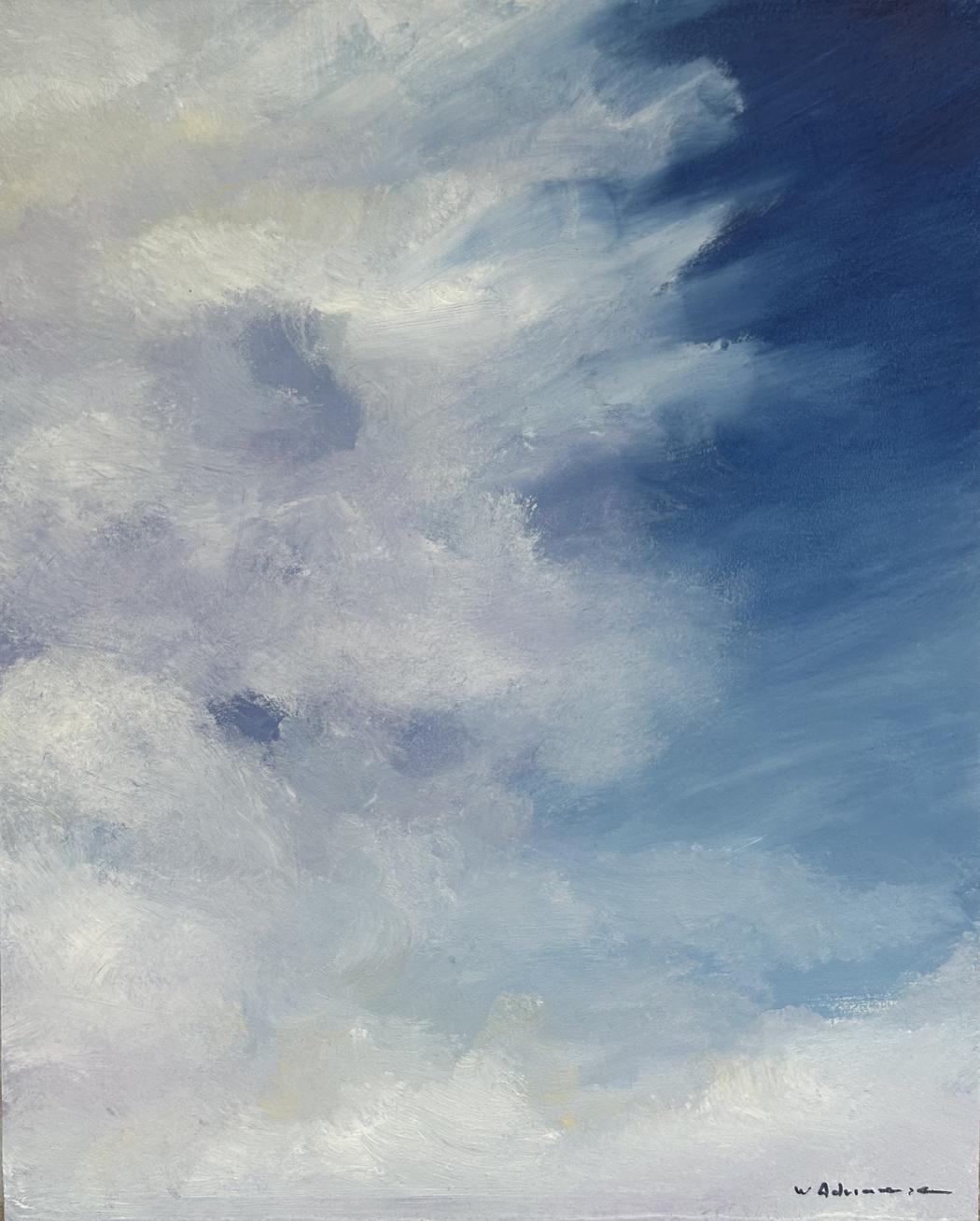
How do you approach capturing movement in a subject as ephemeral as clouds? Is the process more intuitive, technical, or both?
Capturing the movement of clouds is, above all, a matter of presence and attention. My approach is both intuitive and technical: spontaneous gesture allows me to convey the fleeting, fluid, and ever-changing nature of the atmosphere, while experience and mastery of the medium on wood provide the tools to ensure that this gesture retains its clarity and strength. Each cloud then becomes a pretext to explore movement itself—its speed, density, and transformation—rather than attempting to reproduce an exact form.
Leave a Reply
You must be logged in to post a comment.